
How to Start a SaaS Business from Scratch
.webp)
Starting a SaaS business sounds exciting until you really try to do it. All of a sudden, you have to deal with ideas, technology choices, pricing questions and a clear voice in your head asking if this whole thing will work out.
I’ve been there and trust me, it feels messy before it feels clear. You don’t need a big team or massive funding. In this guide, we’ll walk through how to start a SaaS business from scratch using simple, practical steps.
Key Takeaways
- Know how to validate your SaaS idea before spending months building something nobody wants.
- Understand the key steps from MVP development to pricing strategy and launch.
- Know which marketing channels work perfectly for early-stage SaaS businesses.
- Avoid the common mistakes that cost founders time and money.
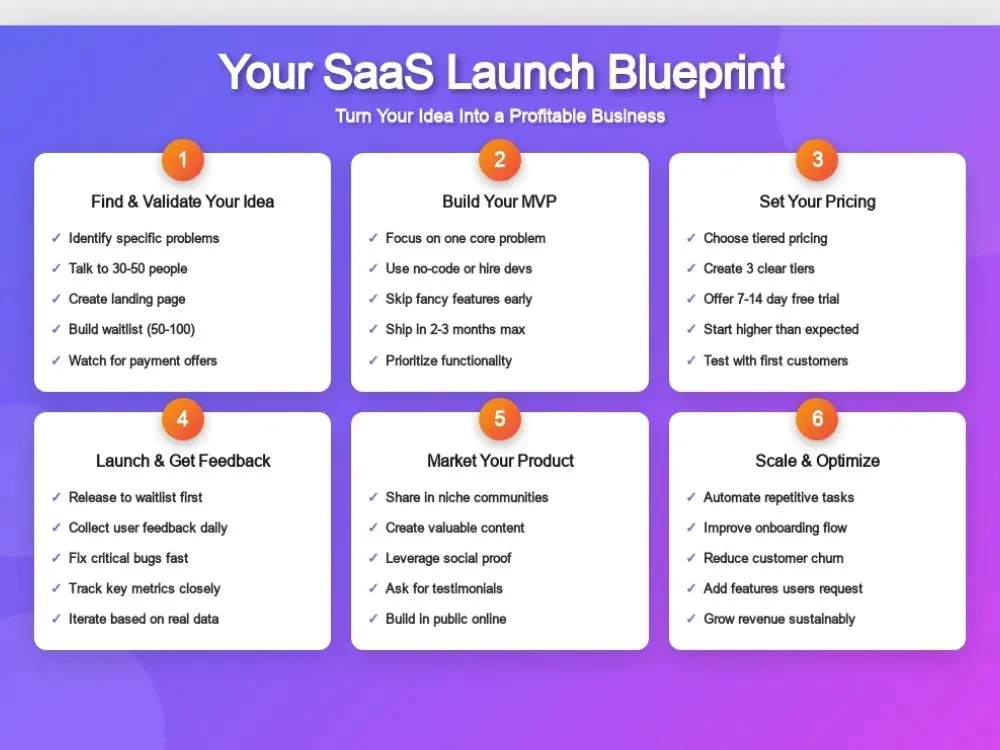
Step 1: Find and Validate Your SaaS Idea
A good SaaS business solves real problems. Not imagined ones. Not “this would be cool” ideas. Real, painful, recurring problems.
Identify a Specific Problem Worth Solving
Start by looking at frustration. Your own problems count here. Pay sharp attention to tasks that feel repetitive, slow, or annoying. Strong SaaS ideas usually save time and reduce costs, that remove confusion.
Ask yourself simple questions:
- What do people often complain about?
- What tasks feel harder than they should?
- What do businesses already pay for but still hate using?
Specific problems beat broad ones every time.
Talk to Potential Customers
This step seems hard, but it matters a lot. You have to aim for 30 to 50 real conversations. Don’t pitch. Just listen to their opinion.
Ask questions like:
- What tools do you use now?
- What frustrates you about them?
- What happens if this problem stays unsolved?
- What are your expectations for specific problems?
Patterns matter more than opinions. If multiple people repeat the same pain, you’re onto something.
Create a Landing Page to Test Interest
Before building anything, test demand. A simple landing page works perfectly. Explain the problem, your proposed solution, and the outcome.
Include:
- A clear headline
- One core benefit
- A signup form
If people sign up without a product, that’s a good sign.
Build a Waitlist Before Building
A waitlist validates interest and builds momentum. Even 50 to 100 signups show real demand. Bonus points if people reply asking when they can use it.
Signs Your Idea is Validated
You know you’re ready when:
- People ask for updates.
- Some offer to pay early.
- Conversations feel easy and specific.
If silence follows, pivot fast. Validation saves months of wasted effort.
Step 2: Build Your Minimum Viable Product (MVP)
You have to build the solution once you've got the required validation for your idea.
What is an MVP?
An MVP includes one or two core features that solve one main problem. Nothing more. Fancy extras can wait. Your goal is learning, not perfection.
Choose Your Approach
You have three solid paths:
- No-code tools like Bubble or Webflow for speed.
- Hire developers if you have a budget.
- Find a technical co-founder if you bring sales or product skills.
Pick the option that gets you live fastest.
Focus on Solving One Problem Really Well
Avoid the temptation to do everything. Strong SaaS products start narrow. Depth beats width early on. You need to pick the single biggest pain point from your validation conversations.
For example, if you're building project management software, don't try to include time tracking and team chat all at once. Just nail task management first.
Don’t Over-Engineer Early
You don’t need perfect code or endless integrations. You need something usable and reliable. Some things can wait like advanced analytics, custom branding options, mobile apps, API access, and third-party integrations.
Focus instead on core functionality that works every time without breaking. Your first users will forgive a basic interface. They won't forgive software that doesn't actually solve their problem or crashes when they need it most.
Timeline for MVP
Aim for 2 to 3 months max. Speed matters more than polish at this stage. If the process takes longer than three months, you are most likely creating too much. Establish a nonnegotiable ending date and then plan in reverse. Divide your MVP into weekly goals to monitor genuine advancement.
Step 3: Set Your Pricing Strategy
Pricing feels awkward at first, but clarity beats comfort.
Common SaaS Pricing Models
The most popular options include:
- Tiered pricing with increasing value.
- Per-seat pricing for team-based tools.
- Usage-based pricing tied to activity.
Tiered pricing works best for most early SaaS products. It's simple to explain and easy for customers to understand what they're getting.
Recommend Three Pricing Tiers
Three tiers feel simple and familiar:
- Starter
- Pro
- Business
Each tier should unlock clear value, not random features. Your starter plan solves the core problem. Pro adds convenience or scale. Business includes team features or priority support.
Price the middle tier to be the obvious choice. Most customers will pick it when the value makes sense. This makes a strong customer relationship.
Free Trial vs Freemium
A free trial attracts serious users faster. Give them 7 to 14 days with full access. They'll either see the value or move on.
Freemium works later when volume matters more. Early on, free users drain support time without converting. Focus on people ready to pay.
Start Higher Than You Think
It's easier to lower prices than raise them. Early users care more about solving pain than saving a few dollars. If your gut says $49 per month, try $79. You can always adjust.
But raising prices on existing customers creates problems you don't need. Your first 10 customers won't make or break you financially. Use them to test if your pricing matches the value you deliver.
Step 4: Create Your Go-to-Market Plan
A great product without proper marketing stays invisible.
Define Your Ideal Customer Profile
Get specific. Industry, role, company size, and main pain. Clear targeting helps sharpen every message. Don't just say small businesses. Say marketing agencies with 5 to 20 employees struggling to manage client reporting.
Best Marketing Channels for Early-Stage SaaS
Focus on channels you can manage such as:
- Content marketing and SEO.
- Social media like LinkedIn or Twitter for visibility.
- Product-led growth through onboarding.
- Founder-led outreach for early traction.
Don't try everything at once. Pick one or two channels and commit for long term. Content takes time to rank. Outreach takes consistency. Jumping around wastes energy without building momentum.
Get Your First 10 Customers
Early customers often come from:
- Your personal network
- Cold but thoughtful outreach
- Online communities
- Launch platforms like Product Hunt
Those first 10 teach you more than 1,000 assumptions.
Step 5: Launch and Iterate
Launching doesn't mean you're done. It means the real work starts now.
Soft Launch First
Invite beta users and tell them upfront that this is early. You need honest feedback which beats empty compliments. Start with 20 to 50 people from your waitlist. Let them know things might break.
Most people respect the honesty and give you useful input because of it. A soft launch lets you catch problems before the whole world sees them.
Collect Feedback Relentlessly
Ask what confuses users. Watch where they struggle. Fix those issues first. Send quick surveys after key actions. Jump on calls with users who seem stuck.
Read every support message like it contains gold. The gap between your perception and what users need may be different from what you expect. Close that gap fast.
Focus on Retention
New signups mean nothing if users leave quickly. Customer success drives sustainable growth. If people sign up but stop using your product after a week, something is broken.
Maybe onboarding is unclear. Maybe the value takes too long to feel. Maybe the core feature doesn't work as smoothly as it should.
Track Essential Metrics
Pay attention to:
- MRR (Monthly Recurring Revenue)
- Churn rate
- CAC (Customer Acquisition Cost)
These numbers will tell you the real story. MRR shows if you're growing. Churn reveals if people find lasting value. CAC tells you if your marketing actually works.
Iterate Using Real Data
Let user behavior guide decisions, not opinions. If users ignore a feature you spent weeks building, accept it and move on.
If they keep asking for something you thought was minor, build it next. Your job is solving their problems, not defending your ideas. Stay flexible and let the data decide.
Step 6: Scale Strategically
Scaling too early breaks good products.
When to Scale
Look for signs of product-market fit:
- Consistent usage
- Low churn
- Organic referrals
Don't rush this part. Because scaling means spending more on marketing and hiring people. You need a strong foundation for this. If not, everything falls apart fast.
Wait until customers use your product regularly without you chasing them. Wait until most people stick around past the first month. Wait until existing users start telling others about you.
Automate Repetitive Tasks
Automation helps you save time and reduce mistakes. Look at what eats up your day. Sending welcome emails or processing payments. Most of this can run automatically with simple tools.
Start small. Automate onboarding first. Then billing reminders. Then reporting. Each automation gives you hours back to focus on growth.
Consider Funding Options
Bootstrap if possible. Investors help with speed but add pressure. Bootstrapping keeps you in control. You move at your own pace and answer to customers, not investors. Your progress might feel slower but you own everything.
Funding is okay if you need to move fast or compete in a crowded space. Just know that investors expect big returns quickly. That changes how you run things.
Build The Team Carefully
Hire only when revenue supports it. Small teams move faster. Your first hire should solve a real bottleneck. If customer support is drowning you, hire them first. If you need technical help and can't keep up, find a developer.
Avoid hiring just because it feels like the next step. Every new hire adds complexity, costs, communication overhead, etc. Stay lean until the work truly demands more hands.
Double Down on What Works
Ignore shiny distractions. Focus drives growth. If LinkedIn brings you customers, do more LinkedIn. If content marketing works, write more content. Don't quickly jump to paid ads or new channels just because others do it.
Growth comes from doing the effective thing over and over without trying everything once. Find your one or two winning channels and push harder there.
Common Mistakes to Avoid
You'll make mistakes building your SaaS. Everyone does. But some mistakes show up so often you can see them coming and step around them.
Avoid these:
- Building without validation. Don't spend your time building something that nobody is really looking for. Talk to real people first.
- Over-engineering early. Your first version can have small mistakes and that’s okay. It needs to work and solve the main problem.
- Ignoring feedback. When multiple users point out the same issue, listen. Your vision matters, but so does reality.
- Mismanaging cash flow. Know exactly how much money comes in and goes out each month.
- Copying competitors blindly. Just because another SaaS does something doesn't mean you should. They might be wrong or solving a different problem.
- Skipping marketing until later. Marketing is prominent. Start talking about what you're building from day one.
Learning from others’ mistakes saves years. Every mistake here costs months of effort and thousands of dollars. Watch what trips up other founders and step around those holes.
Wrapping Up
Starting a SaaS business from scratch seems challenging. But you can simplify it by doing things step by step. You don’t need perfection to start. You need real momentum. Start small and stay curious. Let feedback guide your growth.
FAQs
Q1: Is starting a SaaS business expensive?
It doesn't have to be. Basic expenses include hosting, your domain, and simple software tools. Using no-code platforms keeps costs under $1000 for most people. Hiring a developer costs you more.
Q2: How fast can you build a working MVP?
2 to 3 months is a reasonable expectation. If your MVP takes longer than three months to develop, then it's most likely larger than necessary.
Explore Related Posts
https://smarttoolsai.com/post/enterprise-resource-planning-erp