How to Sell on eBay from Scratch: Beginner’s Guide
.webp)
Ever sold something online and thought it was easier than expected? Then eBay might be exactly where you should start. You list something you have and within days, someone buys it.
That first sale hits differently and the whole idea of making money online feels completely real and doable. Selling on eBay really is straightforward, but knowing the right approach from the start saves you headaches later.
This guide walks you through how to sell on eBay from scratch, even if you've never sold anything online before. No complicated tricks. Just clear steps that help you start simple.
Key Takeaways
- Find out what eBay is and why millions of buyers use it daily.
- Learn what items actually sell and how to price them right.
- Follow a simple step-by-step plan from account setup to your first sale.
- See where to source items when your closet runs out.
- Compare eBay with other reselling platforms to find what fits you best.
- Avoid common mistakes that slow down your sales early on.
What is eBay and Why Sell There?
eBay is a big online marketplace where people visit every day looking for both new and used items. The biggest reason beginner sellers love eBay is simple. You already have traffic.
Another huge advantage is flexibility. You can sell one thing from your closet or turn it into a full reselling business. Both work and you get to decide how far you want to take it.
Why eBay works for beginners:
- Millions of active buyers are already shopping daily.
- No upfront costs to start listing.
- You control your prices and shipping methods.
- Built-in payment processing and seller protection.
What Can You Sell on eBay?
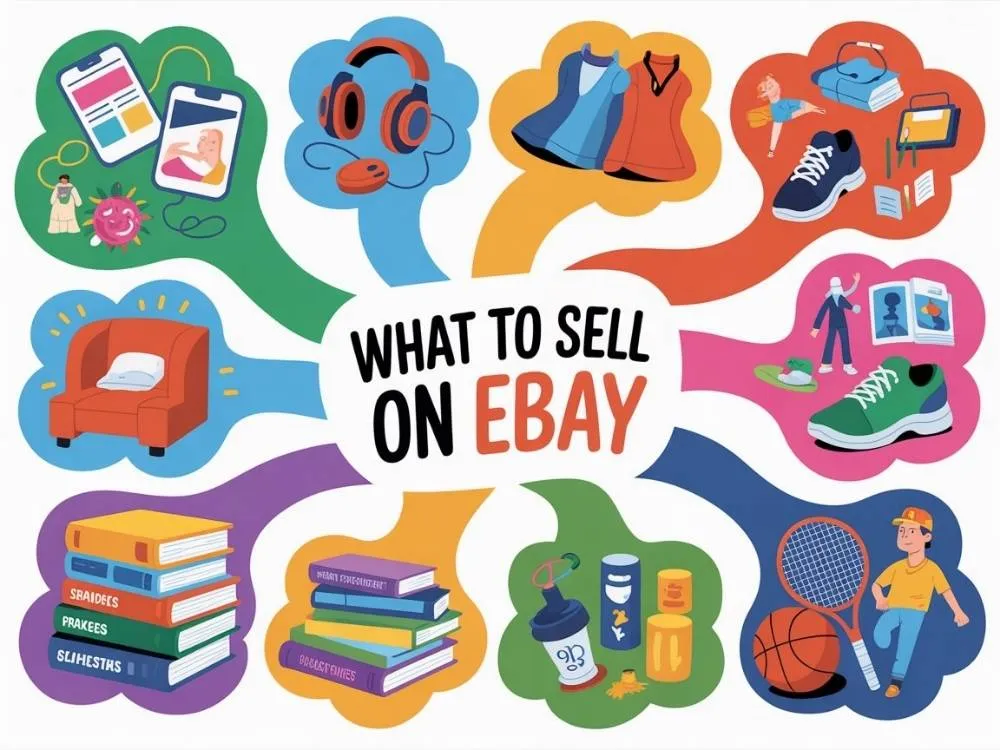
You can sell almost anything legal and allowed by eBay. The platform is flexible and works so well for beginners.
Some beginner-friendly categories include:
- Electronics and accessories
- Clothing and shoes
- Home goods and decor
- Collectibles and vintage items
- Books, movies, and games
- Sporting goods
- Craft supplies
- Handmade products
You can even sell digital products like designs and artwork. Just check eBay's restricted items list before posting. Some categories need approval first.
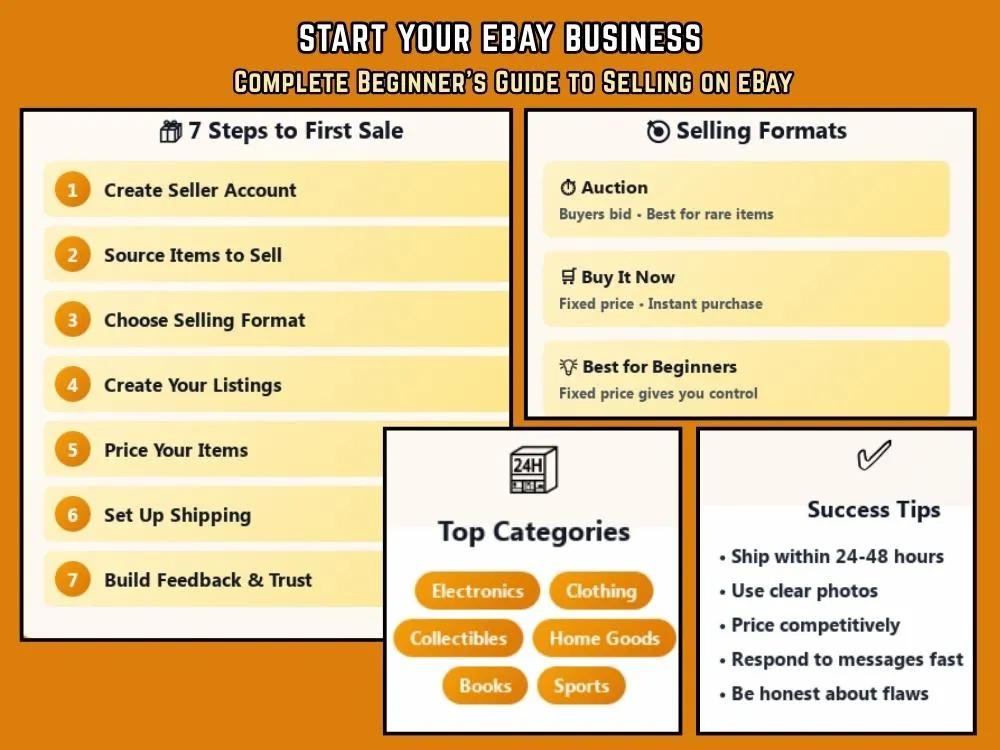
Step 1: Create Your eBay Seller Account
Creating your account is so simple. Go to eBay and sign up with your email.
Then you'll need to:
- Add your contact details
- Connect your bank account for payouts
- Verify your identity
You're ready to list your first item once that's done. One thing that actually matters early on is filling out your profile completely.
Add a clear username and a short bio if you want. It sounds small, but buyers feel better purchasing from someone who looks real, even without any sales history yet.
Step 2: Source Items to Sell
A) Selling Personal Items
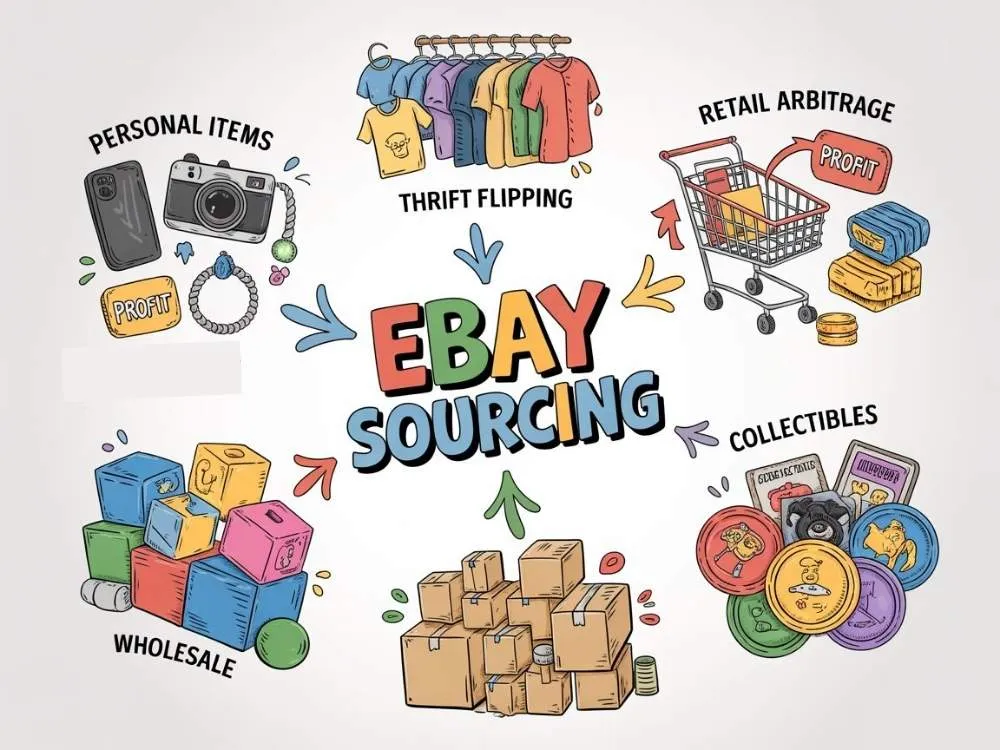
This is where you start easy. You can sell any personal stuff when you look around your home. This includes old phones, kitchen tools, books, unused clothes, etc.
This helps you learn:
- How listings work
- How shipping feels
- How buyers behave
Plus, making your first sale with something you already own just hits different.
B) Thrift Flipping and Retail Arbitrage
Thrift flipping means buying cheap items from thrift stores and reselling them for more on eBay. Retail arbitrage is when you grab items on discount from retail stores and flip them online.
What to look for:
- Branded items
- Electronics
- Small appliances
- Shoes and sneakers
Always check sold listings on eBay before you buy anything. That shows you what items actually sell for, not just what people are asking.
C) Wholesale and Collectibles
Wholesale works better when you already understand the platform. Collectibles can be great if you know the niche. Knowledge matters here more than luck.
Examples include:
- Trading cards
- Vintage toys
- Comics
- Memorabilia
Step 3: Choose Your Selling Format
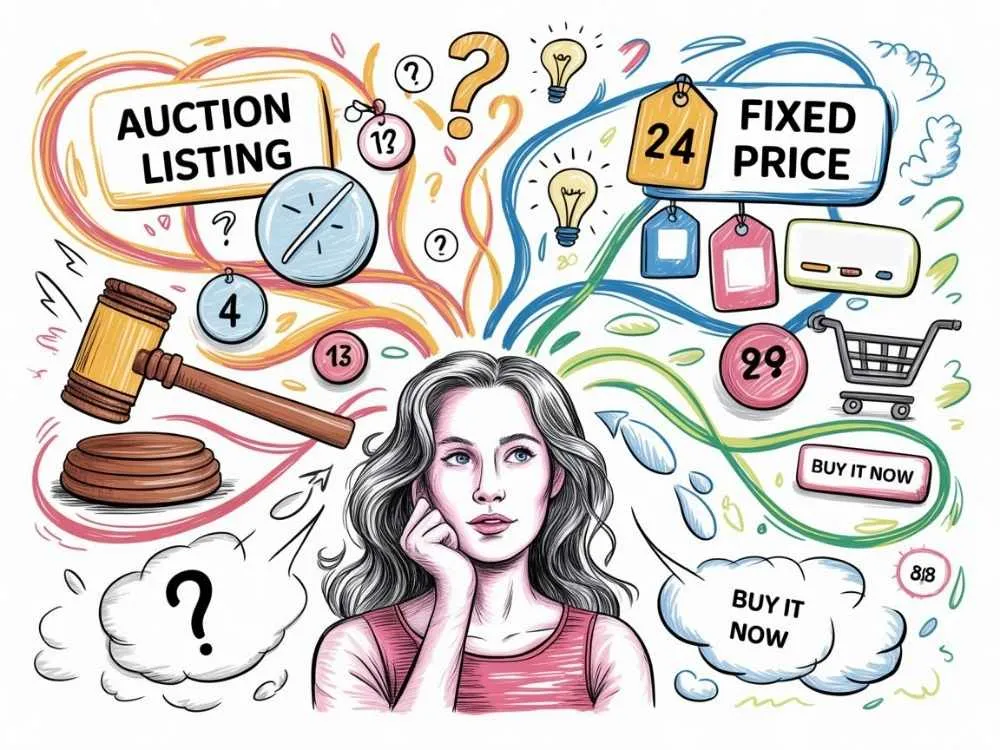
A) Auction listings
This lets buyers bid. They work best when:
- The item is rare or collectible
- Demand is high
- You're unsure what it's worth
Auctions can be exciting to watch. But there's a risk they end lower than you hoped.
B) Fixed Price (Buy It Now)
Fixed price lets buyers purchase immediately at the price you set. This is usually the better option for beginners. You control exactly what you make, and there are no surprises at the end. Most everyday items sell faster with Buy It Now anyway.
Step 4: Create Your eBay Listings
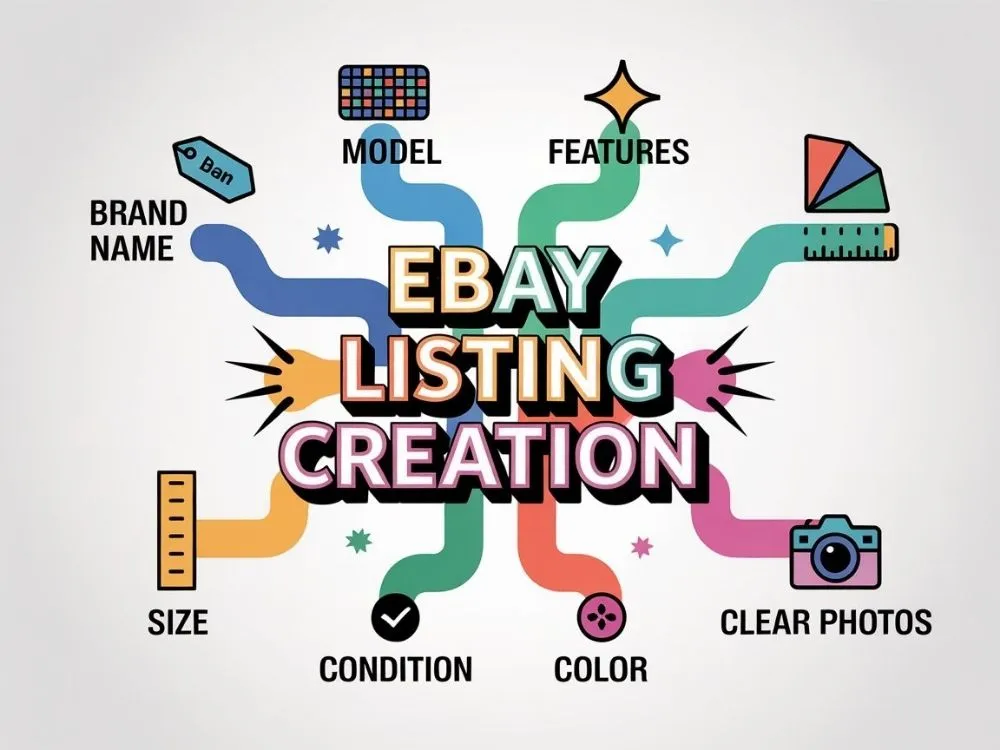
A) Writing Product Titles and Descriptions
Your title matters more than almost anything. Use:
- Brand name
- Model number
- Key features
- Size or color when relevant
Your description should answer common buyers' questions clearly. Focus on:
- Condition (new, like new, used, etc.)
- What's included in the box
- Any flaws or defects
Be honest about everything. Returns eat up your time and profit.
B) Photography Tips
Good photos sell faster. Use:
- Natural light
- Clean background
- Multiple angles
- Close-ups of any damage or wear
Blurry or dark photos make people scroll past. Clear ones build trust instantly.
Step 5: Price Your Items
Don’t guess your price. Search for your exact item and filter by “Sold items”. This shows what buyers actually paid for the products.
A simple beginner rule:
- Price slightly lower than similar listings if you are new
- Increase pricing once you build some feedback
Those first few sales matter more for building credibility than maximizing profit.
Step 6: Set Up Shipping
eBay lets you print shipping labels directly from your seller dashboard. This makes things way easier to perform shipping.
You can:
- Offer free shipping (and build it into your price)
- Charge a flat rate
- Use calculated shipping based on the buyer's location
Start simple and always pack items securely. A damaged delivery can tank your ratings fast, even if the shipping carrier messed up.
Step 7: Manage Your eBay Store and Build Feedback
Feedback actually matters a lot on eBay. To build it faster:
- Ship within 24 to 48 hours
- Upload tracking right away
- Answer messages quickly and politely
- Maintain customer relationships (CRM)
After delivery, you can send a short thank-you message. Many buyers leave feedback when you ask nicely. Your reputation directly affects your sales.
eBay vs Other Reselling Platforms
Here is a quick comparison to help you decide where eBay fits for you.
| Platform | Fees | Audience | Best Categories | Shipping | Global Reach |
|---|---|---|---|---|---|
| eBay | Varies by category (typically 13.6%) | General buyers | Almost everything | Seller chooses | Yes |
| Poshmark | 20% or $2.95 flat | Fashion focused | Clothing, accessories | Platform labels | Limited |
| Mercari | 10% | Budget buyers | Everyday items | Platform labels | Mostly US |
| Depop | 0% (US & UK sellers), 10% outside US & UK | Younger audience | Streetwear, vintage | Seller labels | Limited |
| Facebook Marketplace | Usually 0% local, 10% shipped | Local buyers | Furniture, bulky items | Often local pickup | No |
If you want the widest reach and flexibility, eBay still wins for beginners.
Common eBay Selling Mistakes to Avoid
Many new sellers struggle for the same reasons. Watch out for these mistakes:
- Not checking sold prices before listing.
- Using poor or blurry photos.
- Writing vague titles without key details.
- Ignoring buyer messages or replying too late.
- Overpricing items because of emotional attachment.
- Shipping late without communication.
- Copying other sellers' photos instead of taking your own.
- Not describing flaws or damage honestly.
- Listing items in the wrong category.
- Skipping measurements for clothing and shoes.
- Using stock photos when selling used items.
Found a product photo online? Use our free reverse image search tool to see what similar items are selling for on different platforms. It saves you from guessing.
The biggest mistake though is giving up after a week or two. Most people need at least a month to figure out what actually sells and how the platform works.
Wrapping Up
Selling on eBay is simple once you get started. List what you prefer and ship it fast to acquire customers' goodwill and build from there. The people making real money on eBay aren't doing anything magical. They just kept going when most others quit. You can do the same.
FAQs
Q1: How long does it take to make my first sale on eBay?
It actually depends on what you sell and how you price the product. Some items sell in a day or two. Some might take a couple of weeks. Consider adding better photos and setting competitive pricing to sell more quickly.
Q2: Is eBay still worth it today?
Yes. eBay still has millions of buyers every day. The fees are higher than some platforms, but you get way more reach and can sell pretty much anything.
Q3: How do I handle returns?
You set your own return policy when listing. Generally, sellers offer 30-day returns to build trust. If someone wants to return something, eBay walks you through the process and protects you from scams.
Explore Related Posts
https://smarttoolsai.com/post/how-to-start-an-etsy-shop
https://smarttoolsai.com/post/how-to-start-a-print-on-demand-business