How to Start Dropshipping: The Complete & Realistic Guide for Beginners
.webp)
Want to start dropshipping but not sure where to begin? The internet makes it sound either so easy or like a total scam. The reality sits somewhere in the middle. You can start an online store without buying inventory upfront.
That part is real. But those screenshots of people making $10,000 in their first month? Usually misleading. Dropshipping is a real business model. It just requires actual work, some starting investment, and realistic expectations.
TBH, you're not gonna get rich quickly, but you can build something legitimate. This guide shows the complete process of starting your first dropshipping store. No hype, just what you need to know.
Key Takeaways
- A complete realistic guide to start your dropshipping business from scratch.
- Know the actual startup costs and time it takes to see real profit.
- Learn how to choose products, suppliers, and the right platform for your budget.
- Understand pricing strategies and marketing methods that bring actual sales.
- Avoid common mistakes that make new dropshippers quit within months.
The Reality of Dropshipping: What You Need to Know First
What Is Dropshipping?
Dropshipping is a type of business where you sell other people's products without holding your own inventory. Simply, customers order from your store and you purchase the item from a third-party supplier who ships it directly to the customer. You never touch the product. Your job is just running the store in between.
Let’s start with a hard truth. Many dropshipping stores fail within the first year. The reasons for this failure are many such as poor product selection, underestimating marketing costs, choosing unreliable suppliers, and expecting quick profits.
This doesn’t mean dropshipping won’t work. It means most people are heading towards unrealistic expectations. This is a real business that takes time and effort to grow.
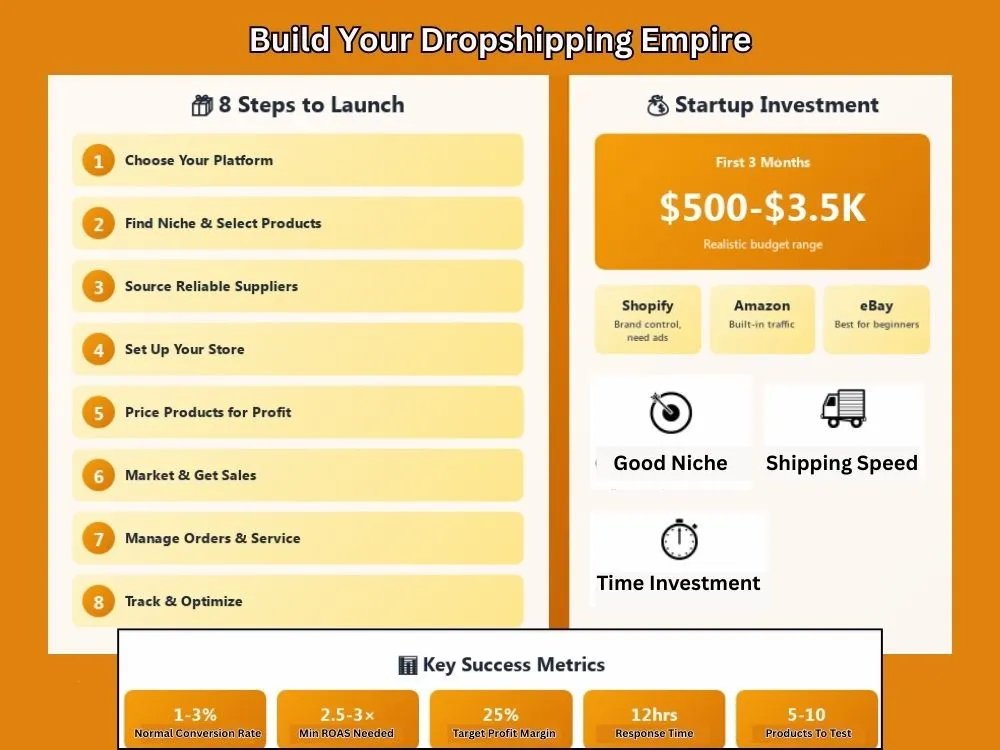
Real Dropshipping Startup Costs (First 3 Months)
| Expense Category | Cost Range | Notes |
|---|---|---|
| Platform Fee (Shopify / eBay / Amazon) | $0-105/month | Shopify is subscription-based eBay or Amazon charge per sale |
| Domain Name | $10-20/year | Optional for eBay/Amazon |
| Dropshipping Tools | $0-50/month | DSers, AutoDS, etc. |
| Product Samples | $50-200 | Essential for quality testing |
| Marketing Budget | $300-1,000/month | Important for Shopify |
| Total (First 3 Months) | $500-3,500 | Depends on platform & strategy |
Common Myths vs. Reality
- People say that you don't need a single dollar to start. But the reality is you have to invest at least $500 to do it properly.
- The myth is that dropshipping is a passive income that won't take up your energy. In reality, you have to handle customer service, order issues, refunds, and related tasks daily.
- Some say you’ll be profitable and rich in weeks. The reality is to expect at least 6 months before getting consistent profits.
Who Dropshipping Is (and Isn’t) For
Good fit if you:
- Can invest 20+ hours per week.
- Have a learning mindset.
- Can handle customer complaints.
- Are patient and consistent.
- Have a minimum budget to start.
Not a good fit if you:
- Expect overnight success.
- Have no marketing budget.
- Dislike customer service.
- Want truly hands-off income.
- Need profits immediately.
Step 1: Choose Your Dropshipping Platform
This step is prominent because the right platform helps you succeed. You can start with:
A) Shopify
Best for: Building a long-term branded business.
Pros:
- Full branding control.
- Professional store appearance.
- Unlimited suppliers.
- You own customer data and an email list.
Cons:
- Monthly fees ($20+).
- No built-in traffic.
- You must handle all marketing yourself.
- Steeper learning curve.
Shopify is suitable if you want to build a real brand plus can invest in ads or content marketing. Go through this guide to know how to start a Shopify store.
B) Amazon
Best for: Leveraging massive existing traffic.
Pros:
- Millions of ready-to-buy shoppers daily.
- High buyer trust and credibility.
- Amazon handles payment processing.
- No need to drive external traffic.
Cons:
- Strict dropshipping policies.
- 8-15% referral fees depending on category.
- Almost zero branding opportunities.
- Amazon owns the customer relationship.
- Can suspend your account without warning.
Amazon works if you want immediate traffic and can follow their strict rules precisely.
C) eBay
Best for: Beginners testing dropshipping.
Pros:
- No monthly subscription fee.
- Built-in buyer traffic.
- Easier to get started than Amazon.
- More relaxed policies.
Cons:
- 12.9% final value fees (13.25% for most categories).
- Very limited branding.
- Lower buyer trust compared to Amazon.
- Competitive pricing pressure.
eBay is ideal if you’re starting with a small budget.
Quick Recommendation:
- $500-1,000 budget - eBay
- $1,500+ with marketing skills - Shopify
- Want traffic without ads - Amazon
Many successful dropshippers eventually use multiple platforms. You can start with one and expand later.
Step 2: Find Your Niche and Select Products
Avoid selling everything to everyone. Pick one suitable niche. This makes marketing easier and helps you build expertise.

What Makes a Good Dropshipping Niche?
- A passionate audience willing to spend.
- Products that are rare to find in local stores.
- Good 30-50% profit margin potential after all costs.
- Lightweight and non-fragile that keeps shipping costs low.
- Solves a specific problem or fills a desire.
- $20-$200 price range. A sweet spot is $30-$100.
- Not heavily saturated or dominated by major brands.
Niches to Avoid:
- Electronic items that have high return rates or warranty issues.
- Trademarked products like Nike, Apple, etc.
- Extremely cheap items under $10. These are hard to profit from after ads.
- Highly regulated products like supplements or medical devices.
Product Selection Checklist
- Minimum 2-3× markup possible.
- Low return risk.
- No trademark or brand restrictions.
- Supplier has 4+ star ratings with real reviews.
- Shipping time under 15 days, ideally 7-10 days.
- Multiple suppliers available as backup options.
- Product has proven demand (check sales data).
Product Research Methods
Find winning products using:
- AliExpress: Check "Hot Selling" and sort by orders. You should look out for products that've completed 1,000+ orders with good reviews.
- Amazon Best Sellers: You should explore different product categories until you discover items that have received more than 500 customer reviews but sold by smaller brands, not Amazon itself.
- Google Trends: Verify that search interest remains steady or growing upward without a decrease.
- TikTok & Instagram: Search hashtags in your niche. Look for viral products with sufficient engagement.
- Competitor analysis: The Shopify detector tools enable you to identify successful dropshipping businesses that operate through that platform. You can analyze their product offerings and observe how they showcase items.
- Facebook Ad Library: find information about your competitors while observing which products they currently promote through ad campaigns.
Step 3: Source Reliable Suppliers
Your supplier can support or completely destroy your business. One bad supplier leads to angry customers, returns, chargebacks, terrible reviews, etc. So choose carefully.
Popular Supplier Options
1. AliExpress
- Huge product selection.
- Very low prices.
- The major downside is 15-30 day slow shipping to the US/EU.
Best for: Testing products with small budgets.
2. CJdropshipping
- Free sourcing service.
- Faster shipping options (7-15 days).
- Better quality control than AliExpress.
Best for: Serious Shopify stores.
3. Spocket
- US and EU suppliers.
- 2-5 day shipping in many cases.
- Higher product costs.
Best for: Premium positioning and fast delivery.
4. SaleHoo
- Verified supplier directory (paid membership).
- Pre-vetted suppliers.
- Mostly US/UK based.
Best for: Finding reliable long-term partners.
5. Direct from manufacturers (Alibaba)
- Best prices when ordering in bulk.
- Requires good negotiation skills.
- Usually need a minimum order (50-100+ units).
Best for: Scaling once you know what sells.
Always Order Samples
This is non-negotiable. Before listing any product, test:
- Product quality, whether it feels cheap or premium.
- Packaging, whether damaged or looking good.
- Shipping time like how long will it take?
- Accuracy like receiving the exact one you ordered.
Supplier Red Flags
Walk away if a supplier:
- Refuses to send samples.
- Has extremely low prices (too good to be true usually is).
- Takes days to respond or gives vague answers.
- Has less than 95% positive rating or very few orders.
- Doesn't offer tracking numbers.
- Won't show you actual product photos.
- Requires large upfront payments.
Shipping Expectations Today
Customers won't wait 30 days anymore. Here's what's acceptable nowadays:
- 7-10 days is Good.
- 10-15 days is acceptable.
- 15-20 days is risky (expect complaints).
- 20+ days is where you'll lose customers.
If you're using AliExpress suppliers, consider offering ePacket shipping or find suppliers with US/EU warehouses. Faster shipping is worth paying extra for.
Step 4: Set Up Your Store
Shopify Setup
- Use clean free themes (Dawn, Sense).
- Buy a custom domain.
- Install DSers or Spocket for product importing.
- Create trust pages (About, Contact, Shipping Policy, Refund Policy, Privacy Policy).
- Optimize product pages.
- Set up payments.
- Install a review app (Loox or Judge.me) where social proof is critical.
Amazon Setup
- Create a seller account.
- Verify identity (have ID and bank documents ready).
- Use FBM (Fulfilled by Merchant), NOT FBA.
- Follow dropshipping policies strictly. You must be the seller of record.
- Critical: Never ship from retail stores (Walmart, Target) - instant ban.
- Your business name must appear on all packing slips.
eBay Setup
- Create a seller account and verify payment method.
- Build early feedback with 5-10 small listings first.
- Write clear listings.
- Maintain good metrics under 2% defect rate.
- Respond to messages within 24 hours because eBay tracks this.
Step 5: Price Your Products for Profit

Basic Pricing Formula
Use one of these approaches:
- (Supplier Cost × 2.5) + Shipping if charging separate shipping.
- (Supplier Cost × 3) if offering "free shipping".
Free shipping usually converts better, even at higher prices.
Example Profit Breakdown
| Platform | Item Cost | Sell Price | Fees | Ad Cost | Net Profit | Margin |
|---|---|---|---|---|---|---|
| Shopify | $10 | $30 | $1 | $11.50* | $7.50 | 25% |
| Amazon | $10 | $30 | $4.50 | $0 | $15.50 | 52% |
| eBay | $10 | $30 | $3.60 | $0 | $16.40 | 55% |
* Assumes $15-20 cost per sale in Facebook/Google ads
The Trade-Off
Shopify gives you control and customer data, but you pay for every sale through advertising. Amazon and eBay give traffic but with more fees and own the customer relationship.
Pricing Mistakes to Avoid
- Forgetting ad costs in your profit calculation. It's the biggest Shopify mistake.
- Pricing too low to compete. You'll just lose money faster.
- Not accounting for refunds and returns that budget 5-10% of revenue.
- Ignoring payment processing fees, somewhere around 2.9% + $0.30 per transaction.
Test pricing. Start higher than you think. You can always lower prices, but raising them later damages conversions.
Step 6: Market Your Store and Get Sales
Shopify Marketing
- Facebook & Instagram ads.
- TikTok organic content like product demos, not ads.
- Email marketing where the abandoned cart recovery alone recovers 10-15% of sales.
- Pinterest for visual niches.
- Google Shopping Ads often convert better.
Amazon Marketing
- Amazon PPC.
- Listing optimization by using all keyword slots and competitive pricing.
- Get initial reviews fast. Use Amazon Vine or the Request a Review button.
- Win the Buy Box through competitive pricing and good metrics.
eBay Marketing
- Promoted Listings (start with 5-8% ad rate).
- Strong SEO titles (front-load keywords: "Wireless Bluetooth Earbuds Noise Cancelling...").
- Maintain excellent seller metrics (fast shipping = higher rankings).
- Use "watchers" - send offers to people watching your items (converts 15-25%).
Critical Rule:
Start Small and track Everything. Test one marketing channel at a time. Track ad spend vs. revenue daily. Most beginners quit after 3-5 days. Give each test at least 2-3 weeks and $150-300 in ad spend before deciding if it works.
Step 7: Manage Orders and Customer Service
Dropshipping is heavy on the customer service side. Expect to spend 30-40% of your time handling customers.

Order Flow:
- The customer places an order in your store.
- You purchase from the supplier and forward shipping details.
- Supplier ships directly to the customer.
- You send the tracking number to the customer.
- Follow up on the delivery.
Automate with tools - DSers and AutoDS help auto-fulfill orders, saving hours daily.
Common Customer Issues
- Long shipping times: Set expectations upfront (10-15 days), send tracking immediately.
- Wrong/damaged items: Contact the supplier first. Offer a replacement or a refund quickly.
- Lost packages: Check tracking and contact the supplier. Refund if truly lost.
- Where's my order? This will be 50%+ of your messages. Always respond within 12 hours.
Customer Service Rules
- Respond fast within 24 hours (ideally under 12).
- Be honest about shipping delays.
- Offer solutions, not excuses.
- Refund quickly when you're wrong (saves your reputation).
- Use templates. Save responses for common questions to reply faster.
Platform-Specific Notes
- Shopify: You handle everything. Consider hiring VA once you hit 20+ orders a day.
- Amazon: Must respond within 24 hours or risk account health issues.
- eBay: Response time tracked. Under 12 hours keeps you in good standing.
Step 8: Track Performance and Optimize
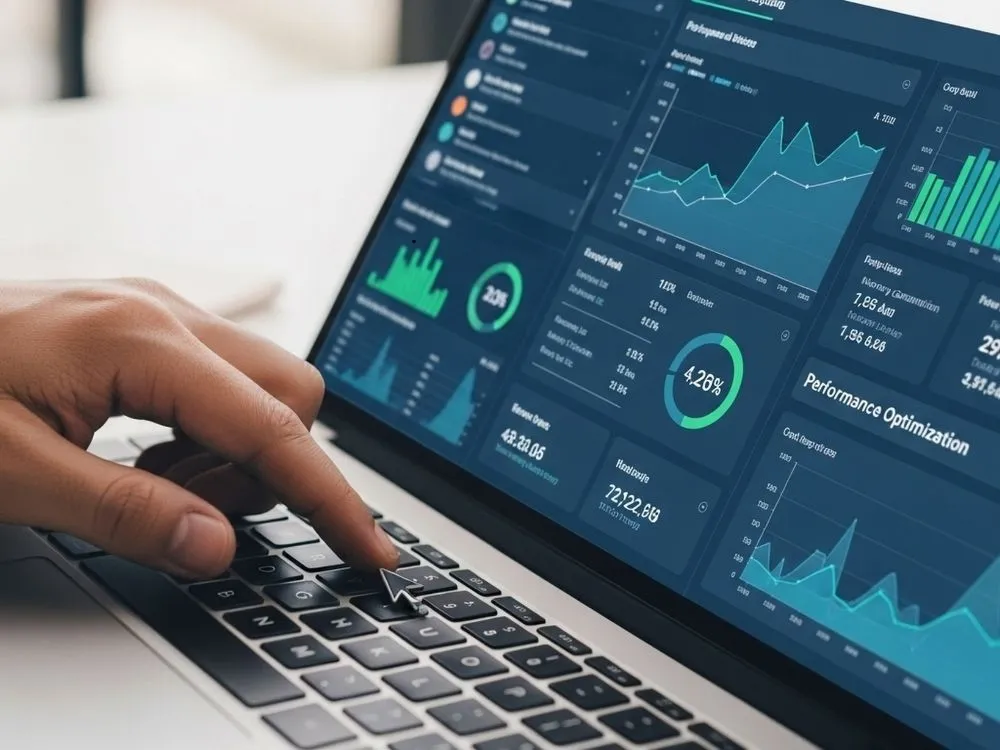
Key metrics to monitor weekly:
- Conversion rate where 1-3% is normal.
- Track AOV (Average Order Value) and see if upsells work.
- Calculate profit margins after ALL costs like product, shipping, ads, fees, and refunds.
- Check ROAS (Return on Ad Spend) which needs 2.5-3× minimum to be profitable on paid ads.
- Check customer acquisition cost (CAC) and find out how much you spend to get one customer.
- Optimize products that work. Cut what doesn’t.
Simple Optimization Process
- Run products for 2-3 weeks minimum.
- Double down on what's working.
- Cut products with high refund rates or low margins.
- Test new products to replace losers.
- A/B test product photos and descriptions. Small changes can double conversions.
Tools to Use
- Shopify Analytics (built-in).
- Google Analytics (free, deeper insights).
- Facebook Ads Manager metrics.
- Simple profit spreadsheet (track daily sales vs. costs).
The winners constantly test and optimize. The losers set it and forget it.
Common Dropshipping Mistakes to Avoid
- Poor product research: Don't sell random trending items without studying the product. Check profit margins or competition and test before scaling.
- Bad suppliers: You shouldn't choose the bad suppliers who offer no product samples. One bad supplier ruins your business reputation fast.
- Weak customer service: When you ignore messages or are defensive with customer complaints, it may impact. Fast, honest responses save your business.
- Ignoring platform rules: Amazon and eBay will ban you without prior warning. Read and follow the platform policies strictly.
- No ad budget: Don't launch a Shopify store with $0 for marketing. Better you invest a fair amount to test ads properly.
- Legal oversights: Don't fail to register your business or ignore taxes. Acquire a business license and track income for taxes.
- Giving up too early: Most people quit after their first failed product. Don't lose hope and test 5-10 products to find your winning stuff.
Wrapping Up
Dropshipping is an online business model where you can earn from the comfort of your home. However, it doesn't mean passive income or less effort. You have to invest your time and energy. Some people hide the real story and tell you that you can make quick money. But in reality, it doesn't work that way. Start smart, stay realistic, and build step by step.
FAQs
Q1: How long before I make my first sale?
eBay or Amazon, maybe a few days. Shopify takes longer, usually 2-4 weeks. You need to run ads and test products. First sale doesn't mean profit yet. That takes months of tweaking.
Q2: Can I do this with a full-time job?
Yes, but expect long nights. You need 15-20 hours a week minimum. Check customer messages during lunch breaks. It works for the first few months. But you'll eventually need to choose one or hire help.
Explore Related Posts
https://smarttoolsai.com/post/how-to-start-a-blog