How to Start a Print on Demand Business from Scratch
.webp)
Want to sell custom products online but don't have money for inventory? Print on demand might be your answer. It lets you design t-shirts, mugs, phone cases, or anything creative without buying them first.
Someone buys your design either directly on the POD platform or from your own store. The POD platform prints it on the product and ships it straight to the customer. You never touch the product. Sounds perfect, right? Well, you still need to create designs people actually want and market your work.
But compared to traditional retail, the barrier to entry is way lower. No garage full of unsold inventory. No shipping headaches. Just your designs and an internet connection.
Key Takeaways
- A complete realistic guide to start your print on demand business from scratch.
- Know the actual startup costs and time it takes to see your first sales.
- Learn how to choose products, niches, and the right platform for your goals.
- Understand pricing strategies and marketing methods that actually work.
- Avoid common mistakes that make new POD sellers quit within months.
What is Print on Demand? (How It Works)
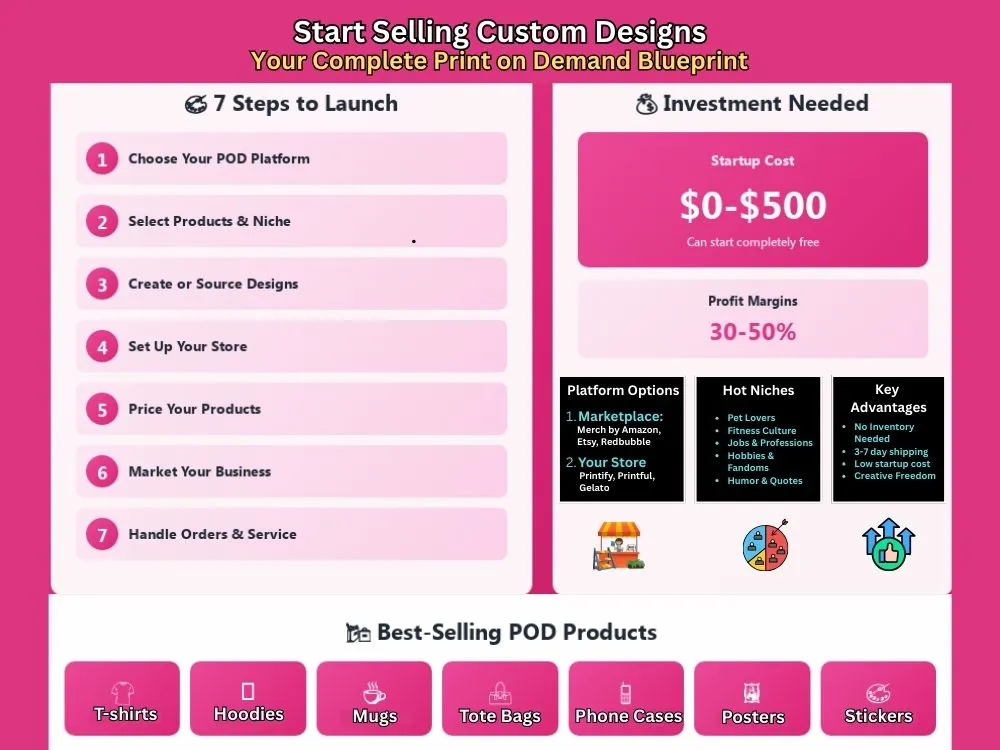
Print on demand is a business model where products are only made after someone actually buys them. There are two main ways to sell with POD:
Option 1: Sell directly on POD marketplaces
You don't need to own an online store here. Just upload your designs to any POD platforms like Redbubble or Merch by Amazon. Customers browse and buy directly on their site. You simply earn a commission on each sale.
Option 2: Use your own store
Here, you have to connect POD services like Printify or Printful to your own store (Shopify, Etsy, WooCommerce). Customers who visit your site buy from your store. But the POD platform handles printing and shipping.
Here's how the process works:
- You first create a design and upload it to a POD platform.
- Set your selling price (the platform shows their base cost, you add your profit on top).
- Someone places an order because they like your design.
- The POD platform prints your design on the product.
- They pack it up and ship it straight to your customer.
- You get paid your profit margin.
No inventory management. No upfront costs. The platform handles production and shipping. You just focus on making eye-catching designs and marketing.
POD vs Dropshipping: Key Differences
Print on demand and dropshipping might look similar to you. However, they work differently in practice. The biggest difference is customization.
With POD, your designs are the product. With dropshipping, you usually sell generic products that many other stores also sell.
POD vs Dropshipping Comparison
| Factor | Dropshipping | Print on Demand |
|---|---|---|
| Product Source | Existing products from suppliers | Custom designs on blank products |
| Creativity Required | Low (product selection) | High (design creation) |
| Startup Cost | $500-3,000 | $0-500 (can start free) |
| Profit Margins | 20-30% | 30-50% |
| Shipping Time | 15-30 days (Often from China) | 3-7 days (US-based POD) |
| Quality Control | Variable (depends on supplier) | Consistent (POD standards) |
| Competition | Very high | High, but you stand out with unique designs |
| Best For | Product curators, resellers | Designers, artists, creatives |
POD is usually a better fit if you enjoy creativity and building a brand.
Step 1: Choose Your Print on Demand Platform
A) Marketplace Platforms (Built-in Traffic)
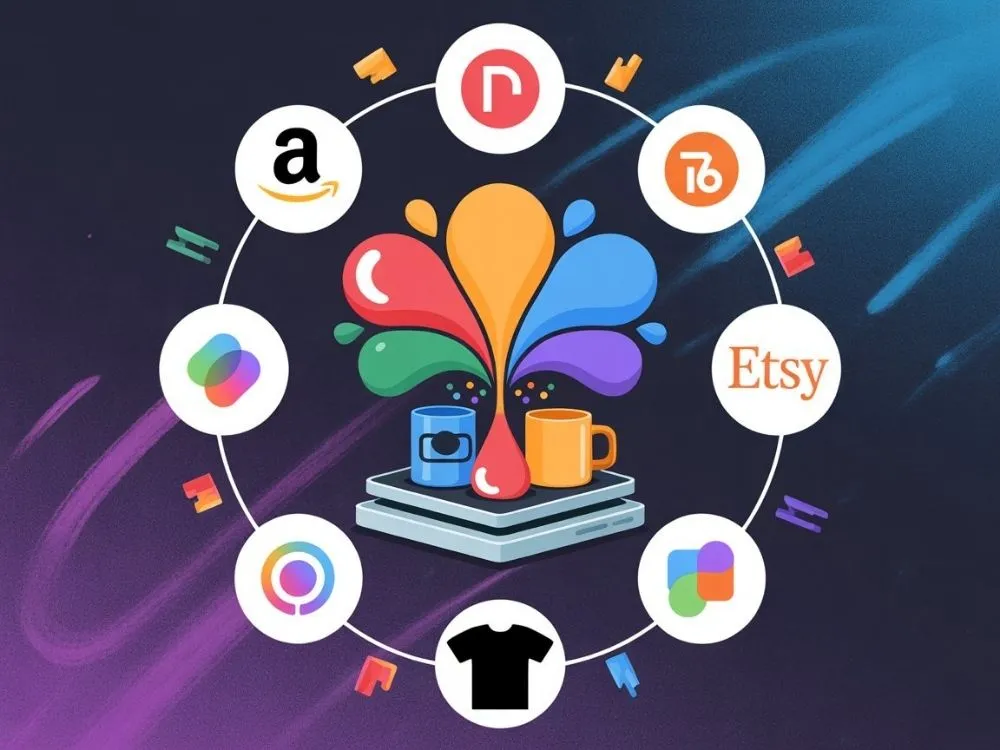
These platforms already have people shopping on them every day. You just upload the designs where they handle the rest. Popular ones are Redbubble, Merch by Amazon, Etsy, and TeePublic.
Pros:
- People are already there shopping.
- Super easy to set up.
- You don't need to run ads right away.
Cons:
- Tons of competition.
- They take a cut of your sales.
- Hard to build your own brand.
Good for testing designs without dealing with your own website.
B) Integration Platforms (Connect to Your Store)
These let you connect POD services to your own online store. You'd use Printify, Printful, Gelato, or SPOD and connect them to Shopify or WooCommerce.
Pros:
- You control everything about your brand.
- Better for growing long-term.
- You keep customer emails and data.
Cons:
- You have to get people to your store yourself.
- Costs money monthly for Shopify.
- Takes more work to get started.
This option works best if you want to build a brand.
C) Which One Should You Pick?
Want to test things fast without much hassle? Start with marketplaces. Want to build something that's actually yours? Go with your own Shopify store plus Printify or Printful. A lot of people end up doing both.
Step 2: Select Your Products and Niche
Trying to sell every product usually leads to slow progress. So focus only on a clear niche instead.
A) Best-Selling POD Products
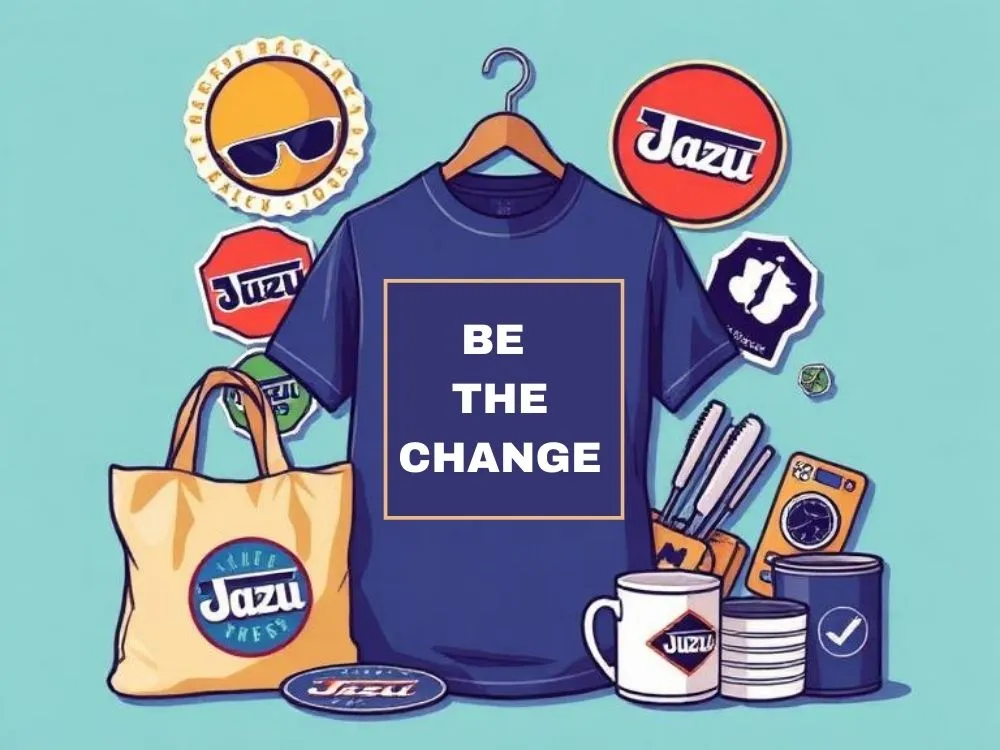
Some products consistently sell well:
- T-shirts and hoodies
- Mugs and tumblers
- Tote bags
- Phone cases
- Posters and wall art
- Stickers
Start with one or two products and expand later.
B) Finding Your Profitable Niche
Good niches tap into people's identity or passions. Think about groups who love showing off what they care about.
Examples include:
- Pet lovers
- Fitness and gym culture
- Jobs and professions
- Hobbies and fandoms
- Humor and quotes
The best niches have people who actually want to express themselves through what they wear or use. If they're proud of being part of that group, they'll buy designs that show it.
Step 3: Create or Source Your Designs
Your designs matter more than anything else in POD. No traffic or platform will save bad designs.
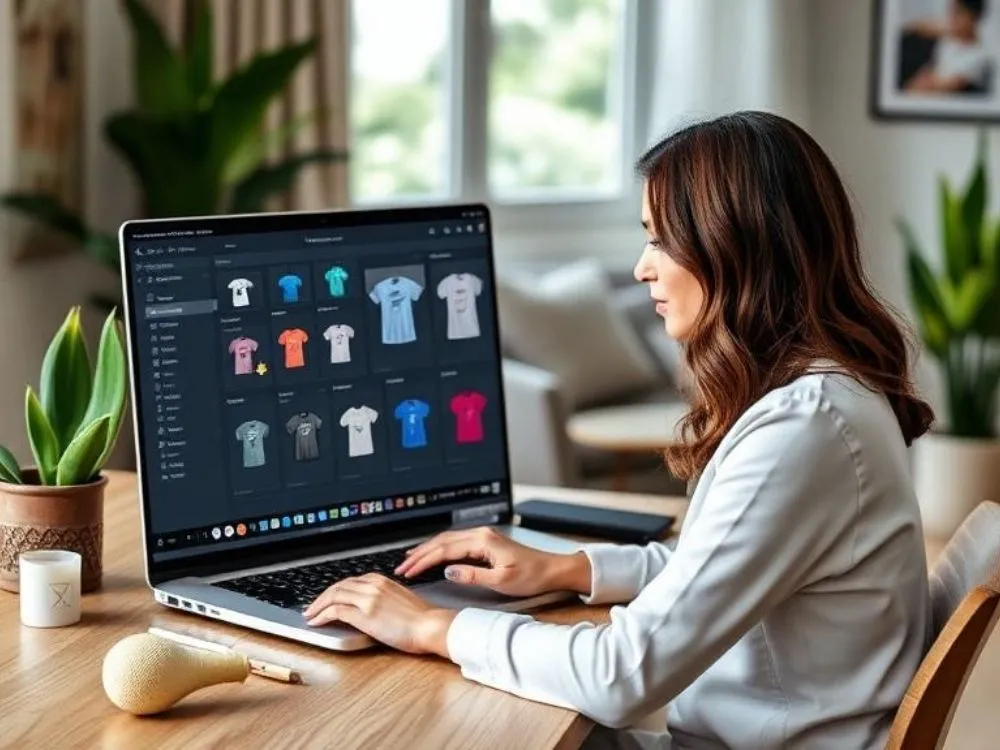
A) Design It Yourself
You can use tools like Canva, Photoshop, Illustrator, or something similar. You don't need to be a pro. Actually, simple designs often sell better than complicated ones.
Text-based designs with good fonts and colors work surprisingly well. Think motivational quotes or niche-specific phrases.
B) Hire a Designer
You can hire designers from Fiverr or Upwork for pretty cheap. Lots of beginners go this route. Just make sure you get full commercial rights to the design. You need to own it completely so you can sell it without issues.
C) Design Tips and Copyright Rules
- Simple and readable beats fancy and complicated.
- Test how the text looks at the actual product size, not just on your screen.
- Never use copyrighted characters, logos, or brand names.
- Don't steal designs from other sellers.
- Avoid trademarked phrases even common ones like "Just Do It".
- Use reverse image search to check if your design is too similar to existing ones.
Copyright violations can get your account banned fast. POD platforms don't mess around with this stuff.
Step 4: Set Up Your Store
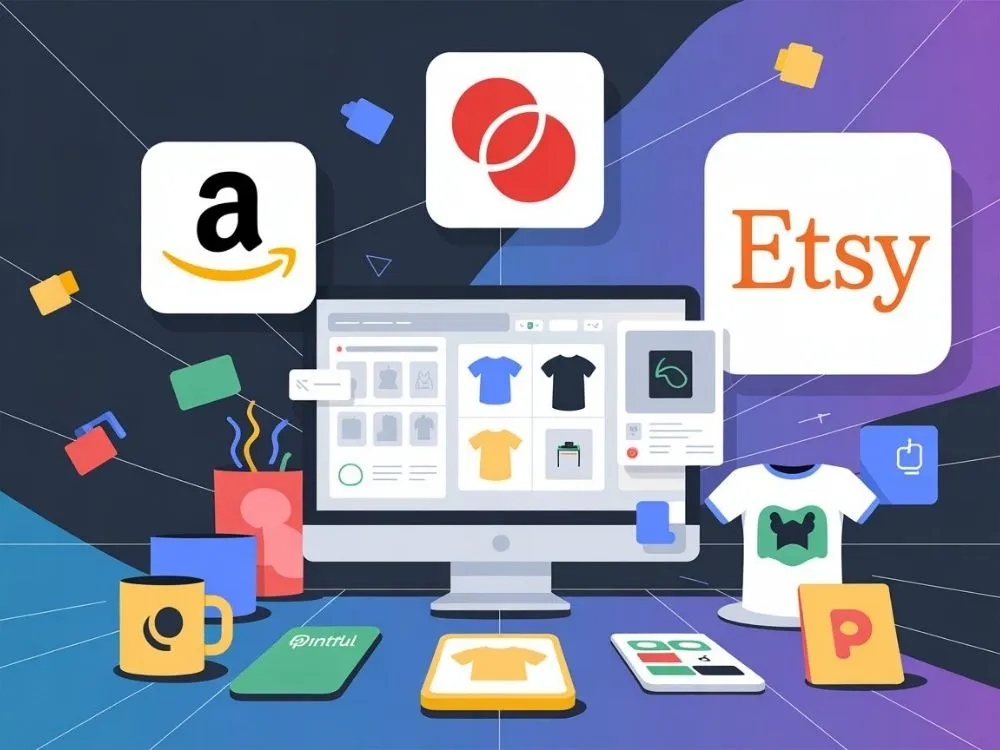
A) If you're using your own store (Shopify):
Pick a simple theme without overcomplicating. Connect your POD app (Printify or Printful) and import your products. You need these pages:
- About (tell your brand story)
- Contact
- Shipping policy
- Return/refund policy
- Privacy policy
Shopify has templates for the legal pages. Don't skip them.
B) If you're using a marketplace (Amazon or Etsy):
No need to build a full store here. Just focus on your product listings. What matters:
- Strong titles with keywords people actually search.
- Clear descriptions that explain what makes your design cool.
- High-quality mockup images (show the product on a model or in use, not just flat).
Your main image is everything. Make it look professional. Blurry or cheap-looking mockups damage sales. Before uploading, compress your images to reduce file size, which is better for loading speed on marketplaces.
Step 5: Price Your Products
This is an interesting yet careful step. You have to cover your costs and leave room for profit when pricing the product. A simple pricing approach:
Product cost + printing + shipping + platform fees + your profit = selling price
Here's What That Looks Like:
| Item | Base Cost | Selling Price | Your Profit | Profit Margin |
| T-shirt | $12 | $25 | $13 | 52% |
| Hoodie | $25 | $50 | $25 | 50% |
| Mug | $8 | $18 | $10 | 56% |
| Phone Case | $10 | $22 | $12 | 55% |
| Tote Bag | $9 | $20 | $11 | 55% |
| Poster (18x24) | $15 | $35 | $20 | 57% |
| Sticker Pack | $3 | $8 | $5 | 63% |
These are realistic numbers based on common POD platforms. Your actual costs will vary depending on which platform you use and the shipping location.
Don't Compete on Price
Seriously, don't try to be the cheapest. There's always someone willing to go lower. People pay more for designs they actually like and brands that feel legit. Focus on making cool stuff.
Step 6: Market Your POD Business
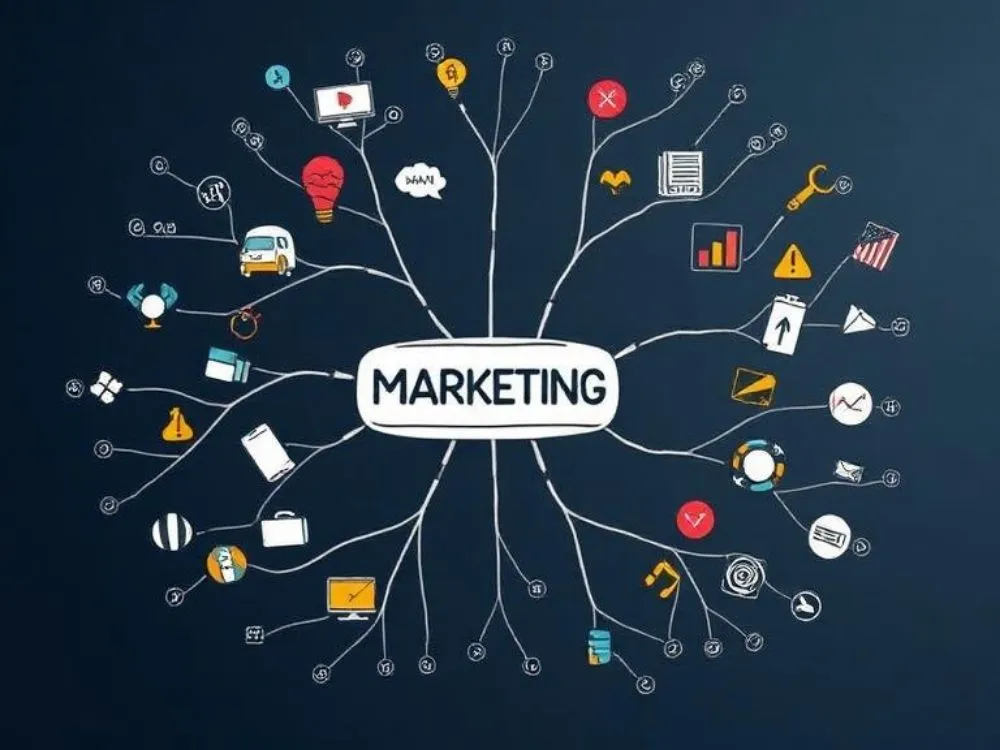
How you market depends on where you're selling.
A) For marketplaces:
The platform brings traffic, but you still need to stand out.
- Use keywords in your titles that people actually search for.
- Fill out all your tags (don't leave any blank).
- Upload multiple high-quality product photos.
- Keep adding new designs regularly.
B) For your own store:
You're responsible for getting people there. No built-in traffic.
- Social media like Instagram and TikTok work best for visual products.
- Short videos that show the product in real life, not just mockups.
- Pinterest is underrated for POD. People actually shop there.
- Email list to collect emails and send updates when you drop new designs.
- Paid ads where you should wait on this until you know what sells.
Step 7: Handle Orders and Customer Service
Most POD platforms handle production and shipping automatically. But you're still responsible for the customer experience.
Your job is to:
- Answer customer questions quickly within 24 hours if possible.
- Track orders and update customers when there are delays.
- Handle refunds or replacements when things go wrong.
- Respond to reviews, most importantly to negative ones.
Set Clear Expectations
POD products aren't Amazon Prime. They're made after someone orders, so shipping takes longer. Be upfront about this:
- Put estimated shipping times on your product pages.
- Send a confirmation email explaining the production time.
- Update customers if their order is delayed.
Most complaints happen when people expect fast shipping and don't get it.
Common POD Mistakes to Avoid
A lot of beginners quit after a month or two because they don't see instant sales. POD takes testing and patience.
Here are other mistakes that impact POD businesses:
- Copying trending designs: If it's already popular, 50 other sellers already did it. Add your own spin.
- Using copyrighted content: This will get you banned. Not worth the risk.
- Weak product descriptions: "Cool shirt" doesn't sell. Explain why someone would want it.
- Ignoring customer messages: Even on marketplaces, people expect responses within a day.
- Uploading 100 products day one: Start with 10-20 good designs. Test what sells, then add more.
The biggest mistake is giving up before you figure out what works. Your first designs probably won't be winners. That's normal.
Wrapping Up
Print on demand is a real way to start selling online without buying inventory. But it's not quick money or make you 5 or 6 figures in a couple of months as many online gurus say. You need designs people want and consistent marketing. Your first designs might flop. But that's completely normal. Start strong with one platform. Test your work and give it 3-6 months before deciding if it works.
FAQs
Q1: How much money do I need to start print on demand business?
It depends on your approach. Marketplaces like Redbubble or Merch by Amazon are free to start. You just upload designs. If you want your own Shopify store, expect $30-50/month for Shopify plus maybe $50-100 for your first designs if you're hiring someone. You can start for under $100 total.
Q2: What if my designs don't sell?
Most don't sell at first. That's part of the process. Test different styles and products. Look at what's selling in your niche and figure out why. POD is about testing and improving without getting it perfect the first time.
Q3: Is POD saturated? Is it too late to start?
People ask this about every online business. Yes, there's competition. But new designs and niches pop up constantly. Many niche communities always want new stuff. You're not competing with everyone, just in your specific niche.