
How to Start a Catering Business from Home
.webp)
Have you ever watched people go back for seconds at your dinner table and thought, maybe you are onto something here? A lot of successful catering businesses started exactly that way. Good food has a way of opening doors you never thought to knock on.
Starting a catering business from home is a lot more within reach than people expect. You don't need costly equipment or a professional cooking background to make it happen. You just need good food and some basic planning.
This guide will walk you through everything from starting this business to getting your first clients, with simple steps you can act on right away.
Key Takeaways
- Understand what a catering business actually involves and what type fits your situation best.
- Know the food laws and licenses you need before you take your first order.
- Learn how to build a simple menu, price your services right, and avoid leaving money on the table.
- Find out how to get your first clients without spending a dollar on ads.
- Avoid the common mistakes that stop most home catering businesses before they take off.
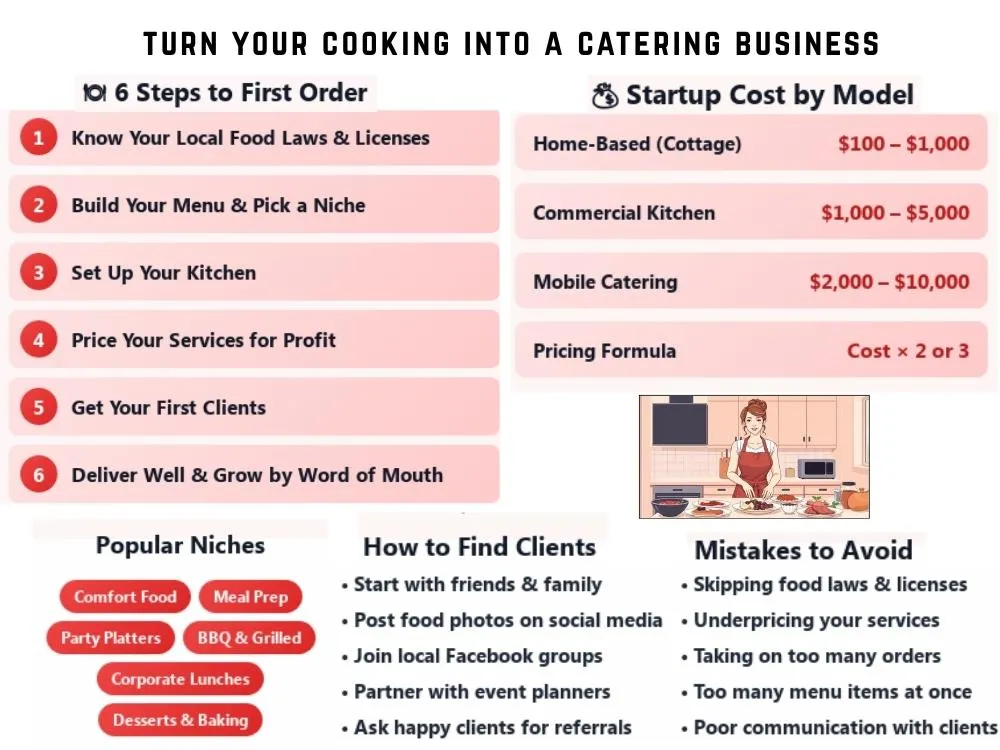
What is a Catering Business and What Does a Caterer Do?
This business is simply about cooking food and getting it to the people who need it. You ain't tied to one location like a restaurant. You go where the clients are.
Caterers typically handle:
- Cooking and preparing meals
- Packaging or plating the food
- Delivering it to the right place at the right time
- Serving food at the event when needed
Depending on the event, you might also handle setup and cleanup on top of everything else. Cooking is the primary part, while the job also takes planning and following through on what you promised.
Types of Catering Businesses
There are actually a few different ways to run a catering business. Some people go big with events while others keep it simple with small local orders. The best one is simply whatever you can realistically pull off.
Some common types include:
- Home-based catering where you handle small orders for people nearby
- Event catering for things like weddings, birthday parties, and work events
- Drop-off catering where you bring the food and head out, no serving needed
- Meal prep services where clients pay you to cook their meals every week
- Niche catering where you stick to one thing like vegan food, keto meals, or a specific cuisine
Starting from home? Drop-off catering or small event catering is where most people find it easiest to begin. Low pressure, good learning experience. Now let's walk through how to get this thing up and running.
Step 1: Understand Food Business Regulations and Licensing
Most people gloss over this part and regret it later. Don’t do that. Food businesses have rules for a reason. You need to know what is allowed in your area before selling anything.

A) Cottage Food Laws vs Commercial Kitchen Requirements
Cottage food laws let you prepare certain foods right from your home kitchen. But you can’t sell just anything under these laws.
Usually, you can sell:
- Baked goods
- Snacks
- Non-perishable items
Things get a bit more complicated with full meals that include meat or dairy. Many places simply don't allow that from a home kitchen. In that case, you may need:
- A commercial kitchen
- A shared kitchen space
- A commissary kitchen
Check your local laws before anything else. Doing this upfront keeps you out of trouble later.
B) Permits, Licenses, and Insurance
You will likely need a few basic things before you take your first clients:
- A business registration
- A food handler or food safety certificate
- A health department permit
- Liability insurance
Don't overlook the insurance part. If something goes wrong with the food, you want to make sure you are covered.
Step 2: Develop Your Menu and Catering Niche
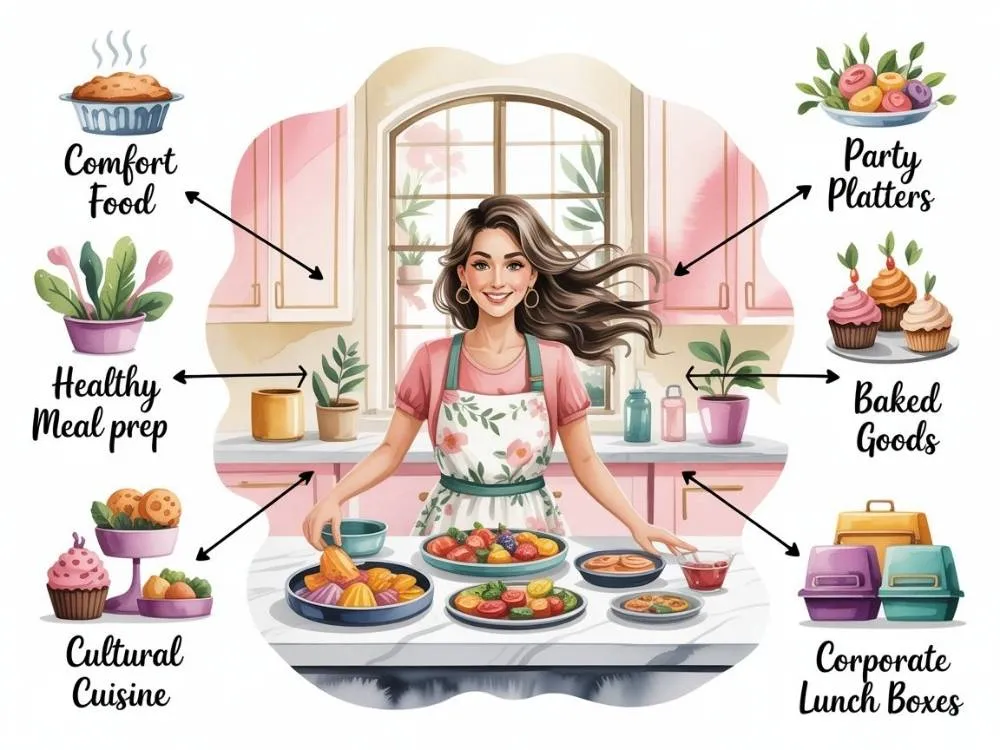
Cooking everything for everyone sounds good until you are actually doing it. Start with the dishes you know well and can make easily.
Ask Yourself:
- What dishes do you cook really well
- What do people always ask you to make
- What ingredients are easy for you to find
- What can you realistically prepare in large amounts
Also, pick a niche that helps people remember you. This lets you become the go-to person for something specific. Common niches are:
- Home-style comfort food
- Healthy meal prep
- Party platters
- Cultural cuisine
- Desserts or baked goods
- Breakfast and brunch catering
- Corporate lunch boxes
- Wedding appetizers and finger foods
- BBQ and grilled food
Step 3: Set Up Your Catering Kitchen
Your kitchen setup really comes down to two things. What your local laws allow and what kind of food you plan to serve. Some people start right from their home kitchen. Some have to rent a shared space to stay compliant and handle orders.
Let's look at the simple comparison to help you decide.
| Model | Startup Cost | Regulations | Revenue Potential | Limitations | Best For |
|---|---|---|---|---|---|
| Home-Based (Cottage Food) | Low ($100-$1,000) | Limited food types | Low to medium | Can’t sell certain foods | Beginners and baked goods |
| Commercial Kitchen | Medium ($1,000-$5,000) | Fully compliant | Medium to high | Monthly rent | Serious home caterers |
| Mobile Catering | Medium ($2,000-$10,000) | Permits required | Medium | Limited menu space | Food trucks and street food |
| Full-Service Catering | High ($10,000+) | Full licensing | High | Complex operations | Large events or weddings |
Step 4: Price Your Catering Services
Pricing is where a lot of beginners get it wrong. They charge too little or take on too much work. This left them with barely anything to show for it. Don't make that mistake.
Your pricing should cover:
- Ingredients
- Packaging
- Your time
- Transportation
- Overhead costs
- Profit
A simple way to start:
Cost of ingredients × 2 or 3 = selling price
You can also create packages like:
- Per person pricing
- Fixed event packages
- Tray or platter pricing
Also, look at what other caterers in your area are charging. Don't be the cheapest option out there. You just need to be fair to your clients and still make money doing it.
Step 5: Get Your First Catering Clients
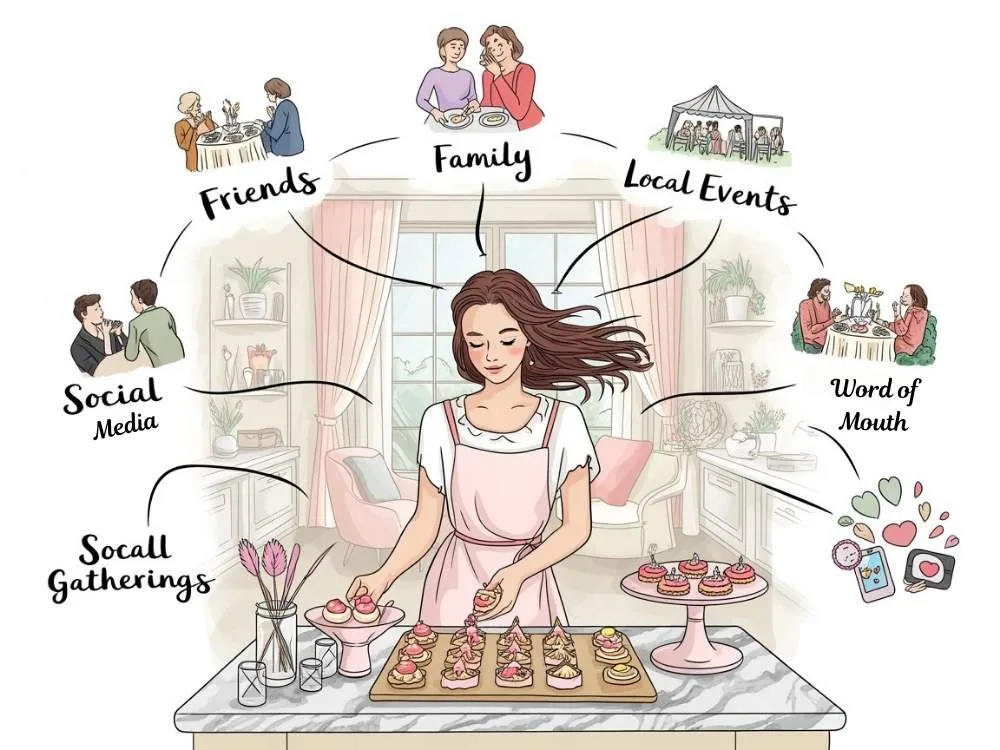
Your first clients are probably closer than you think. Most people get their first few orders through people they already know.
Start with:
- Friends and family
- Small gatherings
- Local events
- Posting on social media
Let people know what you offer. Share photos of your food. Ask happy customers to spread the word.
You can also grow your reach by:
- Joining local Facebook groups
- Partnering with event planners
- Working with small businesses
Word of mouth goes a long way in this business. One good job done right can bring in three more without you doing anything extra.
Step 6: Execute Catering Events Successfully
Getting a booking is one thing. Delivering a smooth experience is what builds your business reputation.
Before the event:
- Confirm menu and quantities
- Plan cooking and prep time
- Prepare packaging and transport
During the event:
- Arrive on time
- Set up properly
- Stay organized
After the event:
- Follow up with the client
- Ask for feedback
- Request a review if they are happy
People remember how reliable you were, not just how the food tasted.
Step 7: Grow and Scale Your Catering Business

You can think about growing things a little once the orders start coming in regularly.
Some ways to scale up:
- Adding more items to your menu
- Taking on bigger events
- Bringing in a helper or two
- Renting a larger kitchen space
- Offering premium services for higher-paying clients
- Slowly raising your prices as your reputation grows
Take on what you can actually handle and do it well. Growing too fast before you are ready can hurt the quality of your work. In catering, your reputation is everything.
Common Catering Business Mistakes to Avoid
A lot of beginners make similar mistakes when starting.
Some of the big ones:
- Ignoring food laws and licenses
- Underpricing services
- Taking on too many orders too soon
- Offering too many menu items
- Poor time management
- Not testing recipes beforehand
- Weak communication with clients
One major mistake is trying to grow too fast. It's better to handle small events well than mess up a big one.
Wrapping Up
A lot of people have built solid catering businesses starting from nothing but their home kitchen. You don't need a ton of money or experience to make it work. Cook what you know and figure out your local rules. Start with small orders you can handle comfortably and price fairly. show up on time and do good work every single time. That's honestly what builds a catering business.
FAQs
Q1: Can I do this part time?
Absolutely. Many caterers start on weekends or around their regular jobs. You can set your own schedule and take orders when it works for you.
Q2: Do I need a license to cater from home?
It really depends on where you live. Most places ask for a food handler certificate and sometimes a basic business registration. Just check with your local health department and you will know exactly what to get.
Q3: How long before I get my first client?
Some people land their first order within days just by telling friends and family. Some may take a few weeks. You can make things quick by being active on social media.
Explore Related Posts
https://smarttoolsai.com/post/how-to-start-a-candle-making-business
https://smarttoolsai.com/post/how-to-start-a-cleaning-business
https://smarttoolsai.com/post/how-to-start-an-airbnb-business