How to Start an Airbnb Business and Make Money
.webp)
A lot of people look at Airbnb and think, that seems like a good way to make extra money. And honestly, it can be. Some people turn their guest room into income. Others turn a full property into a short-term rental. Some don't even own the place and still build a business around it.
But Airbnb isn't just about putting a property online and waiting for bookings. There is setup, guest communication, cleaning, pricing, and local rules to deal with. So if you want to do this properly, you need a plan.
This guide breaks down how to start an Airbnb business properly. We’ll go through the main business models, how to set up your listing, how to handle guests, and how to actually make money without making a mess of it.
Key Takeaways
- Learn the different Airbnb models and know which one fits your situation.
- A practical guide to starting with or without owning a property.
- Know how to pick your space, price it right, and land first bookings.
- Learn what your property needs and how to set up the basics.
- Avoid common mistakes that make new Airbnb businesses quit early.
What Does Running an Airbnb Business Mean?
An Airbnb business is when you rent out space short-term. Could be a spare room, your whole place, a house, or whatever. You list it on Airbnb and people book it for a few nights or longer.
Here's how it works:
- You create a listing with photos and details
- Guests browse and book your place
- They pay through Airbnb's platform
- You host them during their stay
- Airbnb sends your payout minus their fees
But there's more to it. You'll be considering cleaning, coordinating check-ins, handling repairs, responding to guest texts, and working to keep your ratings up.
Can you make money? Absolutely. But it works way better when you take it seriously as a business, not just easy cash on the side.
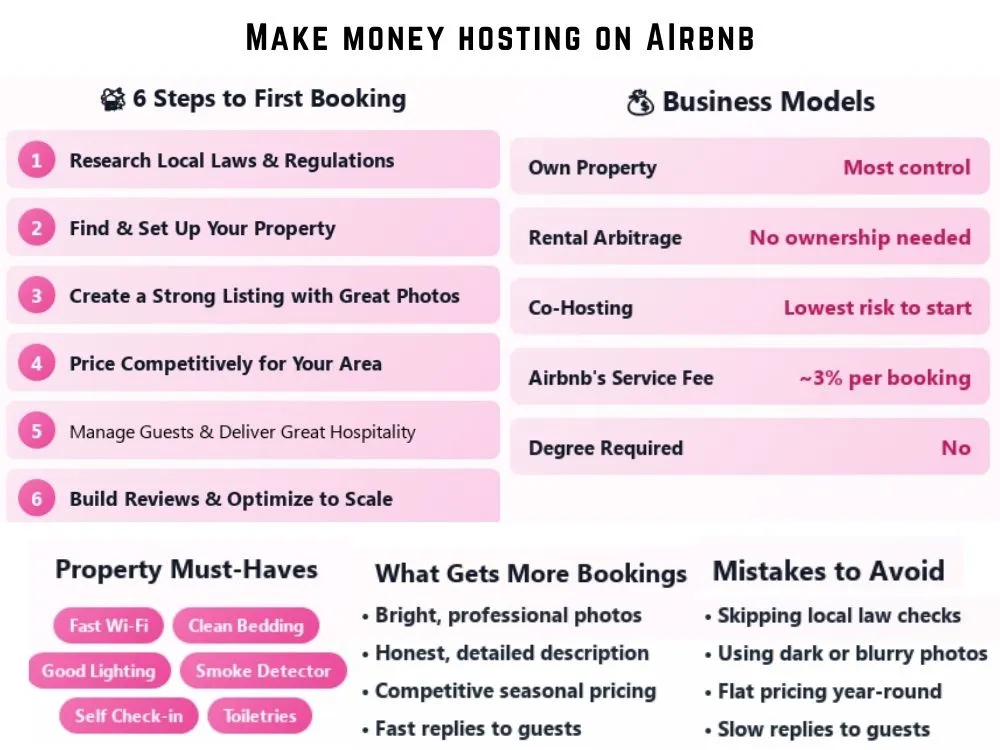
Airbnb Business Models: Which Path Should You Choose?
There is more than one way to run an Airbnb business. The best option depends on your budget, risk tolerance, and how involved you want to be.
Airbnb Business Models Comparison
| Business Model | Startup Cost | Monthly Income Potential | Risk Level | Time Commitment | Legal Considerations | Best For |
|---|---|---|---|---|---|---|
| Own Property | High | Medium to high | Medium | Medium | Local short-term rental rules, taxes, permits | People who already own a property |
| Rental Arbitrage | Medium | Medium | High | Medium to high | Lease approval, landlord permission, local laws | People without property who can manage risk |
| Co-Hosting | Low | Low to medium | Low | Medium | Service agreements, platform rules | Beginners who want to start without a property |
Own Property
This is the most straightforward option. You use your own property and list it on the platform. You have more control, but the upfront cost is obviously much higher if you buy a place just for this.
Rental Arbitrage
This means you rent a property long-term, then list it on Airbnb with the landlord’s permission. This lowers the entry cost compared to buying property, but it also comes with more legal and financial risk.
Co-Hosting
Co-hosting means you manage someone else’s Airbnb for a fee or a percentage of the booking income. The property isn’t yours or rented. This is often the easiest way to start if you want experience first.
Step 1: Research Local Laws and Regulations
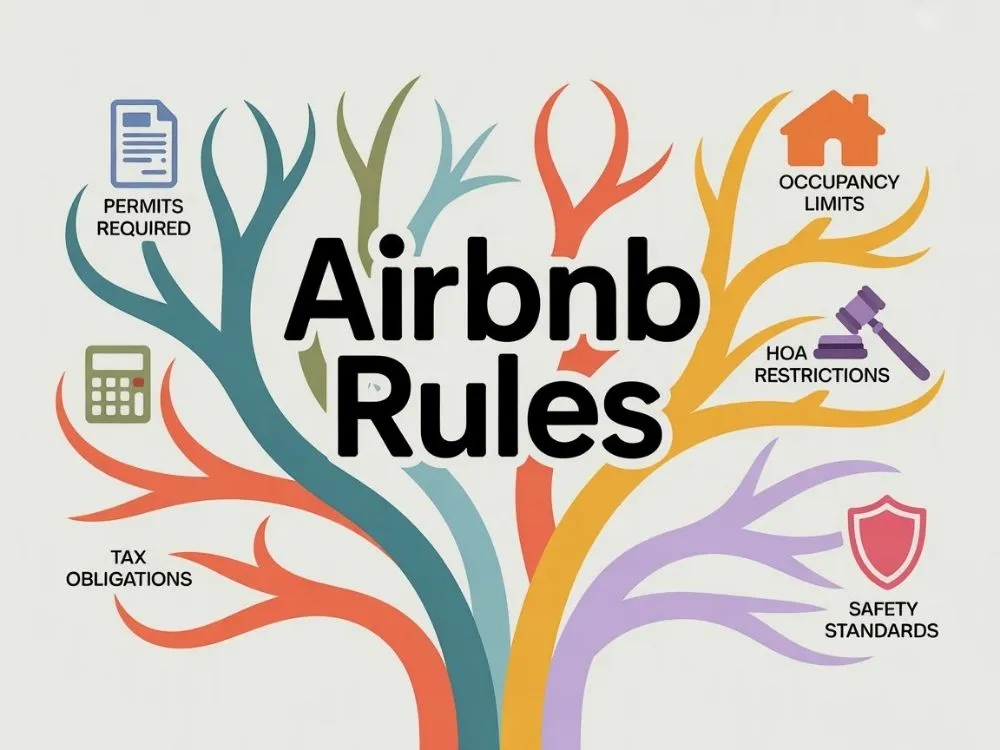
Check the rules in your area before you do anything. Skipping this part can cost you a lot later. So you should think about it earlier. Some areas fully allow short-term rentals. Some require permits, licenses, tax registration, or safety checks.
Things to look into:
- Whether short-term rentals are legal in your area
- If you need a permit or license
- Occupancy limits
- Tax rules
- Building or HOA restrictions
- Landlord permission if you are renting
Don't just assume you can list a property as other people seem to be doing it. Local rules change all the time, and some hosts get shut down because they never check.
Step 2: Find and Set Up Your Property
The property itself matters a lot but a bad location or poor setup can make everything complicated.
A) Choose the Right Property or Rental
Own a place? Think about whether it makes sense as a short-term rental. If you're looking for a new property or a rental, you have to pay attention to things like:
- Location
- Safety
- Nearby attractions
- Parking
- Public transport
- Local demand
- Noise levels
A small, well-located property always performs better than a bigger place in the wrong area. Also think like a guest and ask yourself, would someone actually want to stay here?
B) Furnish and Prepare Your Space
This part matters more than you think. People want more than just a bed. They want a clean and comfortable stay.
Focus on the basics first:
- A good bed and mattress
- Clean bedding and towels
- Fast Wi-Fi
- Working air conditioning or heating
- Good lighting
- Basic kitchen supplies
- Toiletries
- Clear house instructions
Keep the design simple and clean. It doesn't need to look expensive. Anyhow, it should look intentional. A cluttered or awkward space makes people nervous.
You should also think about safety:
- Smoke detector
- Carbon monoxide detector if needed
- First aid kit
- Secure locks
- Emergency contact info
Step 3: Create Your Airbnb Listing
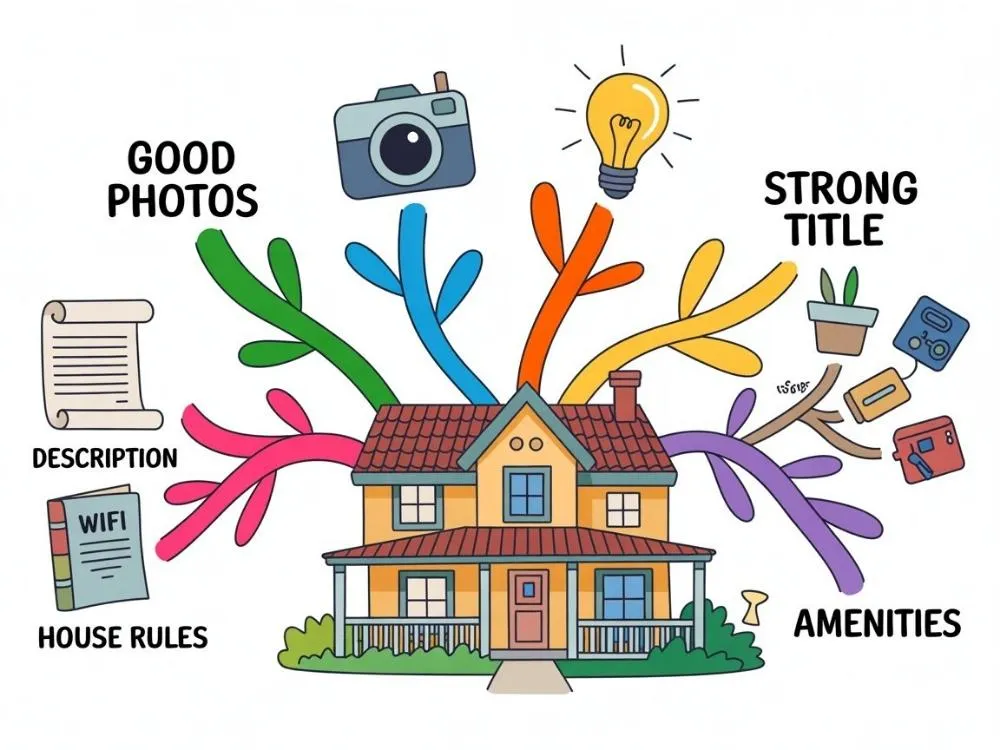
Your listing is what gets people to trust you and book. A weak listing can hurt you even if the property itself is good. Start with strong photos. This is huge. Dark, blurry, lazy photos impact interest fast. Take bright pictures of every important area.
Your listing should include:
- A clear title
- An honest description
- Accurate amenities
- Good photos
- House rules
- Check-in and check-out details
Be honest in your description. Don't oversell the place which then disappoints guests. If the apartment is compact, say it's cozy. If there are stairs, mention them. Clear expectations lead to better reviews.
Also, highlight what makes the place useful or appealing. That could be:
- Walkable location
- Great view
- Workspace for remote workers
- Family-friendly setup
- Free parking
- Self check-in
Step 4: Price Your Airbnb Competitively
You won't get bookings if you price too high. Likewise, pricing too low only attracts the wrong guests like budget freaks and cuts your profits.
Start by checking similar listings in your area to set an optimum price. Look at places with:
- Similar size
- Similar amenities
- Similar location
- Similar guest ratings
Your price should make sense based on what the guest gets. Also, remember that your nightly rate isn't the whole story. Guests also see:
- Cleaning fee
- Service fee
- Extra guest fee if any
A place with a low nightly price and a huge cleaning fee often turns people off. In the beginning, many hosts start slightly lower to get their first few bookings and reviews. Once you build some momentum, you can adjust.
Prices should also change depending on:
- Season
- Weekends vs weekdays
- Holidays
- Local events
- Booking demand
Keeping the same price year-round means you're missing out on extra income.
Step 5: Manage Guests and Provide Excellent Hospitality
How you handle guests can make or ruin your business. Good hospitality leads to good reviews. Good reviews lead to more bookings.
Guests want things to feel smooth and simple. That means:
- Replying quickly
- Giving clear check-in instructions
- Being polite
- Solving problems calmly
- Keeping promises
Simple things that help a lot:
- Send a welcome message
- Share Wi-Fi details clearly
- Explain parking and entry
- Let guests know how to reach you
- Check in after arrival to make sure everything is okay
Fix guest-related issues if something goes wrong. Guests are usually more understanding when you respond quickly and take responsibility.
Step 6: Handle Operations and Maintenance
This is the part people underestimate. Airbnb isn't just about bookings and money coming in. It is operations.
You need systems for:
- Cleaning between stays
- Laundry
- Restocking supplies
- Repairs
- Key handoff or smart lock management
- Trash handling
- Deep cleaning
- Emergency issues
If you are doing everything yourself, create a routine. If you want less daily involvement, build a team. That might include:
- A cleaner
- A handyman
- A co-host
- A laundry service
The smoother your operations, the easier it becomes to manage bookings without stress. Also, inspect the space regularly. Small issues become bigger problems when guests keep rotating through the property.
Step 7: Optimize and Scale Your Airbnb Business

You can think about scaling your business once it gets enough bookings and good reviews.
Some ways to optimize include:
- Updating photos
- Improving your description
- Refining your pricing
- Adding useful amenities
- Making check-in easier
- Asking happy guests for reviews
Look at guest feedback carefully. Fix any problems that multiple guests report. You have a few options to scale such as:
- Adding another property
- Starting co-hosting for others
- Improving your current property to raise rates
- Hiring help so you can manage more units
Common Airbnb Business Mistakes to Avoid
A lot of hosts make the same mistakes early on. It helps to know them before you repeat them.
Common mistakes include:
- Ignoring local laws
- Choosing the wrong property
- Using poor photos or copying others
- Writing vague or misleading descriptions
- Pricing badly
- Replying slowly to guests
- Letting cleaning standards slip
- Forgetting to restock essentials
- Trying to scale too fast
Another big mistake is thinking that guest experience doesn’t matter that much. But it matters a lot. A few bad reviews can slow bookings fast.
Also, avoid copyright issues or prevent someone from using your photos. You can check this using our reverse image search tool.
Wrapping Up
Starting an Airbnb business can be a good way to make money. But it works best when you treat it seriously. You need the right property, clear systems, strong hospitality, and attention to detail. Start with one property or one co-hosting setup. Learn how it works. Fix problems as they come up. Then grow from there.
FAQs
Q1: Do I need to own property to start an Airbnb business?
No. You can rent a place and list it with your landlord's guide or you can manage someone else's Airbnb and split the earnings.
Q2: How much can I actually make from Airbnb?
It varies a lot. Some people make a few hundred bucks a month renting a spare room. Others pull in thousands with a whole place in a busy area.
Explore Related Posts
https://smarttoolsai.com/post/how-to-start-a-photography-business
https://smarttoolsai.com/post/how-to-start-a-reselling-business
https://smarttoolsai.com/post/how-to-start-a-graphic-design-business