
How to Start a Graphic Design Business (Step by Step Guide)
.webp)
Ready to turn your design skills into actual money? Then starting a graphic design business is the way to go. It's easier than most people think and you don't need a fancy office or expensive equipment to begin. Just your design skills and a plan to find clients.
I like this business model because you control everything. No boss breathing down your neck. No fixed salary that keeps you stuck. You set your rates and choose who you work with.
There's real demand for good designers. Whether you're into branding or illustration, people are looking for someone who can bring their ideas to life.
Key Takeaways
- Learn what a graphic design business does and why people hire designers.
- Find out how to build skills and create a portfolio from scratch.
- Pick your niche and price your services the right way.
- Get a step-by-step plan from setup to landing your first clients.
- Avoid mistakes that burn you out or impact your business early.
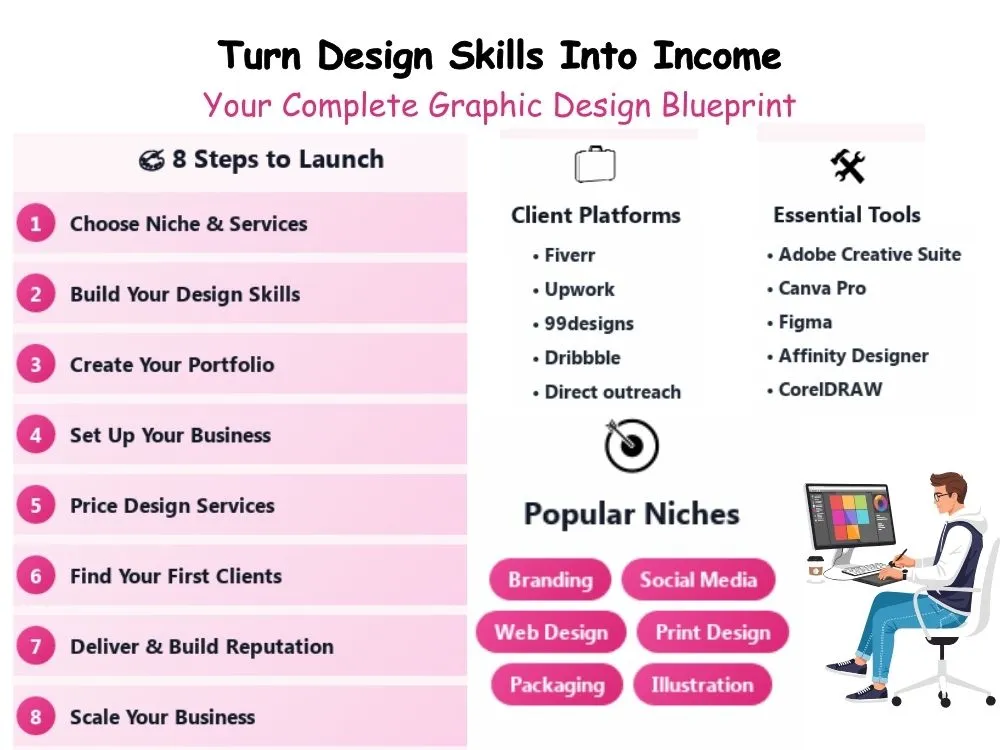
What Does a Graphic Design Business Do?
This business mainly involves designing. It helps people communicate visually through eye-catching designs like logos, flyers, websites, social media posts, packaging, marketing materials, celebration cards, or something similar.
But it's not merely about making these things pretty. You're solving actual business problems. Maybe a company's brand looks outdated and cheap. Or their website confuses visitors. Or their social media posts get zero engagement.
Clients hire you because they know design matters. They've seen competitors with better branding win customers. They understand that a good logo builds trust. They just can't create it themselves. That's where you come in.
Do You Need a Degree to Start a Graphic Design Business?
The short answer is no. Clients care far more about your portfolio than your degree/diploma. TBH, most businesses won't ask where you studied if your work looks professional and you can communicate well
Also, learning matters and you still need to understand layout, typography, color, spacing, and basic branding principles. You can learn these through online courses or real practice.
I've seen plenty of self-taught designers run circles around design school graduates. Why? They focused on improving rather than collecting credentials. They worked on real projects, received feedback, and improved more quickly.
Essential Tools and Software for Graphic Designers
You don’t need every tool on day one. Start with one main design tool and grow later.
A Quick Comparison of Design Software
| Tool | Cost | Main Features | Learning Curve | Best For |
|---|---|---|---|---|
| Adobe Creative Suite | Monthly subscription starting at $69.99 | Photoshop, Illustrator, InDesign, everything you need | Medium to high | Professional designers and agencies |
| Canva Pro | Monthly or yearly and the cost varies | Templates, drag and drop, social media stuff | Very easy | Beginners and quick projects |
| Affinity Designer | Free | Vector and layout tools, no monthly fees | Medium | Freelancers who hate subscriptions |
| Figma | Free or paid | Web design, collaboration, prototyping | Easy to medium | Web and app designers |
| CorelDRAW | Annual plans varies | Vector graphics, print layouts | Medium | Print and illustration work |
| Free tools (GIMP, Inkscape) | Free | Basic editing and vectors | Medium | Testing before you buy |
Most professional clients expect Adobe files. That's just reality. But if you're starting out or doing social media work, Canva gets the job done fast. Figma is taking over for web and app design. Affinity is perfect if you want professional tools without the subscription headache.
You'll also need utility tools for daily tasks. Things like image resizers, compressors, and format converters (JPG to PNG, SVG, WEBP, HEIC, etc.). Not a big part of design, but you'll use them every single day. Check out these image tools for the basics.
Step 1: Choose Your Design Niche and Services
Trying to offer everything at once makes it harder to market yourself. A niche helps clients understand what you are good at doing.
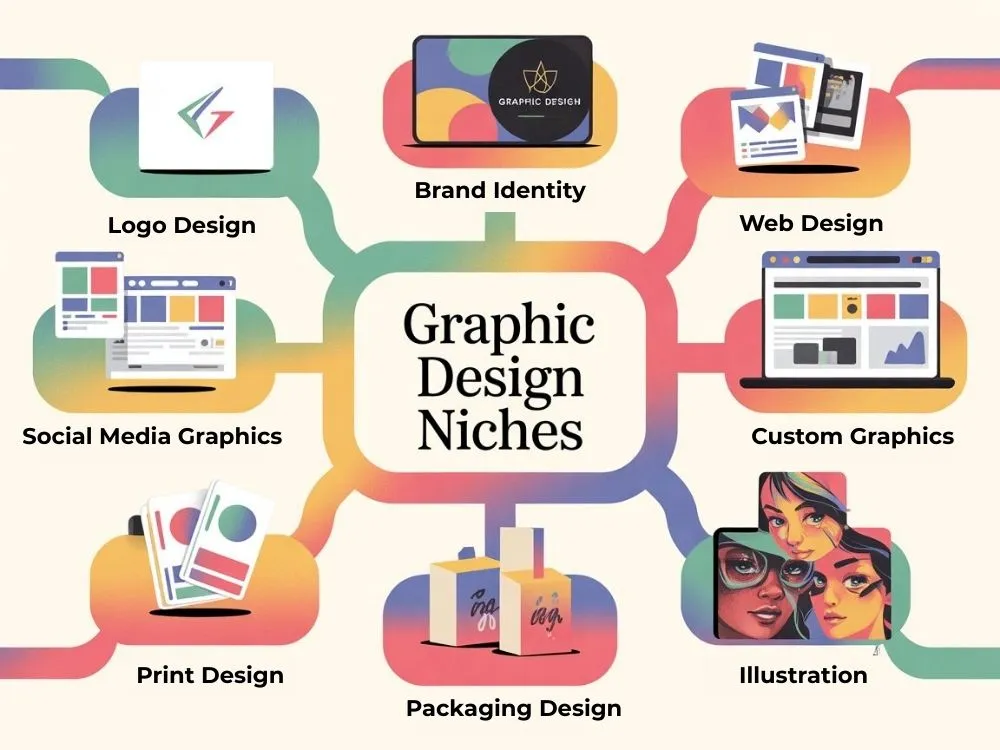
A) Popular Design Niches
Here are strong niches you can build a business around:
- Logo design
- Brand identity and branding packages
- Social media graphics
- Web design and UI or UX
- Print design such as business cards, flyers, and brochures
- Packaging design
- Illustration and custom graphics
Pick one or two to start and you can expand later once you've got momentum.
B) Deciding What Services to Offer
Your niche determines your service list.
For example:
- Branding designers offer logos, brand kits, and style guides.
- Social media designers offer post templates and content packs.
- Web designers offer page layouts and user experience design.
Keep it simple at first. Three to five services max. It's easier to sell and clients won't get confused about what you actually do.
Step 2: Build Your Design Skills
Expensive software won't fix bad design. You need actual skills and creativity that make people stop and notice your work.
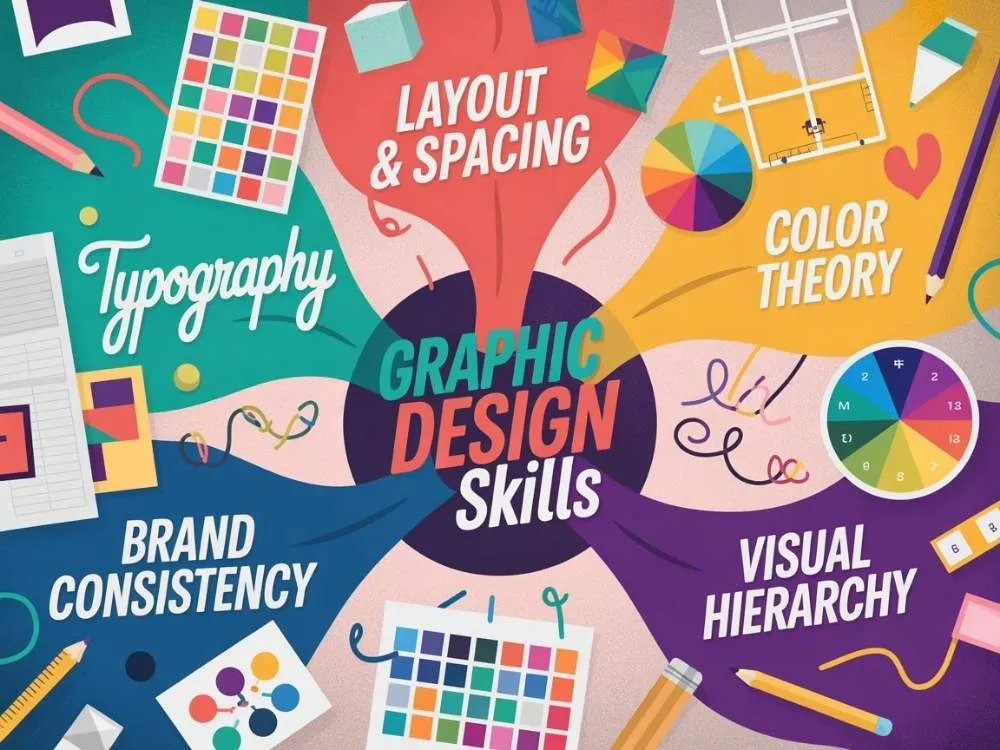
Focus on learning:
- Typography
- Layout and spacing
- Color theory (Our RGB to Hex tool helps)
- Visual hierarchy
- Brand consistency
Practice constantly. Redesign websites you visit. Recreate ads or posters you like. Watch design breakdown videos and understand why things work. The fastest improvement comes from doing real work and asking for feedback.
Step 3: Create Your Portfolio
You don't need paid clients to build your first portfolio. Create sample projects for imaginary brands. Redesign real brands for practice and clearly label them as concept work. Show different styles and use cases.
Explain each project briefly:
- What problem you solved
- Who the audience was
- Why you chose the design approach
Utilize platforms like Behance and Dribbble to showcase your work. Your own website helps too, even if it's simple.
When checking if your work already exists or if a logo is being reused, a reverse image search tool can save you from awkward mistakes.
Step 4: Set Up Your Business
Don't overcomplicate this part. Pick how you want to operate:
- Freelance under your own or an alias name
- Create a personal brand
- Use a studio name
Create a basic website or portfolio page and set up a business email. Prepare a simple contract and invoice template where at this stage, you are building a freelance business model. Later, you can grow into an agency or hybrid business.
Some designers also add extra income by selling templates, checklists, fonts, or graphics. You can learn more about this in a digital products guide if you plan to build passive income alongside client work.
Step 5: Price Your Design Services
Pricing freaks out most beginners. Here's what not to do. Don't charge based on hours. A logo might take you three hours, but it could be worth thousands to the client's business.
Price your service based on value and complexity instead. What's the project worth to them? How much experience do you have? What's included in the deliverable?
Design Service Pricing Guide
| Service | Beginner Range | Intermediate Range | What's Included |
|---|---|---|---|
| Logo design | $25 - $300 | $300 - $2,000+ |
|
| Branding package | $500 - $1,500 | $1,500 - $5,000+ |
|
| Social media graphics | $50 - $400 | $400 - $1000 |
|
| Website design (UI) | $500 - $1,500 | $1,500 - $5,000+ |
|
| Landing page design | $100 - $500 | $500 - $2,000 |
|
| Print materials | $50 - $200 | $200 - $600 |
|
| Packaging design | $150 - $600 | $600 - $3,000+ |
|
| Illustration (custom) | $100 - $400 | $400 - $1,500+ |
|
| Brand refresh | $800 - $2,000 | $2,000 - $6,000+ |
|
Start on the lower end and raise your prices as you get better and busier. If you're booked solid for weeks, you're too cheap. If nobody's buying, you might be pricing too high for your experience level.
Don't be afraid to say no to clients who want premium work for bargain prices. They're usually the most difficult to work with anyway.
Step 6: Find Your First Clients
You need clients, not perfection. Start reaching out before you feel ready.
A) Freelance Platforms
These sites help you land early projects and build experience:
- Fiverr - Easy to start, super competitive, lower prices.
- Upwork - More professional clients, you write proposals for jobs.
- Contra - No platform fees (rare), portfolio-focused.
- 99designs - Design contests (hit or miss, but can build a portfolio fast).
- Dribbble - Portfolio site with a job board attached.
- Behance - Showcase work, get discovered by clients.
B) Direct Outreach and Networking
Direct clients usually pay better. Reach out to:
- Small businesses without good branding.
- Startups launching products.
- Coaches and consultants.
- Content creators and YouTubers.
- Local companies in your area.
Send short and friendly messages. Show relevant work. Don’t send generic pitches. Real connections matter more than mass emails.
C) Use Social Media
LinkedIn is an amazing platform to post and show your work. Join Instagram and FB groups for local businesses or entrepreneurs. Comment on posts. Help people for free occasionally. Real relationships turn into paying clients.
The best client sources? Referrals from happy customers. But you need those first few clients before referrals kick in.
Step 7: Deliver Projects and Build Your Reputation
Clear communication matters a lot as good design. Maybe more. You must set expectations upfront and share realistic timelines. Ask questions before you start designing, without being confused in the middle.
What to clarify before starting:
- What problem are they trying to solve?
- Who's the target audience?
- What's the deadline (and is it flexible)?
- How many revision rounds are included?
- What file formats do they need?
Deliver files properly organized. Don't just dump everything in a zip file. Name things clearly. Include a simple guide explaining what each file is for and how to use it.
Need to package documents or create client guides? Use our PDF tools to organize everything professionally. Happy clients are your best marketing. They leave reviews and refer their friends.
Step 8: Scale Your Graphic Design Business
You have to think bigger once you've got steady clients and consistent income. Let's see ways you can scale your business:
- Raise your prices. If you're turning down work or booked for weeks, you're undercharging.
- Specialize deeper where you become the go-to person for one specific thing like restaurant branding or app design.
- Hire help by bringing on other designers or a VA and grow into a small agency.
- Add passive income. Sell templates, design assets, or courses on the side.
The agency route isn't for everyone. Some designers make great money staying solo and just charging more.
Common Graphic Design Business Mistakes to Avoid
Most beginners undercharge way too long. They think low prices will attract clients, but it just attracts cheap clients who drain your energy. You end up burnt out and broke.
Other mistakes to watch out for:
- Saying yes to every project. You're not a one-stop design shop. Stay focused.
- Working without contracts. Even with people you know. Get it in writing always.
- No revision limits. Clients will ask for changes forever if you let them.
- Ignoring feedback. Your ego isn't more important than getting better.
- Copying other designers. Inspiration is fine. Theft impacts your growth and reputation.
Treat your graphic design business from day one. Set boundaries and charge what you're worth. Respect your own time because clients definitely won't do it for you.
Wrapping Up
You don’t need permission to start a graphic design business. You need skills and the right practice with consistency. Start small and build a clean portfolio. Find your first clients and improve with every project. Over time, this can grow into a real and stable creative business.
FAQs
Q1: Can I start a graphic design business from home?
Absolutely, you can because many people started this way from their small home offices. You only need basic office essentials like a laptop, design software, stable internet, etc.
Q2: How long does it take to get my first client?
Depends on your hustle. Some people land clients within weeks through freelance platforms or networking. Some may take a few months building their portfolio first.
Q3: Is it essential to register my business legally?
Not immediately. You can start as a sole proprietor under your own name. Register an LLC or business entity later when you're making consistent income.
Explore Related Posts
https://smarttoolsai.com/post/how-to-start-a-shopify-store
https://smarttoolsai.com/post/how-to-start-an-etsy-shop
https://smarttoolsai.com/post/how-to-start-a-print-on-demand-business