How to Start a Reselling Business from Scratch
.webp)
Ever thought about turning stuff you find into actual profit? That's exactly what reselling is. You buy something at a good price and flip it for more. You keep the difference. Simple as that.
What makes it really appealing is that you can start small. No huge investment needed. Just your phone, some research skills, a little storage space, and the willingness to learn as you go.
Plenty of people have built solid income streams this way. Some do it as a full-time business. This guide shows you how to start your own reselling business from scratch without overcomplicating things.
Key Takeaways
- Find out what reselling is and how people make money flipping products.
- Learn different ways to source products like thrift flipping, retail arbitrage, etc.
- See which products are easiest to start with and where to find them cheap.
- Know how to check what stuff actually sells for and calculate profit.
- Understand which platforms work best for the products you want to sell.
- Get potential income numbers and avoid mistakes that waste your time and money.
What is a Reselling Business?
A reselling business simply means buying products at a lower price and selling them for a profit. You don't make or change anything. You just connect a good deal with someone willing to pay more for it.
People resell all kinds of products. It could be anything that you find lucrative such as clothing, sneakers, electronics, books, toys, collectibles, vintage items, home goods, or furniture. The list goes on.
The business works because most people don't have time to dig through thrift stores or clearance racks looking for deals. You do that legwork, and they pay you for it.
Types of Reselling Business Models
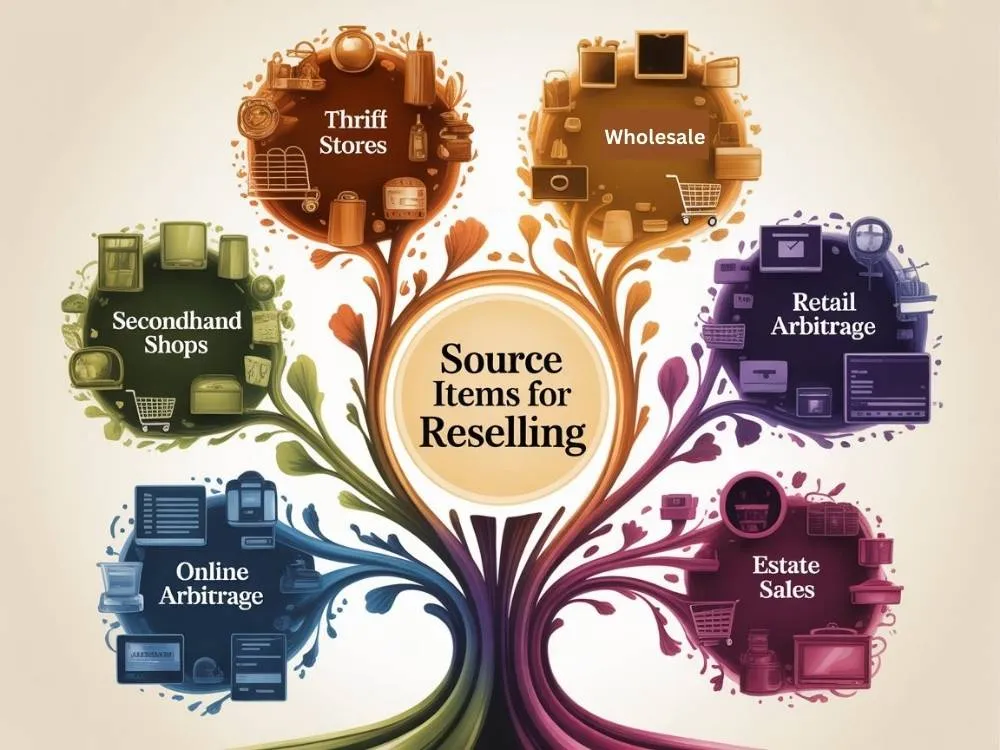
You can source products in different ways. Pick what really fits your budget and how much time you have. Let’s see a comparison in detail:
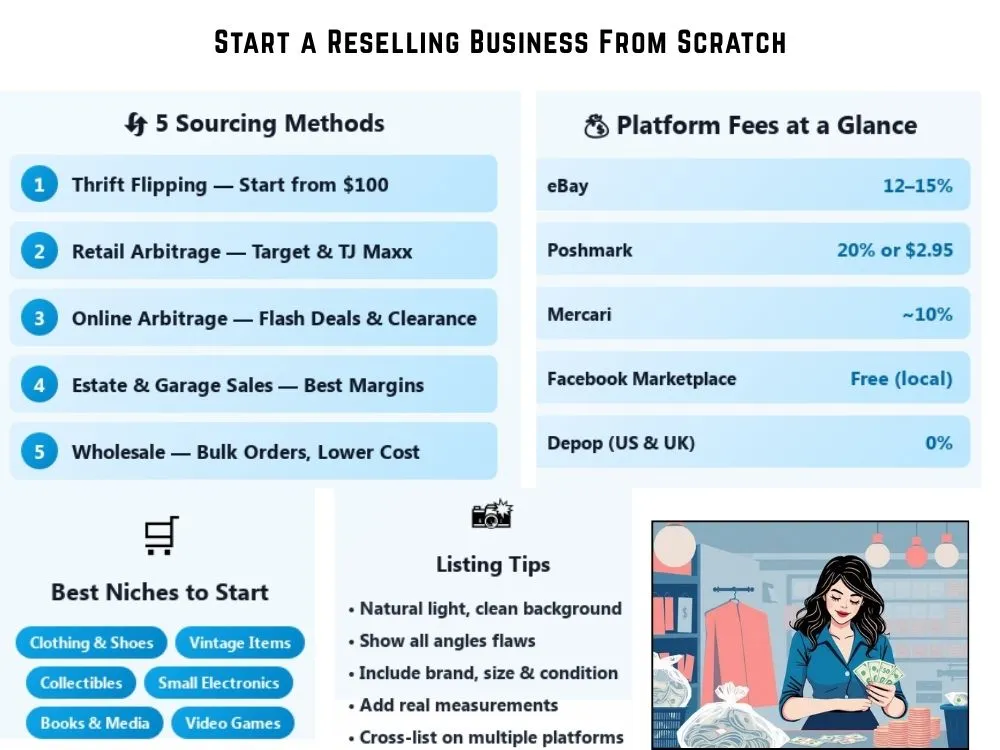
| Method | Startup Cost | Time Investment | Profit Margins | Skill Level | Scalability |
|---|---|---|---|---|---|
| Thrift Flipping | $100 - $500 | Part-time friendly | 50% to 300% | Beginner | Medium |
| Retail Arbitrage | $500 - $2,000 | Part-time to full-time | 30% to 100% | Beginner to intermediate | Medium |
| Online Arbitrage | $500 - $2,000 | Home-based | 20% to 80% | Intermediate | High |
| Wholesale | $2,000 - $10,000 | Full-time | 30% to 50% | Advanced | High |
| Estate and Garage Sales | $200 - $1,000 | Weekend-based | 100% to 500% | Beginner to intermediate | Medium |
Here's what each one means:
- Thrift Flipping: You buy stuff from thrift stores and resell it online. This one is cheap to start.
- Retail Arbitrage: You grab clearance items from places like Walmart or Target, then flip them for more.
- Online Arbitrage: Same idea but you shop clearance deals online instead of driving to stores.
- Wholesale: You buy products in bulk straight from suppliers. Costs more upfront but you get better prices.
- Estate and Garage Sales: You show up early to sales and hunt for things people are selling too cheap.
Step 1: Choose Your Reselling Niche
Picking a niche is so important to learn faster. You stop wasting money on random stuff that sits unsold for months.
A) Product Categories to Consider
Some categories are easier to start with:
- Clothing and shoes
- Vintage items
- Books and media
- Small electronics
- Toys and collectibles
- Home decor
- Sports equipment
- Video games
Clothing and vintage items are solid starting points because thrift stores are full of them and you can buy cheap.
B) Matching Products to Platforms
Different products sell better on different platforms. You wouldn't list a rare Pokemon card the same place you'd sell used jeans.
For example:
- Trendy clothing does well on Poshmark, Vinted, or Depop
- Electronics sell better on eBay or Facebook Marketplace
- Collectibles work best on eBay, where collectors actually search for specific items
- Furniture and bulky stuff moves faster locally on Facebook Marketplace or Craigslist
Matching your product to the right platform actually matters. List something in the wrong place and it just sits there.
Step 2: Source Profitable Items
This is where you actually make your money. Buying right matters way more than being good at writing listings.
A) Thrift Stores and Secondhand Shops
Thrift flipping is perfect for beginners. You can start with $50 and learn as you go.
Tips that actually work:
- Visit often because inventory changes daily.
- Learn the discount schedule. Most thrift stores have 50% off days or color tag sales.
- Stick to recognizable brands in good condition.
- Check labels, stitching, and fabric quality. Skip anything that feels cheap.
- Vintage styles from the 70s to 90s sell well right now.
- Always inspect for stains, holes, missing buttons, and broken zippers.
- Be nice to the staff. They'll sometimes tell you when new stuff comes out.
You'll typically spend $3 to $10 per item. Many resell for $20-$60 or more, depending on the brand.
B) Retail Arbitrage
This means buying clearance items from retail stores and flipping them online.
What works:
- Check clearance racks at stores like Target and TJ Maxx.
- Use store apps for clearance alerts.
- Shop end-of-season sales. Winter coats in March, swimsuits in September.
- Only buy new with tags. Easier to sell and worth more.
- Scan barcodes with reselling apps to check what items actually sell for.
- Always subtract fees and shipping before you decide it's profitable.
You typically buy for $5-$15. Resale is usually $25-$50 if you pick right.
C) Online Arbitrage, Wholesale, and Estate Sales
Online arbitrage:
- Watch for online clearance sales and flash deals.
- Compare prices across Amazon or Target websites.
- Use browser extensions that track price drops.
- Factor in shipping costs before you buy anything.
Wholesale:
- You order directly from distributors or manufacturers.
- There are minimum order quantities, sometimes hundreds of units.
- Takes more upfront cash but your per-unit cost drops.
- Only makes sense once you're selling consistently and know what moves.
Estate and garage sales:
- Check Craigslist and estatesales.net for listings.
- Find them early because the good stuff goes fast.
- Bring cash. Sellers are more willing to negotiate with cash in hand.
- Look up comps on eBay while you're there. Don't guess on value.
Step 3: Research and Price Your Items
Never buy something before you check what it actually sells for. This is obvious but people skip this step all the time and end up with stuff that won't move.
Always look at sold listings, not active listings. Active listings just show what people hope to get. Sold listings show what buyers actually paid.
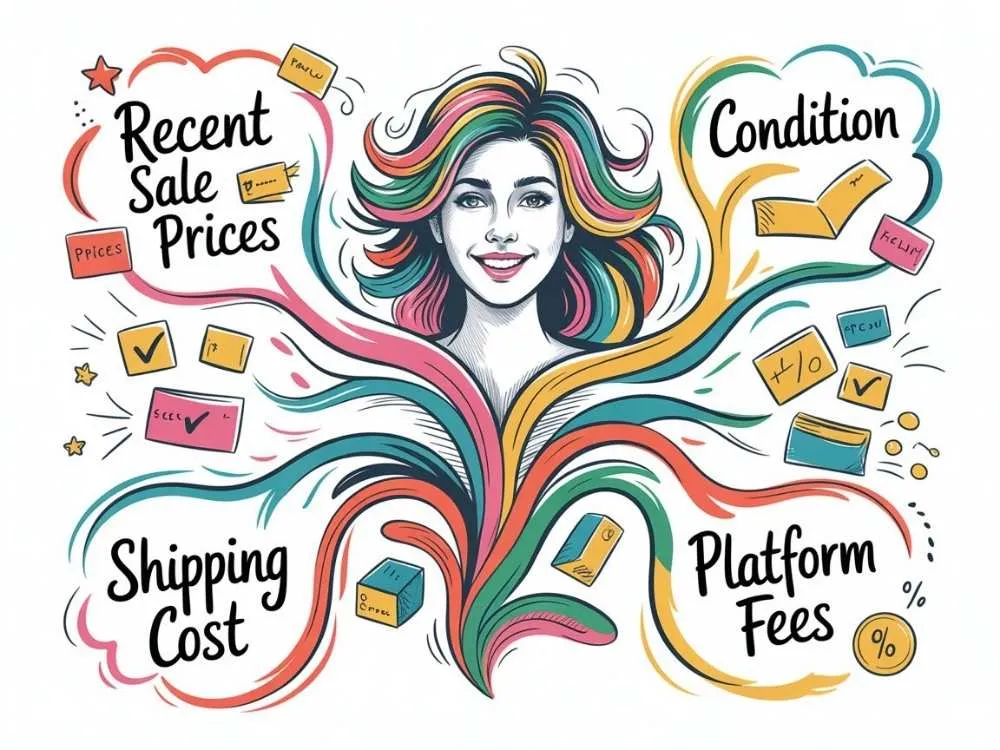
What to check:
- Recent sale prices from the last 30 to 60 days
- Condition differences (new vs used vs vintage affects price big time)
- What shipping costs on similar items
- Platform fees
Quick profit math:
Try to at least double your money after fees and shipping. That's a decent baseline.
Example: You find jeans at a thrift store for $8. You check sold listings and see they're going for around $35 on Poshmark. Poshmark takes 20%, so you'd actually get $28. Take out your $8 cost and maybe $2 for a poly mailer and thank you card. You're left with about $18 profit.
If the margin is tight or you're not sure it'll sell quickly, pass on it. There's always more inventory out there.
Step 4: Choose Your Selling Platforms
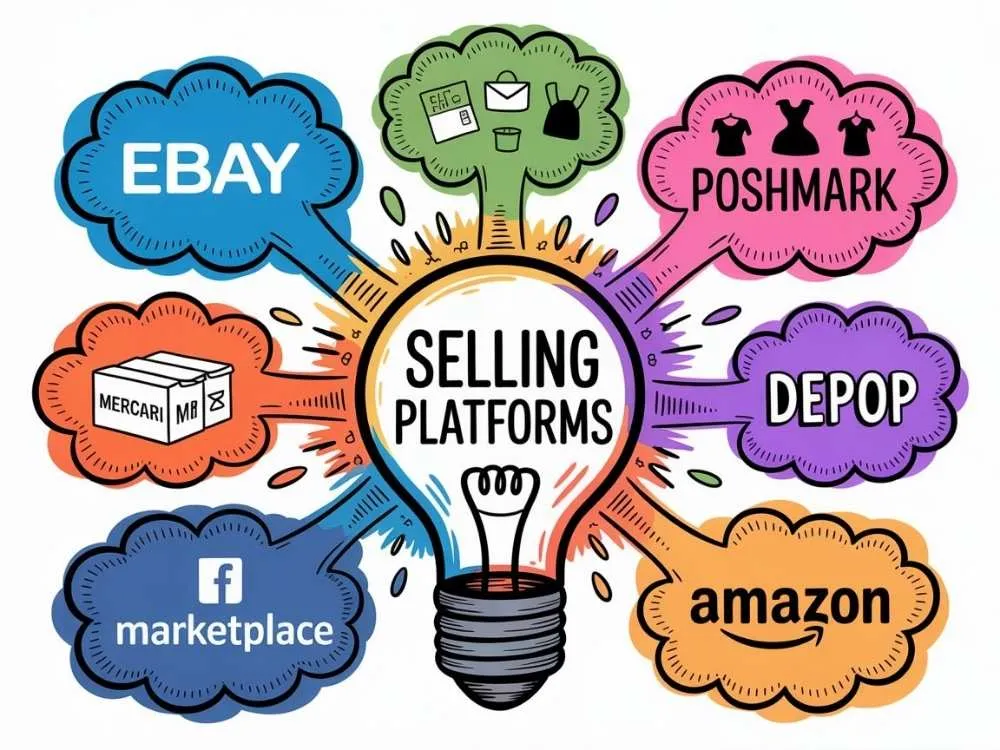
This is the next vital step where each platform attracts different buyers and takes different cuts. You have to pick the right one, which affects how fast you sell and how much you keep.
Platform Breakdown:
1. eBay
- Best for: Electronics, collectibles, vintage stuff, anything with a specific model number
- Fees: About 12-15% plus payment processing
- Pros: Massive buyer base. You can do auctions and ship internationally
- Cons: Lots of competition and you'll deal with returns
2. Poshmark
- Best for: Clothing, shoes, accessories, pet items
- Fees: 20% on sales over $15, flat $2.95 under that
- Pros: Shipping labels are prepaid and has social features built in
- Cons: Fees are steep and you have to share listings all the time to stay visible
3. Mercari
- Best for: Pretty much anything, clothing, toys, electronics
- Fees: 10% plus payment processing
- Pros: Fees are lower than Poshmark, super easy to use
- Cons: Fewer buyers than eBay
4. Facebook Marketplace
- Best for: Furniture, local pickup stuff, bulky items
- Fees: 10% if you ship, nothing for local pickup
- Pros: Tons of local buyers, no shipping headaches with pickup
- Cons: People flake constantly, get ready for lowball offers
5. Depop
- Best for: Trendy and vintage clothes, streetwear, Y2K style
- Fees: 0% for US & UK, 10% elsewhere. Plus payment processing
- Pros: Younger crowd willing to pay for the right style
- Cons: Really fashion-focused, won't work for other categories
6. Amazon
- Best for: Books, new products, stuff you buy wholesale
- Fees: Around 15% plus fulfillment costs
- Pros: People trust Amazon, items sell fast
- Cons: Strict rules, some categories need approval, lots of competition
Start with one platform. Get comfortable with how search works, what gets views, what buyers expect. Once you're making regular sales, add a second. Cross-listing on multiple platforms can come later after you have things figured out.
Step 5: List and Market Your Products
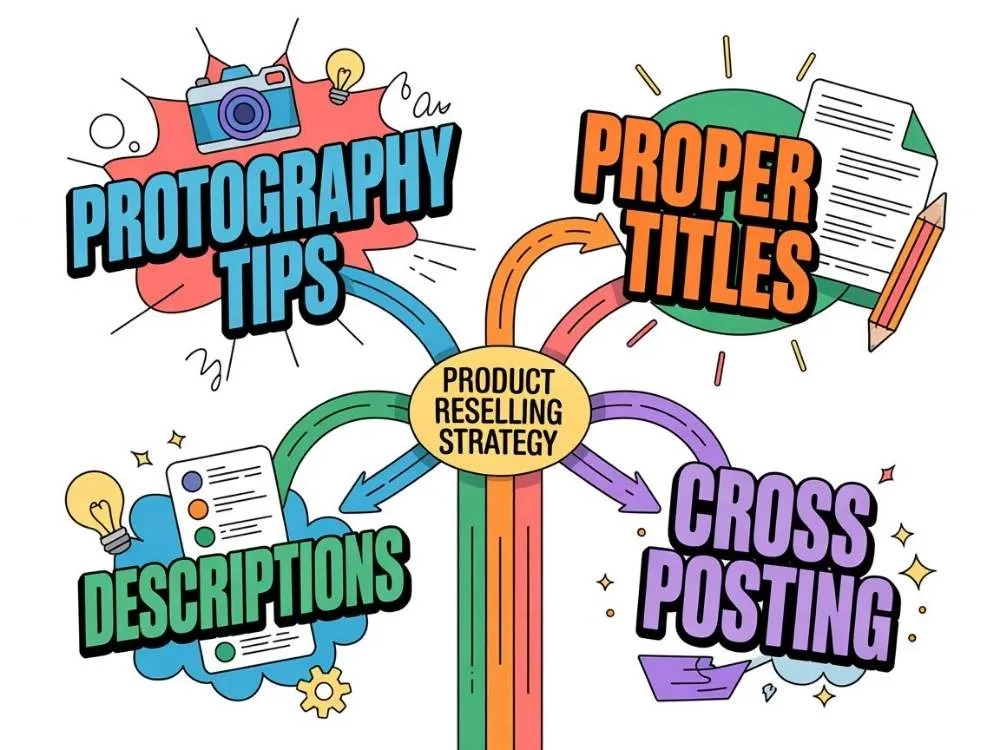
Good listings sell faster than cheap prices. People buy when they can see exactly what they're getting.
Photography Tips
- Use natural light near a window. No yellow indoor lighting.
- Keep the background clean. White wall and simple backdrop.
- Show multiple angles. Front, back, sides, close-ups.
- Photograph brand tags and labels so buyers know it's real.
- Show any flaws clearly. Stains, holes, scratches. Hiding them leads to returns.
- Use flat lays or modeled shots for clothing.
Titles and Descriptions
- Include brand, size, color, and condition right in the title.
- Add real measurements. Waist, length, pit to pit for shirts. Buyers need this.
- Use keywords people actually search for like "Vintage Nike Windbreaker".
- Be honest about flaws upfront. Saves you from angry messages later.
- Mention anything unique like a limited edition or a rare color.
Cross Posting
Cross-listing increases visibility and sales.
- List the same item on multiple platforms.
- Use tools to save time.
- Mark items sold everywhere once one sells.
Step 6: Manage Inventory and Scale Your Business
If you lose items, you lose money which is why proper inventory management matters.
Organization Systems
- Track every item in a spreadsheet or reselling app like Vendoo or List Perfectly.
- Record cost, platform, price, and date listed.
- Store items in labeled bins or on shelves.
- Use first-in, first-out (FIFO) so older items sell first.
Don't skip the tracking part. It feels boring but you need to know what's actually making you money and what's just taking up space.
Scaling Strategies
- Start with 5 to 10 hours per week.
- Reinvest your profits back into inventory instead of spending it.
- Source more often. Hit thrift stores twice a week instead of once.
- Expand to more platforms.
- Specialize in your best categories.
- Use bulk listing tools and templates to speed things up.
- Get help with listing or shipping when needed.
Step 7: Set Up Your Business Properly
Business Structure
Most people start as sole proprietors. It's the simplest and cheapest way to get going. You don't need to file anything special in most places.
As you grow and start making real money, you might want to form an LLC. It’s a good option to safeguard your personal assets. But don't stress about this on day one.
Better you check your local rules to see if you need a business license or seller's permit. Some cities require them, others don't care until you hit a certain revenue.
Open a separate bank account for your reselling business as soon as you can. It helps you avoid mixing personal and business money. This prevents errors in financial calculations.
Taxes and Bookkeeping
- Track every sale and expense.
- Keep receipts for inventory and supplies.
- Common deductions include inventory, shipping supplies, platform fees, and mileage.
- Pay estimated taxes if required.
- Use simple accounting tools like QuickBooks.
- An accountant becomes very helpful once income grows.
Income Expectations
In your first few months, expect maybe $200 to $500 a month working part-time. Once you figure out what actually sells, that grows to $500 to $1,500.
Work 15 to 20 hours a week and you'd hit $1,000 to $3,000. Full-time resellers usually make $3,000+ or more after they get good at it. The beginning is slow. You'll make mistakes and buy stuff that sits. That's just part of learning. Again these numbers are rough estimates and not real figures.
Income depends heavily on:
- Product knowledge
- Sourcing skill
- Time invested
- Platform choice
- Niche selection
Common Reselling Business Mistakes to Avoid
- Buying without researching what it actually sells for.
- Overpricing items based on what you hope to get.
- Using dark or blurry photos.
- Forgetting to factor in platform fees before buying.
- Buying too much inventory too fast.
- Relying on only one platform.
- Skipping condition checks and missing flaws.
- Ignoring business setup and taxes.
- Inconsistent sourcing habits.
- Giving up too early.
Most people need three to six months before they really understand what sells.
Wrapping Up
You can start a reselling business that doesn't require huge upfront costs. You just have to be patient and have the willingness to learn what actually sells. Start simple and give yourself a few months to figure it out. The income potential is real if you stick with it.
FAQs
Q1: How much do I need to start a reselling business?
You don't need much to start. $50 to $100 is enough. Initially, thrift store flipping works best where you grab some items from the store and resell them with good profits.
Q2: How long will it take to make my first sale?
Depends on what you list and where. Some people sell within days. Others take a few weeks. Just keep listing and stay patient.
Explore Related Posts
https://smarttoolsai.com/post/how-to-start-an-amazon-fba-business
https://smarttoolsai.com/post/how-to-start-dropshipping
https://smarttoolsai.com/post/how-to-start-a-print-on-demand-business