
How to Start an Event Planning Business (Step-by-Step Guide)
.webp)
Do you love organizing things and making sure everything comes together at the right time? There's a reason people notice when you do. Many successful planners started exactly where you are. They planned one wedding or company event. Nailed it. Then realized they could actually get paid for this.
This guide breaks down how to start an event planning business from scratch. No unnecessary complications. Just straightforward steps that actually work.
Key Takeaways
- Understand what event planners actually do and if it matches your skills.
- Learn how to start without needing formal training or big investments.
- Pick your niche, figure out pricing, and get your first clients booked.
- Build a portfolio and connect with vendors who can make your job easier.
- Skip the mistakes that cause most new event planning businesses to fail.
What Does an Event Planner Do?
They help people organize and manage events from start to finish. That can include many events like weddings, birthdays, corporate events, baby showers, private parties, product launches, and more.
The job usually covers things like:
- Meeting with clients
- Understanding their budget and vision
- Finding venues
- Booking vendors
- Creating timelines
- Managing setup
- Solving last-minute problems on the event day
Event planning may sound fun. However, it also includes fixing unexpected issues and staying calm while everyone else panics.
Ready to start? Let's walk through the steps to get your event planning business up and running.
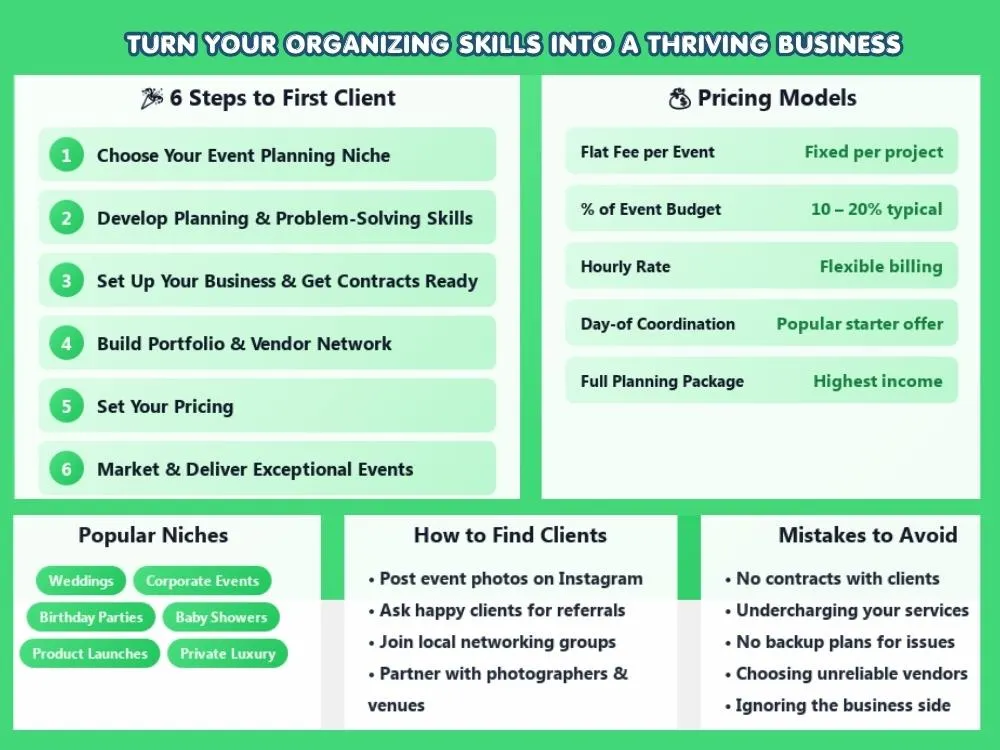
Step 1: Choose Your Event Planning Niche
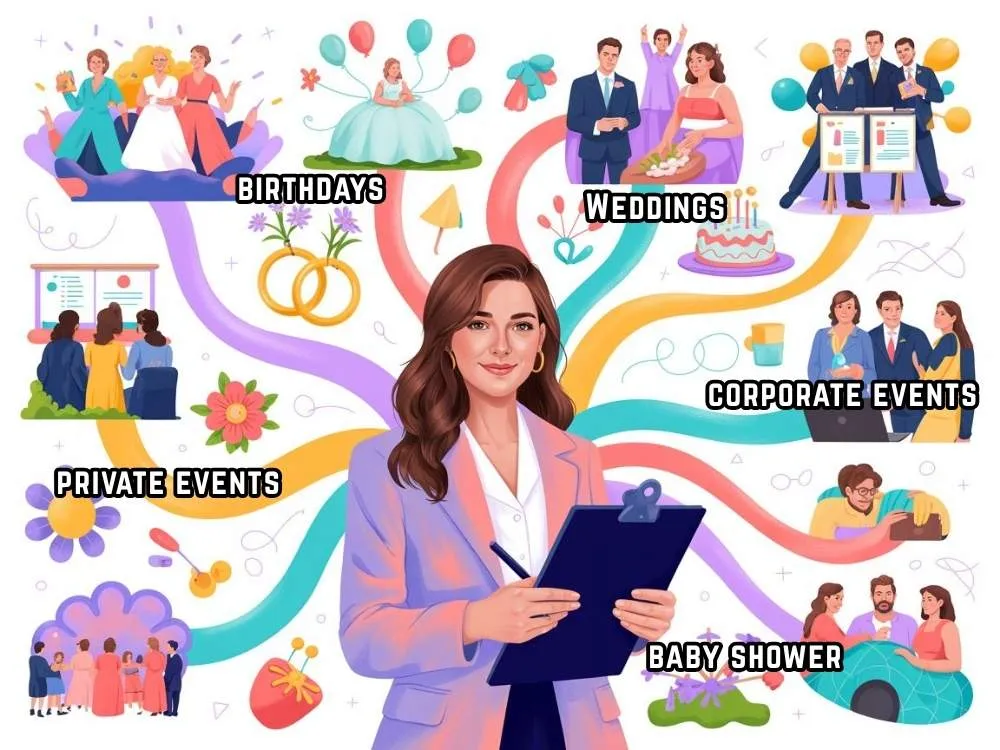
You don’t need to plan every kind of event. Choosing a niche helps people understand exactly what you do. It also helps you market yourself more clearly.
Some common event planning niches include:
- Weddings
- Birthday parties
- Corporate events
- Baby showers
- Engagement parties
- Product launches
- Nonprofit events
- Private luxury events
Weddings might seem fun, but expect stress and strong feelings from clients. Corporate events require professionalism and tight timing. Private parties are usually a little flexible. So pick the niche that resonates with your skills and market.
Step 2: Develop Your Event Planning Skills
More than just organizational skills, you also need to communicate clearly, manage money wisely, negotiate deals with vendors, and solve problems quickly.
A lot of people learn these skills as they go. Start by helping plan events for family or local groups to build real experience.
You can also build your skills by:
- Taking short online courses on event planning
- Watching planning tutorials on YouTube
- Learning basic budgeting and cost tracking
- Practicing how to communicate with vendors
- Studying timelines and checklists from real events
One of the biggest skills in this business is problem-solving. Venues make mistakes. Vendors run late. The weather ruins plans. Clients change their minds. Anyhow, you need to stay calm and figure things out on the spot.
Step 3: Set Up Your Event Planning Business

Set up the business properly once you are ready to start taking clients
Basic things to take care of:
- Choose a business name
- Register your business if needed in your area
- Open a separate business bank account
- Create a professional email address
- Get a business phone number if necessary
- Set up social media pages
- Build a simple website or service page
- Use contracts for clients and vendors
Plus, think about how you want to run things day to day. Keep track of inquiries, payments, timelines, and event notes in one place.
Even a simple spreadsheet can help in the beginning. You don’t need a perfect setup. You just need something clear and professional to run the business.
Step 4: Build Your Portfolio and Vendor Network
When people hire an event planner, they want proof that you can actually pull things off. That’s why your portfolio and your vendor network matter so much.
A) Getting Your First Events
Your first few events may not be huge paid bookings, and that’s okay.
You can build experience by:
- Planning events for friends or family
- Helping with community events
- Assisting another event planner
- Offering planning with a discount for your first few clients
Take photos of the events you work on. Save mood boards, setup images, before-and-after shots, and testimonials if you can get them. All of that helps build your portfolio.
Present it well even if the event is small. A well-organized birthday dinner can still show your style, attention to detail, and planning skills.
B) Building Vendor Relationships
A big part of event planning is knowing who to call.
You will likely work with:
- Caterers
- Florists
- Photographers
- DJs
- Makeup artists
- Bakers
- Decor suppliers
- Rental companies
- Venues
The better your vendor relationships are, the smoother your events usually go. Good vendors can save you a lot of stress.
Start building those relationships early. Reach out and introduce yourself. Attend local events and keep notes on who is reliable. A strong vendor network becomes one of your biggest business assets.
Step 5: Price Your Event Planning Services

Pricing is important and you have to think about this in the beginning. A lot of people undercharge because they think lower prices will attract clients faster. Sometimes that works short term, but it usually creates problems later.
Your pricing should reflect:
- Your time
- Planning hours
- Meetings
- Coordination work
- Vendor management
- Event day support
- Your experience level
Common pricing models include:
- Flat fee per event
- Percentage of the total event budget
- Hourly rate
- Package pricing
For example, you might offer:
- Full event planning
- Partial planning
- Day-of coordination
Keep your pricing simple so people can easily understand. Clients don’t want to feel confused before they even book you. Start at a level that fits your experience, then raise your prices as your portfolio and confidence grow.
Step 6: Find Clients and Market Your Business
You can be amazing at planning events, but none of that matters if nobody knows about you.
Start with the basics:
- Set up an Instagram account for your business
- Post pictures and videos from events you work on
- Share quick tips or show what goes on behind the scenes
- Make a basic website where people can see what you offer and how to reach you
- Get reviews from clients after their events
- Stay in touch with vendors who'll recommend you when people ask
Word of mouth is huge in event planning. One happy client can lead to several referrals.
You can also market your business by:
- Joining local business networking groups
- Adding your business to event planning directories online
- Going to wedding expos or community events
- Teaming up with photographers or venue owners
- Running cheap ads on Facebook or Instagram
Try to make your content look better than others. No need to post every day. But you do need to stay visible.
Step 7: Deliver Exceptional Events and Scale Your Business

Once you start booking clients, your main job is to deliver a smooth experience.
That means:
- Replying on time
- Keeping clients updated
- Staying organized
- Handling problems calmly
- Making the event day feel easy for the client
People may forget some of the tiny details. But they'll remember whether you made them feel stressed or supported.
Once the business grows, you can scale by:
- Raising your prices
- Taking on larger events
- Hiring assistants
- Building planning packages
- Specializing in one niche
- Working with higher-end clients
Common Event Planning Business Mistakes to Avoid
A lot of new event planners make the same mistakes early on. It’s better you know them before they become your problem.
Some common ones include:
- Taking every client without checking fit
- Undercharging
- Not using contracts
- Poor communication
- Leaving things until the last minute
- Not having backup plans
- Trying to do everything alone
- Choosing unreliable vendors
One major mistake is focusing only on the pretty side of events and ignoring the business side. Mood boards and decor matter, but timelines, budgets, contracts, and communication matter just as much.
Wrapping Up
Starting an event planning business is more straightforward than most people think. You don't actually need special training or connections. Just stay organized and care about making events run smoothly. Start wherever you are and learn as you go. Don't wait for perfection and do solid work so people will notice.
FAQs
Q1: Do I legally need anything to start this business?
Depends where you live. Most places don't need a special event planning license, but you might have to register as a business. Check what your city or state requires before you start taking money.
Q2: What kind of money can I actually make doing this business?
All over the place. New planners might get a couple of hundred per small event. Once you get good and build a name, weddings and corporate gigs can pay several thousand each. Really depends on your area and what you charge.
Explore Related Posts
https://smarttoolsai.com/post/how-to-start-a-cleaning-business
https://smarttoolsai.com/post/how-to-start-a-resume-writing-business
https://smarttoolsai.com/post/become-a-life-coach-and-start-your-own-business