
How to Become a Life Coach and Start Your Own Business
.webp)
Do friends call you when they need clarity on big choices? That happens for a reason. People need guidance to navigate their lives and they're willing to pay for real support.
So why not turn this into a business? Without expensive certifications or a fancy office, you can actually start this business small and grow from there.
This guide shows you exactly how to become a life coach and simply start your own business. No confusing talk. Simple, practical steps you can follow.
Key Takeaways
- Learn what a life coach actually does and how coaching is different from therapy.
- Get a complete guide to start your coaching business from scratch.
- Know how to pick a niche, get training, set your prices, and find your first clients.
- Skip the mistakes that slow down most new coaches.
What is a Life Coach and What Do They Do?
They actually help people get their lives moving in the right direction. It could be anything like career guidance, confidence, relationships, getting healthier, or just figuring out what they want.
Coaching isn't like therapy. Therapists help you fix past trauma and mental health struggles. But coaches help you set goals and actually hit them. Two different things.
So what does a life coach do:
- They help figure out what you really want and how to get there
- Build habits that actually last
- Push past the doubts that are holding you back
- Help make vital decisions without second-guessing everything
- Stay accountable to your commitments
- Turn vague ideas into real steps
Do You Need Certification to Become a Life Coach?
You don’t legally need certification in most places to call yourself a life coach. That surprises a lot of people. But that doesn't mean you should choose that way.
Certification can help because it gives you structure and more confidence when you begin. It can also make some clients trust you faster, especially if they are comparing coaches online.
So certification alone won't build your business. Plenty of certified coaches struggle because they never learn how to market themselves or get results for clients.
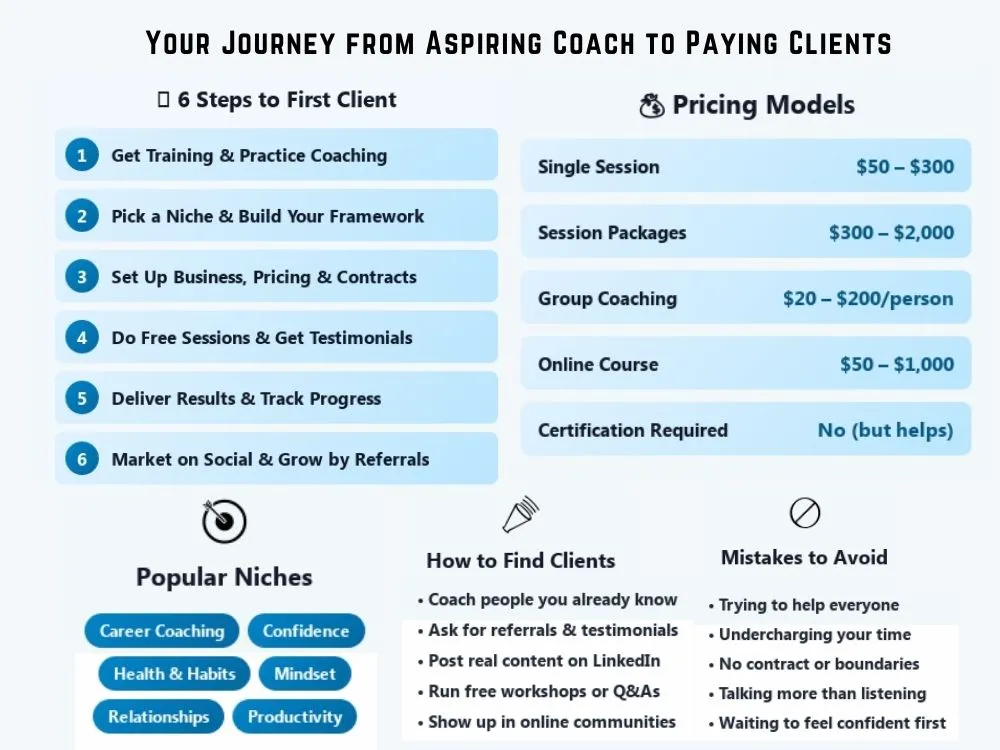
Step 1: Develop Your Coaching Skills and Get Training
You need to know what you're doing before you start charging anyone. Good intentions don't cut it. Coaching is a real skill you have to learn.

A) Life Coaching Certification Programs
Many new coaches start with a certification program. A good program can teach you:
- Coaching ethics
- Listening skills
- Asking better questions
- Goal setting
- Accountability methods
- Session structure
When looking at certification programs, check:
- What the course actually teaches
- Whether you get live practice
- Who the trainers are
- Whether the program has good reviews
- The total cost
Some programs are quick and cheap. Others take longer and cost more. You don't need the most expensive one. Just pick something that gives you actual practice, not just a bunch of PDFs to read.
B) Self-Study and Practice
If you don't have the money for a program right now, you can start learning on your own. Plenty of people do.
You can learn from:
- Books on coaching techniques
- Online courses (lots of free ones out there)
- YouTube channels run by actual coaches
- Podcasts about coaching
- Practice sessions with friends who'll let you coach them
Study all you want, but real practice is what counts. You have to actually coach people. Even if it's your friend trying to quit some bad habit or your cousin figuring out a career change. That's where you really learn.
Start coaching for free if you need to. The reps are what matter. You'll feel awkward at first. That's normal. But each session makes you better.
Step 2: Define Your Coaching Niche and Framework
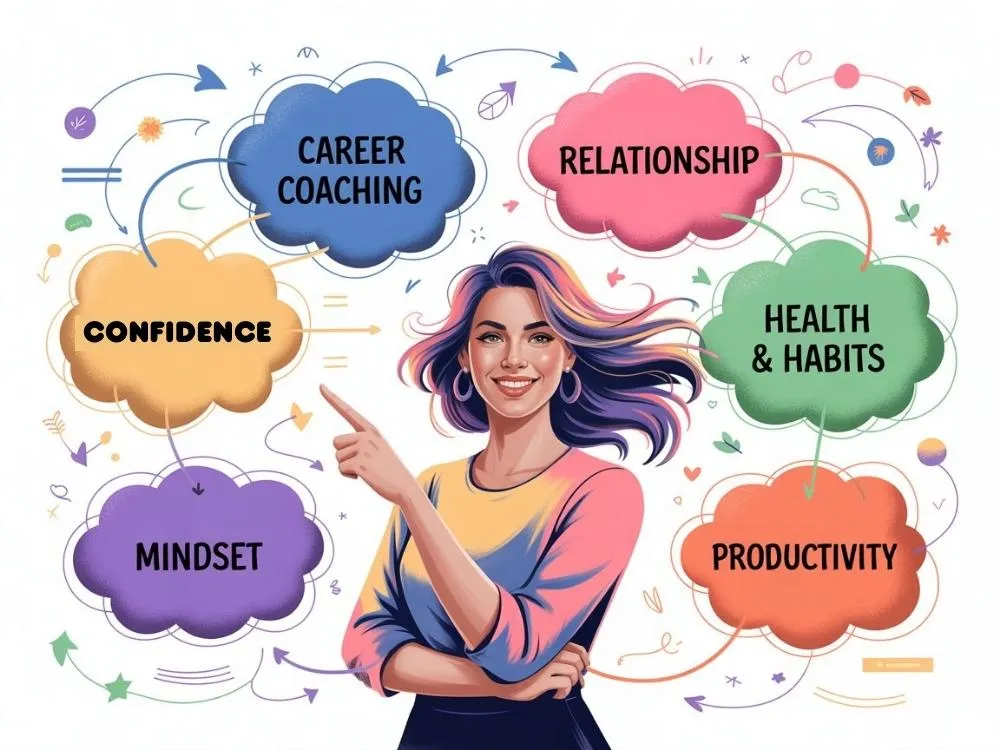
Trying to help everyone with everything doesn't work. People want a coach who really understands their specific problem clearly. For example, you might focus on:
- Career coaching
- Building confidence
- Getting your mindset right
- Health and habits
- Relationships
- Productivity
Think about your strengths and what people already ask you for help with. You also need a simple coaching framework. That just means your way of helping clients go from problem to result.
For example, your framework might include:
- Clarify the goal
- Identify the blocks
- Build an action plan
- Stay accountable
- Review progress
It doesn’t need a fancy name. It just needs to be clear. Just know your steps so you're not winging it every session.
Step 3: Set Up Your Coaching Business and Pricing
Once you know who you're helping, you need the basic business stuff in place and a way to get paid.
Basic things to set up:
- A business name
- A basic website or booking page
- A professional email (not your old AOL address)
- A way to take payments
- A simple contract so everyone's clear on what you're doing
- A calendar tool so people can book time with you
Figuring Out What to Charge
This is where most new coaches freeze up. They charge way too little because they feel weird asking for money. Look, that's normal. But your time matters. Don't give it away.
Ways to Work With Clients
| How You Coach | What People Charge | The Upside | The Downside |
|---|---|---|---|
| One session at a time | $50 to $300 per session | Easy to start, very personal | You're trading hours for dollars |
| Packages (multiple sessions) | $300 to $2,000+ | People commit, steadier money | Harder to sell when you're new |
| Group coaching | $20 to $200 per person | Make more per hour of your time | Can't give everyone individual attention |
| Online course or program | $50 to $1,000+ | Make it once, sell it forever | Takes real work upfront |
Most people start with one-on-one sessions. Once you've got some experience, move to packages. Packages work better anyway because people actually get results when they stick around longer than one call.
Step 4: Get Your First Clients
You may struggle to get those first few clients. Not because people don't need help, but because nobody knows you exist yet.
Somehow you can begin by:
- Do a few free sessions to get practice and feedback
- Coach people you already know (friends, coworkers, anyone who'll say yes)
- Ask those people for testimonials after
- Talk about what you're doing on social media
- Hang out in groups where your people are (online or in person)
Don't wait until your website is perfect or your Instagram looks professional. That's just procrastinating. Most coaches get their first clients by talking to people they know and asking for referrals. That's it.
Step 5: Deliver Effective Coaching Sessions

Once you have clients, your job is simple which is to help them get results. A good coaching session usually looks like:
- Start with a check-in (how'd the week go?)
- Pick one main thing to work on that session
- Ask questions that make them think
- End with clear next steps
- Make sure they're accountable for doing something
Good coaching means you listen more than you talk. You don't interrupt every two seconds. You ask direct questions. You call out excuses without being a jerk about it.
And you help them come up with real actions they'll actually do. Not some fantasy plan that sounds good but won't happen. Keep notes after every session. You'll forget details otherwise, and tracking progress matters.
Step 6: Market Your Coaching Business
The business stays stuck if no one knows you exist. That's why marketing matters a lot even if it feels awkward at first.
Simple ways to market your coaching business:
- Post useful stuff on Instagram or LinkedIn (not just quotes over sunsets)
- Talk about actual problems you solve, not vague inspiration
- Share what's happened for your clients (with permission)
- Start collecting emails so you can stay in touch
- Run free workshops or Q&A sessions
- Show up in groups where your people hang out
People trust real talk over perfect Instagram captions. A post about an actual problem someone's dealing with will always beat some dramatic quote that means nothing.
Step 7: Scale Your Coaching Practice
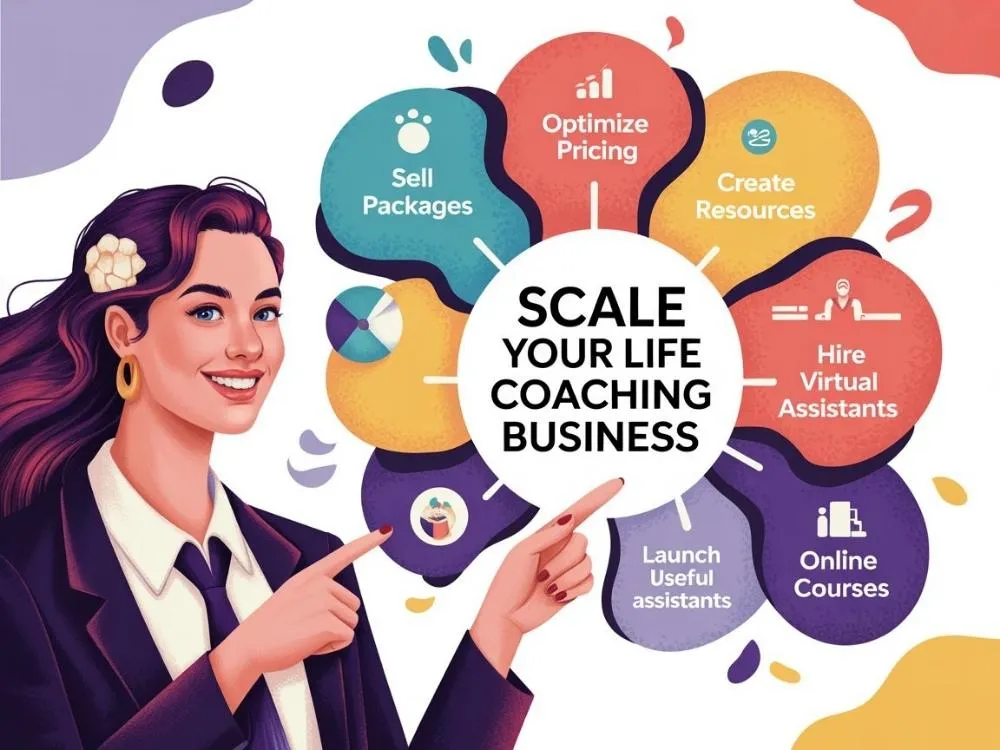
You can start growing once you've got regular clients and a system that works.
Ways to Scale Up
- Charge more (you're better now than when you started)
- Sell packages instead of single sessions
- Run group coaching so you help more people at once
- Create stuff people can buy without your time (templates, guides, workbooks)
- Build an online course
- Hire someone to handle scheduling and admin stuff
Don't jump into this too soon. Make sure your one-on-one coaching actually works first. It's way easier to grow something that's already getting people results.
Common Life Coaching Business Mistakes to Avoid
A lot of new coaches mess up in the same ways early on. Catch these now and save yourself the headache. Watch out for:
- Trying to help everyone instead of picking a lane
- Copying what other coaches do instead of finding your own way
- Charging way less than your time is worth
- Talking the whole session instead of letting the client work it out
- No contract, no boundaries, just vibes (bad idea)
- Spending weeks on a logo when you have zero clients
- Being scared to actually sell your services
- Taking on clients with issues you're not equipped to handle
Another big mistake is waiting to feel confident before you start. That's backwards. You don't get confident and then start coaching. You start coaching and then confidence shows up after you've done it a bunch of times.
Wrapping Up
Becoming a life coach and starting your own business is possible. But it takes more than passion. You need coaching skills, a clear niche, a simple business setup, and real experience to help people. Start small and practice often. Get a few clients and improve as you go.
FAQs
Q1: Do I need certification to become a life coach?
No, it's not legally required. But training helps you actually know what you're doing. Certification also helps gain clients' trust.
Q2: How much can life coaches make?
There's no standard figure, but people make decent money. New coaches might charge $50 to $100 per session. Experienced coaches charge way more. Some pull in five or even six figures once they're established.
Explore Related Posts
https://smarttoolsai.com/post/how-to-become-a-health-and-wellness-coach
https://smarttoolsai.com/post/how-to-start-a-bookkeeping-business
https://smarttoolsai.com/post/how-to-start-a-virtual-assistant-business