
How to Become a Career Coach and Start Your Own Business
.webp)
Ever had people come to you for career advice without you even offering it? Maybe friends ask you to review their resume or coworkers ask how to get promoted or switch industries. That's usually a sign.
Career coaching can become a real business when you help people move forward. You don't need a huge office or a perfect plan on day one. You only need useful skills and a clear way to help people get results.
This guide breaks down how to become a career coach and simply start your own business. No complicated language. Just practical steps that work.
Key Takeaways
- Learn what a career coach does and how it differs from recruiters or HR.
- A practical guide to building your coaching business from scratch.
- Know how to pick a niche, set prices, and get your first clients.
- Learn simple ways to market your coaching services and get noticed.
- Know and avoid common mistakes that slow new coaches down.
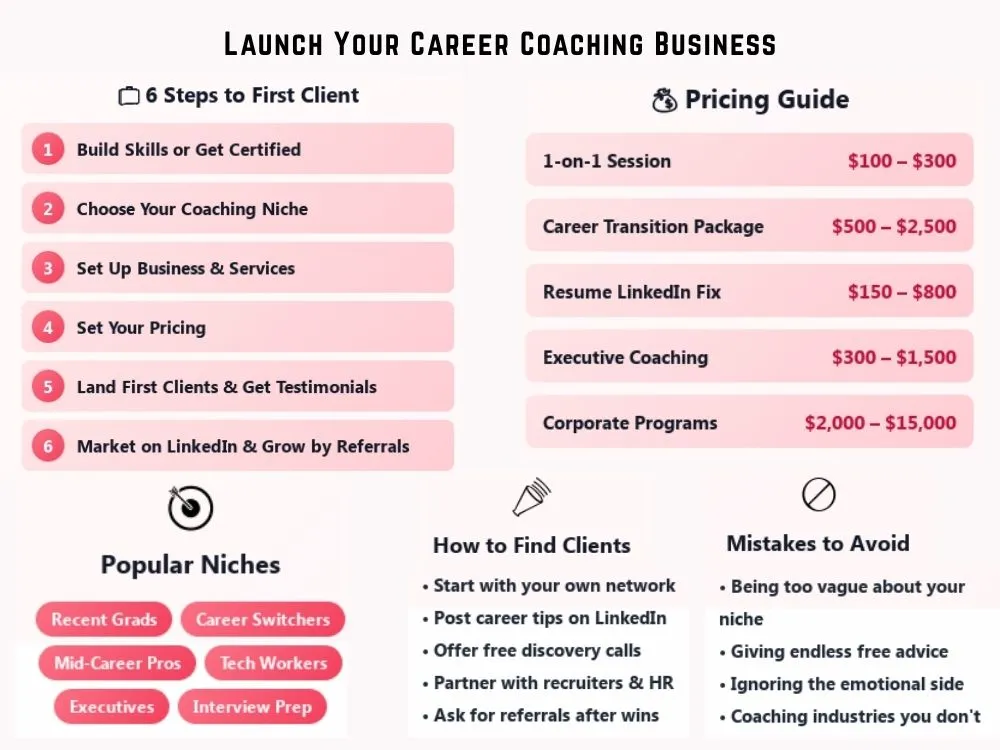
What is a Career Coach and What Do They Do?
They help people make smart moves in their careers and take real action. That could mean choosing the right path, fixing a resume, preparing for tough interviews, making a complete career switch, or something similar.
Some coaches work with recent grads trying to break in. Others help professionals who've hit a wall. Some specialize in senior leaders or people jumping back into work after taking time off.
The work usually includes things like:
- Helping clients get clear on what they actually want
- Reviewing resumes and LinkedIn profiles
- Practicing interviews until they feel natural
- Building a realistic job search plan
- Working through doubt and building confidence
- Keeping clients on track when motivation drops
Career coach gives advice. But more importantly, they help people turn confusion into a plan.
Do You Need Certification to Become a Career Coach?
No, you don't always need it. People think you need a certificate before you can help anyone, but that's not how it works.
A lot of successful coaches started without formal training. They had something better like real experience. They'd managed teams, hired people, and knew how to listen. They asked questions that got people unstuck.
Certification can help though. It gives you a system to follow early on and builds your confidence. Some clients want to see credentials before they work with you.
So the real answer is certification is useful, but it's not the only way in. If you've been in the workforce long enough and you're naturally good at helping people think through their options, you can start coaching without it.
Now let's find out how you can become a successful career coach and make it into a real business.
Step 1: Develop Your Career Coaching Skills and Expertise
You need to understand how you'll actually help people before you think about selling your skills.

A) Career Coaching Certifications
If you want training, you can take a career coaching or general coaching certification. These programs usually teach coaching frameworks, communication skills, goal setting, and client support methods.
Certification makes sense if:
- You are new to coaching
- You want more structure
- You want extra credibility
- You need help building confidence
You don’t need to choose the most expensive program. Start with something practical and respected.
B) Leveraging Your Professional Experience
A lot of successful career coaches skip certification completely. They build their business on what they already know.
Think about what you've done professionally:
- Hired or recruited people
- Worked in HR or talent development
- Managed teams or led projects
- Reviewed hundreds of resumes
- Interviewed job candidates
- Climbed the ladder in your own career
That experience matters. If you've spent years helping people make smart career moves, that's totally valuable. The key is to turn your experience into a clear coaching offer.
Step 2: Choose Your Career Coaching Niche
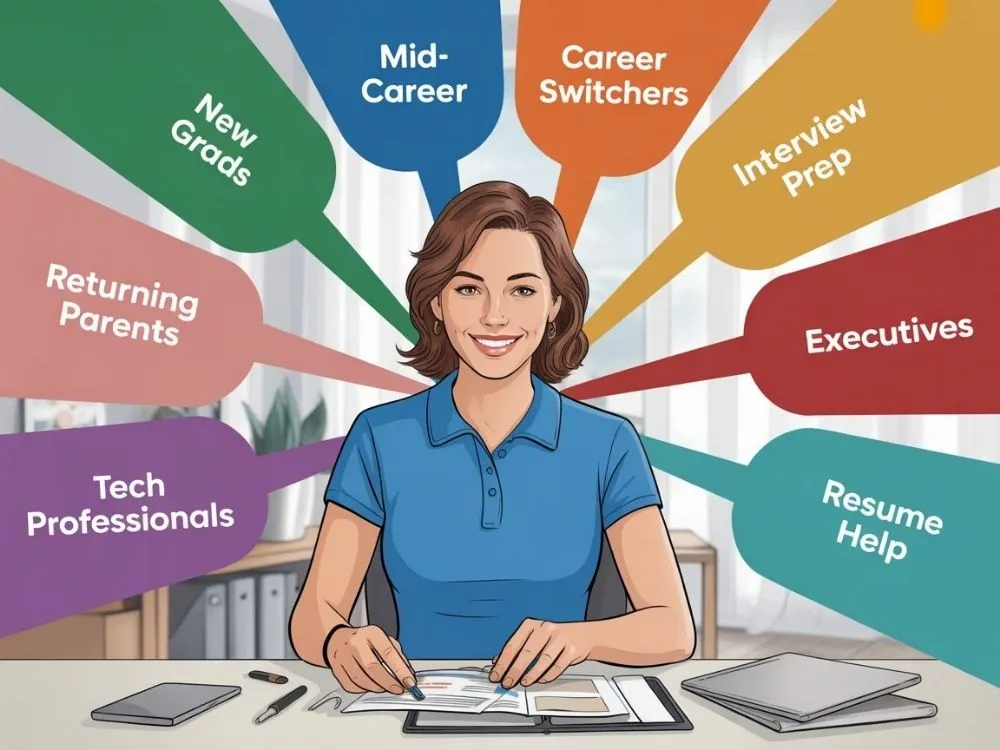
A niche makes everything clearer. People need to understand what you do and who you help right away. Some common career coaching niches include:
- College students and recent grads
- Professionals stuck mid-career
- People switching industries completely
- Parents getting back into the workforce
- Tech workers looking to level up or change to low-stress jobs
- Executives and senior leaders
- Anyone struggling with interviews
- People who need their resume and LinkedIn fixed
Choose based on what you know and who you get. Worked in tech recruiting for years? Tech job seekers are your people. Led teams before? Executive coaching probably fits better.
Step 3: Set Up Your Coaching Business and Services
Set up the basics once you know who you're helping. Keep everything simple at the start, without overcomplicating it.
Here's what you need:
- A business name
- A simple website or landing page
- A business email address
- A booking system
- A payment method
- A basic contract or coaching agreement
Next, figure out what services you're actually offering.
Common options include:
- One-on-one coaching calls
- Resume reviews and rewrites
- LinkedIn profile fixes
- Interview practice and feedback
- Career change packages (multiple sessions)
- Executive coaching for leaders
- Group coaching sessions
- Workshops for companies
Try not to create ten different offers right away. Start with a few clear services that solve specific problems of your clients.
Step 4: Price Your Career Coaching Services
Pricing feels awkward when you're starting out. Most new coaches charge way too little because they don't feel experienced enough yet.
But your pricing should reflect the time you spend and the real value you offer to help someone land a better job or career.
Common Career Coaching Services and Pricing
| Service | Typical Pricing | Time You'll Spend | How Easy to Scale | Who It's For |
|---|---|---|---|---|
| 1-on-1 coaching session | $100-$300 per session | 60-90 minutes | Low | Job seekers, professionals |
| Career transition package | $500-$2,500 | Multiple sessions over 4-12 weeks | Medium | People changing careers or industries |
| Resume + LinkedIn optimization | $150-$800 | 3-8 hours | Medium | All levels of job seekers |
| Interview prep coaching | $150-$600 | 1-3 sessions | Medium | Active job applicants |
| Executive coaching | $300-$1,500+ per session | 60-90 minutes | Low | Senior leaders, C-suite |
| Corporate career programs | $2,000-$15,000+ | Half-day to several weeks | High | Companies, teams, HR |
When you are setting prices, think about:
- How much time the service actually takes (including prep)
- Your experience level and background
- The outcome your client gets (a new job, promotion, career change)
- What other coaches in your area charge
You don’t need to start with premium prices. But don't price so low that you resent the work.
Step 5: Get Your First Career Coaching Clients
This step may be the hardest part for many. Anyways, you don't need a big audience to begin. Just start with the people already around you.
Good places to find early clients include:
- Your personal network and LinkedIn connections
- Former coworkers and colleagues
- Friends and family who can refer people
- Local professional or industry groups
- Online career communities and forums
Also, try running a few beta sessions at a discount to collect testimonials and figure out what actually works.
A few simple ways to start:
- Post on LinkedIn about who you help and what you do
- Offer a free short discovery call
- Ask past contacts if they know anyone job hunting or stuck in their career
- Share helpful career advice regularly (not just selling)
- Be specific about your niche
The main thing is to stop being vague. People need to know exactly what you help with.
Step 6: Deliver Results-Driven Coaching
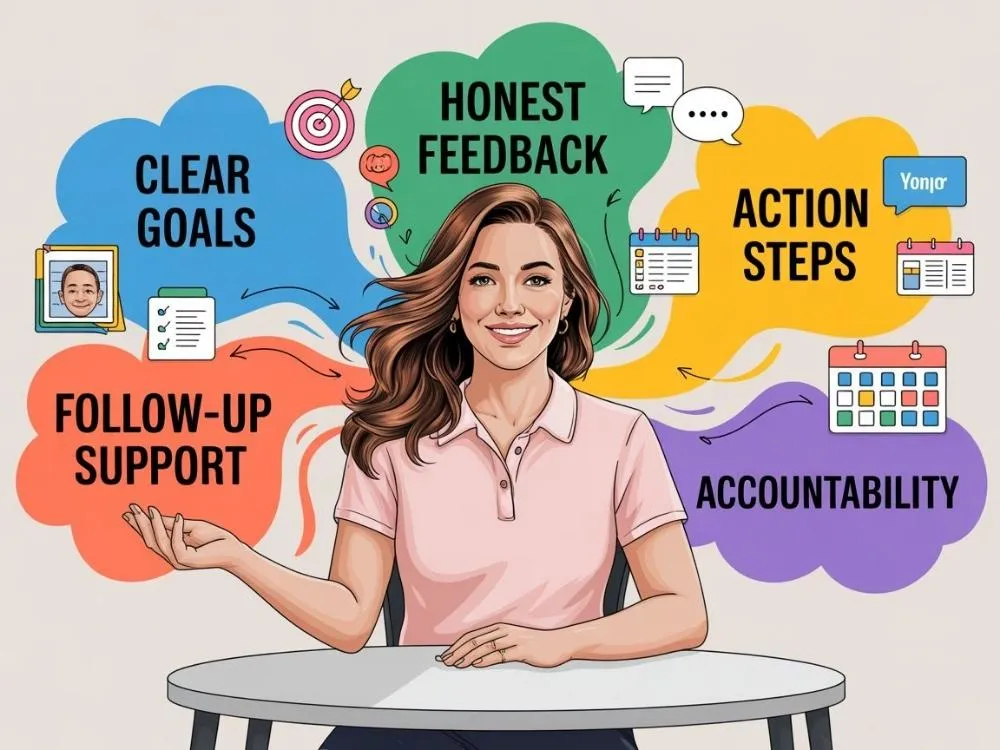
A good career coach does more than talk. They help clients take action and see progress. That means your coaching should feel practical, not fluffy.
Strong coaching often includes:
- Clear goals
- Honest feedback
- Action steps
- Follow-up support
- Accountability
If a client comes to you for interview help, they should leave more prepared. If they come for career clarity, they should leave with direction. If they come for resume support, they should leave with something stronger than what they started with.
Results build trust and it leads to referrals. So listen carefully because a lot of coaching isn't about giving the perfect answer. You ask the right questions and help the client think clearly.
Step 7: Market and Grow Your Career Coaching Business
Once you have a few clients and can prove your process works, you can focus on growing.
Simple ways to market your coaching:
- Share helpful content on LinkedIn
- Build your personal brand as a career expert
- Ask happy clients for referrals
- Send regular email tips to your list
- Host free webinars or career workshops
- Partner with recruiters or HR professionals
LinkedIn works well for career coaches. Share practical job-related advice regularly and people will start seeing you as an expert.
When you're ready to scale:
- Raise your rates as you get more experience
- Create packages instead of one-off sessions
- Add group coaching programs
- Sell digital resources like templates or courses
- Offer corporate training for companies
Start with one clear offer. Then expand once the basics are working.
Common Career Coaching Business Mistakes to Avoid
Most new career coaches trip over the same things early on. Here's what usually goes wrong:
- Copying the same resume templates everyone uses
- Spending hours on free advice calls that go nowhere
- Using corporate jargon that sounds impressive but means nothing
- Coaching people on industries you know nothing about
- Forgetting that job search is emotional, not just tactical
- Never following up after someone lands a job (huge missed referral opportunity)
- Thinking that a certification alone will bring clients
- Being afraid to share your own career mistakes and lessons
Another big mistake is assuming people automatically understand what career coaching is. Many don’t. You need to explain your value clearly and simply.
Wrapping Up
Career coaching can be a solid business. But success takes more than having opinions about resumes. You need training, a focused niche, knowledge of hiring practices, and the skill to help people through uncertainty. Start small with people you can actually help. Pay attention to what leads to job offers. Let those results shape how you grow.
FAQs
Q1: Is the career coaching market too crowded?
There are lots of coaches out there. But most are way too generic. If you focus on something specific, like helping teachers move into corporate roles, you'll stand out. Being specific always wins over trying to help everyone.
Q2: How many clients do I need to replace my full-time income?
Depends on your rates. If you charge $150 per session and want to make $5k a month, you need about 8-9 clients per week. With packages at $1,500, you'd need 3-4 new clients monthly. Do the math based on what you charge.
Explore Related Posts
https://smarttoolsai.com/post/become-a-life-coach-and-start-your-own-business
https://smarttoolsai.com/post/how-to-become-a-health-and-wellness-coach
https://smarttoolsai.com/post/how-to-start-a-photography-business