
How to Start a Bookkeeping Business from Home
.webp)
Ever thought about how you could make money from home just by being good with numbers? Starting a bookkeeping business is the answer. You actually help businesses track their money, and they pay you for it.
The best thing is that you can simply start this business from your own home. No fancy equipment or massive space is needed. Just your willingness to learn and dedication matter.
This guide explains how to start a bookkeeping business from scratch. No overwhelming steps. Just practical advice you can put into action right now.
Key Takeaways
- Understand what bookkeepers do and how this business works.
- Know the difference between bookkeeping and accounting.
- Follow a complete step-by-step guide to start your business from scratch.
- Learn which software to use and what services to offer clients.
- Avoid common mistakes that trip up most new bookkeepers.
What is Bookkeeping and What Does a Bookkeeper Do?
Think of it as maintaining a detailed money diary for a business. You just note every transaction and keep everything filed so it's easy to find later.
Bookkeepers handle everyday money tasks like:
- Record all the money a business makes and spends
- Match bank statements with business records
- Organize and store all receipts and invoices
- Follow up on unpaid invoices and upcoming bills
- Make basic financial reports
Your job is to keep everything neat and accurate. When you do this right, business owners can make smarter decisions about their money. Plus, tax season becomes way less stressful for everyone involved.
Bookkeeping vs Accounting: Key Differences
People often mix up these two things. However, they ain't the same. Bookkeeping mainly focuses on recording and organizing financial transactions. It's the key to a company’s financial records.
On the other hand, accounting involves analyzing those records and providing financial advice. Accountants usually create financial strategies and handle complex financial planning. In simple terms, bookkeepers maintain the records. Accountants interpret them.
Step 1: Learn Bookkeeping Basics
You can't run a bookkeeping business without knowing how it actually works. The good thing is you have options for learning.
A) Self-Taught Path
Plenty of bookkeepers learn on their own using online courses and practice. You can also do the same with free resources and work your way up.
Focus on learning:
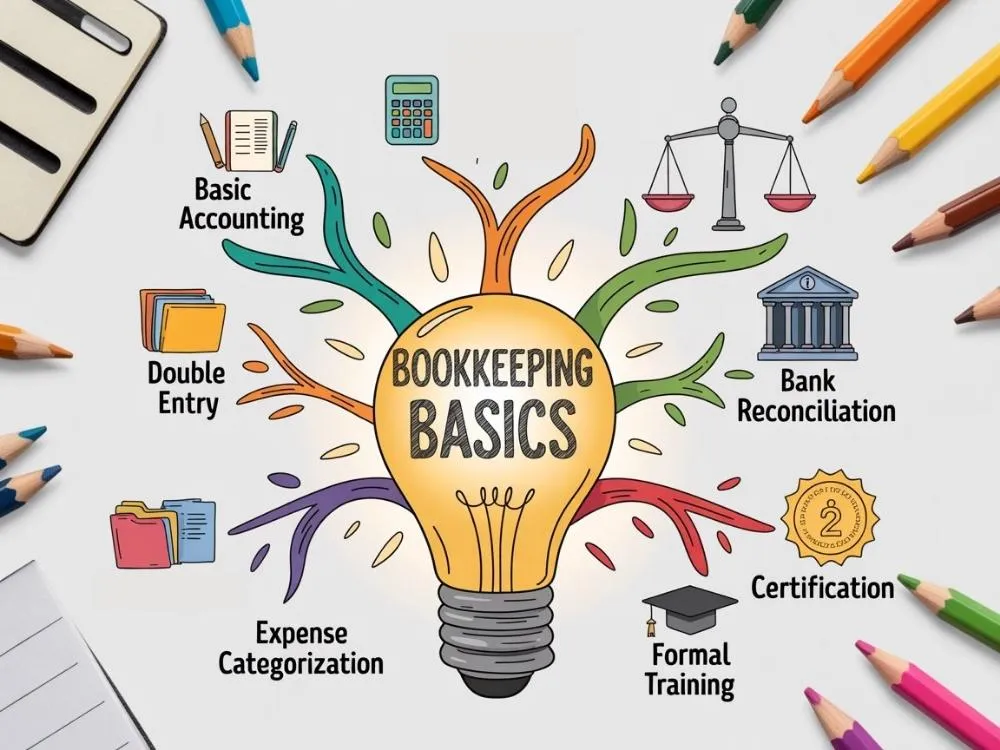
- Basic accounting terms
- Double entry bookkeeping
- Bank reconciliation
- Financial statements
- Expense categorization
Practice with sample transactions or offer to help a friend's small business for free. Real experience is more important than the theory you learn.
B) Formal Training and Certifications
Some people prefer structured learning through certifications.
Popular options include:
- QuickBooks certification
- Bookkeeping certification programs
- Community college accounting courses
These programs help build credibility and confidence when working with clients.
Step 2: Choose Your Bookkeeping Software
Most bookkeeping happens online now. You need to know at least one software platform well before you start taking on clients.
Popular Bookkeeping Software Options
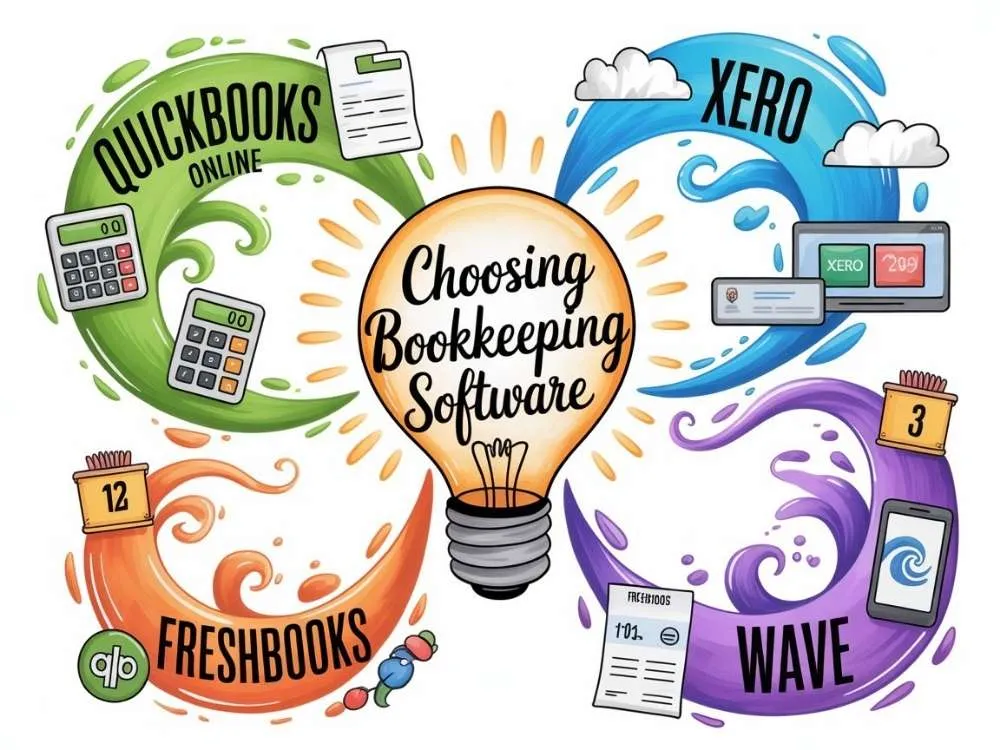
A) QuickBooks Online
- What it does: Invoicing, reporting, bank connections
- Cost: Paid plans
- Best for: Most small businesses
This platform is the most common. Learn this one first if you're unsure where to start.
B) Xero
- What it does: Automation and lots of integrations
- Cost: Paid plans
- Best for: Growing businesses
C) FreshBooks
- What it does: Simple invoicing and expense tracking
- Cost: Paid plans
- Best for: Freelancers and solo businesses
D) Wave
- What it does: Basic accounting tools
- Cost: Free
- Best for: Small businesses with a tight budget
Start with QuickBooks Online if you can. Most clients already use it or want someone who knows it. Once you're comfortable with one platform, picking up others gets easier.
Step 3: Decide What Services to Offer
You don’t have to offer every financial service. Many successful bookkeepers specialize in a few core tasks.
Common services you can offer:
- Monthly bookkeeping
- Bank reconciliation
- Managing bills and invoices
- Creating financial reports
- Payroll processing
- Cleaning up messy or backlogged books
You can also niche down by industry. Some people only work with restaurants or e-commerce stores. Specializing simplifies the marketing of yourself and allows you to charge higher rates.
Start with basic monthly bookkeeping and bank reconciliation. You can add more services to your list as you get comfortable.
Step 4: Set Up Your Home Office and Business

You don't need a fancy office. But you do need some office essentials and systems to work professionally such as:
- A reliable computer
- Secure internet connection
- Accounting software
- File storage and backup system
- A small home office setup
Beyond equipment, take care of the business side too. Check if you need to register your business in your state or area. Then open a separate business bank account. Mixing personal and business money is a mess. Keep them separate from day one.
Step 5: Gain Experience and Build Your Portfolio
This is crucial when you're just starting out. You actually need some real work under your belt before you can charge professional rates.
Here's how to get experience:
- Helping a friend or local business
- Offering discounted services to your first few clients
- Practicing with bookkeeping software tutorials
Save examples of your work. Screenshots of cleaned-up books or before-and-after comparisons all work. These become proof that you know what you're doing when you're talking to new clients.
Step 6: Set Your Pricing
There's no one right way to charge clients. You pick what makes sense for the type of work you're doing.
Common pricing options:
- Hourly rates
- Monthly packages
- Project-based fees
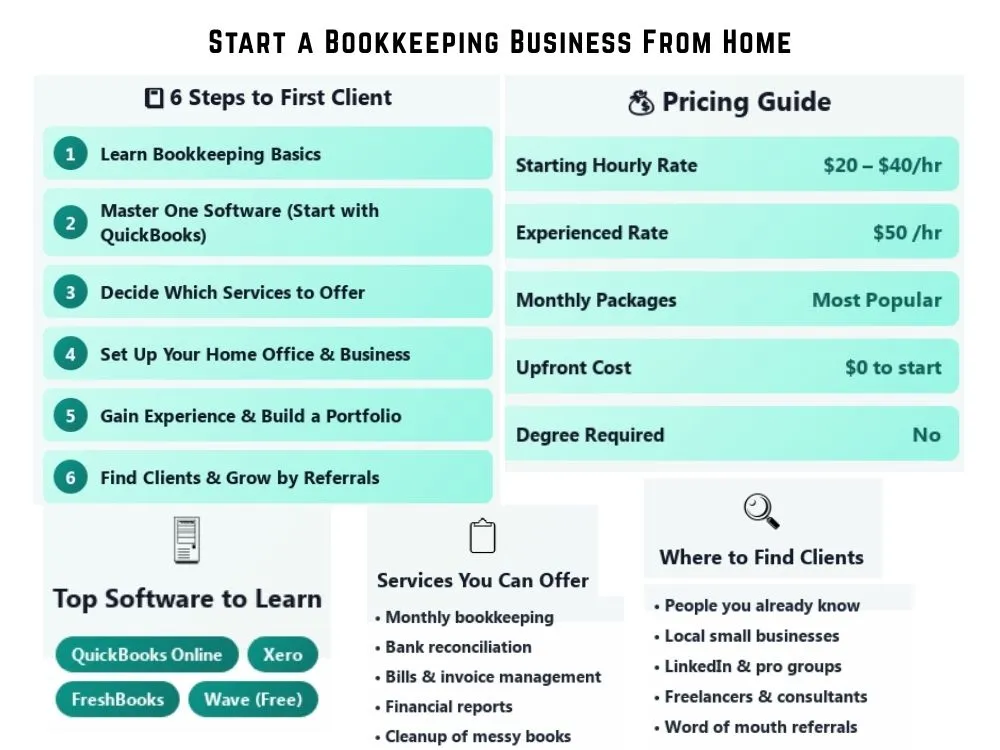
Something around $20-$40 per hour is ideal when you're starting. With experience, you can raise your rates to $50 or more.
Monthly packages are usually the easiest to sell. Clients like knowing exactly what they'll pay each month instead of worrying about hourly bills adding up.
Step 7: Find Your First Clients

This often feels like the hardest part for many. Anyhow, there are several simple ways to start.
Good places to look include:
- Local small businesses
- Freelancers and consultants
- Online business communities
- LinkedIn and professional groups
Without overthinking, reach out to people you already know who run businesses. Let them know you're offering bookkeeping services now.
Once you do good work for a few clients, referrals start coming in. Word of mouth is how most bookkeepers grow their business.
Step 8: Manage Clients and Deliver Quality Work
A very important step because you have to keep clients in the loop. This is only possible when you deliver quality services.
Make sure you:
- Keep records updated regularly
- Communicate clearly with clients
- Ask questions when transactions are unclear
- Hit your deadlines every time
Clients care more about reliability than how fast you work. They really need someone they can trust with their money. Show up consistently and do what you said you'd do.
Step 9: Scale Your Bookkeeping Business
You may reach a point where you want to expand as your client list grows,
Ways to grow include:
- Raise your rates as you gain experience
- Add higher-value services like financial analysis or advisory
- Hire other bookkeepers to handle overflow work
- Specialize in one industry and become the go-to expert
Scaling allows you to increase income to a good 5 figures without working endless hours.
Common Bookkeeping Business Mistakes to Avoid
Many new bookkeepers make similar mistakes when starting out. Some common ones include:
- Underpricing services because you're nervous
- Saying yes to every client and getting overwhelmed
- Not keeping clients updated or asking clarifying questions
- Ignoring software updates and new features
- Using the same bank account for personal and business expenses
You must learn from these mistakes early on. So it helps build a stronger business.
Wrapping Up
Starting a bookkeeping business from home can be practical. You can actually build a service that many businesses need. You only need the right skills and tools. Focus on learning the basics and gaining experience. Building trust with your clients matters. Over time, those small steps can grow into a reliable business.
FAQs
Q1: Do I need a degree to start a bookkeeping business?
It's not important because many people learn through online courses or certifications. The key thing is real experience.
Q2: Do I need special insurance or licenses?
Depends on where you live. Some states require business registration. Liability insurance is smart once you have paying clients, but not always mandatory. Check your local requirements.
Q3: What software should I learn first?
QuickBooks Online. It's what most small businesses use. Once you know one platform well, learning others becomes easier.
Explore Related Posts
https://smarttoolsai.com/post/how-to-start-a-freelance-writing-business
https://smarttoolsai.com/post/how-to-start-a-virtual-assistant-business
https://smarttoolsai.com/post/how-to-become-a-social-media-manager-and-make-money