
How to Start a Freelance Writing Business
.webp)
Wanna start your own freelance writing business? It's easier than you think. You pick topics you understand and write helpful content where clients pay for it.
That first paying client hits different. You're not just talking about freelancing anymore. You're actually running your own writing business and making money from it.
This guide shows you how to start a freelance writing business from scratch. No complicated strategies or confusing terms. Just simple steps you can start using today.
Key Takeaways
- Find out what freelance writing is and how writers earn money creating content.
- Learn different types of writing you can offer.
- See how to build a portfolio from scratch without any clients yet.
- Know how to set your rates and which pricing model works best.
- Understand where to find clients and how to pitch them effectively.
- Know and avoid common freelancing mistakes.
What is Freelance Writing and What Do Freelance Writers Do?
Freelance writers create content for clients and earn money doing it. They're not tied to one employer and work with different clients. They help with various writing needs like:
- Blog posts and articles
- Website copy
- Sales pages and landing pages
- Email campaigns
- Social media content
- Product descriptions
- Technical documentation
- Newsletters and case studies
- White papers and ebooks
Businesses need more customers and better sales. Plus, they wanna provide clear messaging. That's what you deliver through your writing.
Types of Freelance Writing You Can Offer
You can actually take many directions. Some are beginner-friendly. Some require experience. Let's see the common freelance writing types:
| Writing Type | Examples | Typical Rates | Skill Level | Demand |
|---|---|---|---|---|
| Blog / Article Writing |
| $25 to $200+ per article | Beginner | Very high |
| Copywriting |
| $30 to $300+ per project | Intermediate to advanced | High |
| Website Content |
| $30 to $200 per page | Beginner | Moderate |
| Ghostwriting |
| $50 to $300+ | Advanced | Moderate |
| Technical Writing |
| $30 to $150+ per hour | Advanced | High in tech |
| Social Media Writing |
| $20 to $300+ per month | Beginner to intermediate | Growing |
| Newsletter Writing |
| $50 to $300+ per issue | Intermediate | Growing |
The ranges of typical rates are rough estimates, not guarantees. If you are just starting out, blog writing or website content is usually the easiest entry point.
Step 1: Develop Your Writing Skills
This first step is absolutely necessary because skills matter a lot. You don’t need a degree to become a freelance writer. What you actually need is consistent practice and a willingness to improve.
Free Ways to Improve
- Take courses on YouTube, Coursera, Skillshare, or Udemy. Many creators sell online courses on these or alternative platforms.
- Practice writing daily. Even 500 words per day helps you improve faster once you start working with clients.
- Read blogs in your chosen niche. This helps you improve quickly.
- Study high-performing content from search engines and social media.
- Join writing communities so you can expand your knowledge.
Skills Worth Learning
- SEO basics
- Copywriting fundamentals
- Content marketing strategy
- Research skills
- Editing and proofreading
Helpful Tools
You can simply start without expensive software. Using the right tools makes your work cleaner and more professional.
A) Writing Tools:
- Google Docs
- Microsoft Word
- Grammarly for grammar and clarity
- Smart Tools AI writing utilities for readability checks and quick content structuring
B) Editing Tools:
- Hemingway Editor for sentence clarity
- ProWritingAid for deeper editing
C) SEO Tools:
- Yoast for WordPress SEO guidance
- SurferSEO for content optimization
- Google Keyword Planner for keyword research
- Smart Tools AI keyword tools
D) Project Management:
- Trello
- Asana
- Notion for organizing content calendars and client tasks
E) Time Tracking:
- Toggl
- Harvest
Tracking your time helps you price your services properly and avoid undercharging.
F) Invoicing:
- PayPal
- Wave
- QuickBooks
- Stripe
Using proper invoicing tools makes you look professional and helps you track income.
Step 2: Choose Your Niche and Services
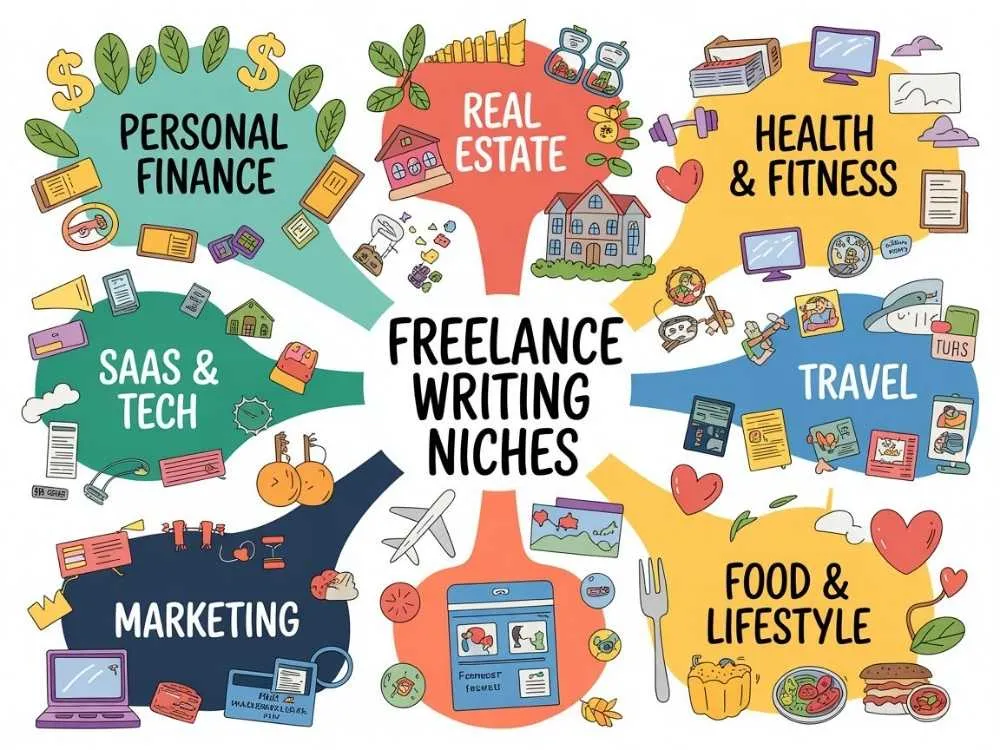
Writing about everything sounds flexible at first but it actually makes you forgettable. So pick a niche you already know something about:
- Health and fitness
- SaaS and tech
- Personal finance
- E-commerce and retail
- Real estate
- Marketing and advertising
- Travel and hospitality
- Food and lifestyle
Specializing lets you charge higher rates because you bring real knowledge to the table. You understand the audience and what actually works in that space.
Step 3: Build Your Portfolio
No client hires a writer without seeing what they can do first. You need samples that prove you know how to write.
A) Create Your Own Samples
You can create samples even if no one has hired you yet.
- 3 to 5 blog posts on relevant topics
- A sales page for a made-up product or service
- An email sequence (welcome series or product launch)
- Case studies based on real business examples
- Product descriptions or landing page copy
B) Get Real Bylines and Testimonials
Writing your own samples works, but published work carries more weight. Try these approaches:
- Pitch guest posts to blogs in your niche
- Offer to write one or two pieces for small businesses
- Help local nonprofits with their content
In exchange, ask for a testimonial or LinkedIn recommendation. Set a deadline for this phase though. One or two months maximum, then start charging actual rates.
Set Up a Simple Website
You need somewhere to send potential clients. A basic one-page site works fine. Easy platforms to use:
- WordPress
- Wix
- Carrd
- Contently
What to Include:
- Your best writing samples
- Short about section (who you help and how)
- Clear contact information or booking link
Don't worry about the design. Clean and functional beats fancy any day. If you want to check other people's WordPress website design, theme, and plugins, use our WordPress theme detector tool.
Step 4: Set Your Rates
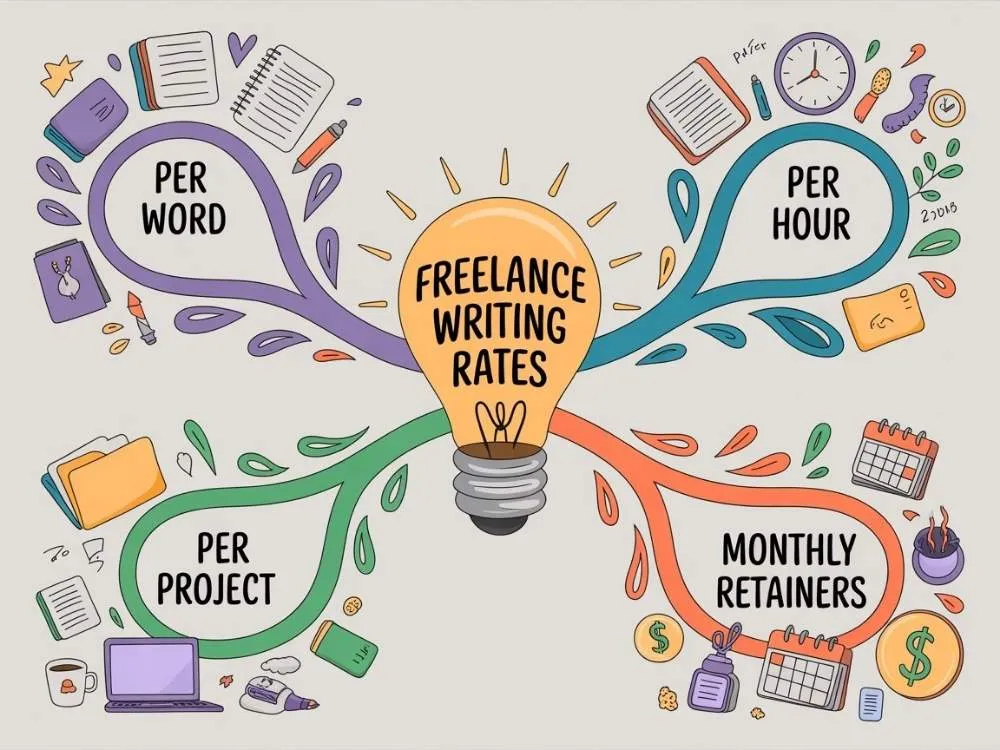
You must understand what to charge. Here's what most writers do.
A) Per Word
This means you charge per word. When you write 1,000 words at $0.10 per word, you make $100. Starting out, you might charge $0.03 to $0.10 per word. As you get better, that goes up. You can check the word count using our word counter tool.
B) Per Project
You agree on one price for the whole thing. A blog post might be $25 to $200+ depending on length and research. Sales pages run $50 to $300+. Email sequences usually fall between $100+.
C) Hourly
Some clients want to pay by the hour. New writers charge $10 to $30 an hour. Once you've got some experience, that becomes $30 to $75. Experienced writers get $75+ or more per hour.
D) Monthly Retainers
A client pays you the same amount every month for regular work. Like $1,000 for four blog posts each month. This is the best setup once you can get it because the income stays consistent.
Setting Your Actual Rate
Start lower while you're learning. Raise your prices every few months as you get better. Don't write full articles for $10 though.
Your time matters more than that. And remember to account for research and revision time when you're pricing projects.
Step 5: Find Your First Clients
The hardest part is getting your first clients and their trust. However, when you gain that, it'll be smooth sailing thereafter. Here's where to start looking.
| Platform | Fees | Client Quality | Competition | Best For |
|---|---|---|---|---|
| Upwork | 0-15% fee | Medium to high | High | Beginners with strong proposals |
| Fiverr | 20% fee | Mixed | High | Specific packaged services |
| Contently | Vetted | High-paying | Competitive | Experienced writers |
| Content Mills | Low pay | Low | Easy entry | Short-term beginner practice |
| Direct Pitching | No fees | High potential | Medium | Long-term growth |
Other Options
- ProBlogger job board
- Writing Facebook groups
- Cold emails to businesses
- Referrals
Direct pitching usually gets you better clients and higher pay than platforms do.
Step 6: Write Proposals and Pitch Effectively
Your proposal matters way more than your profile. Most of the clients actually decide based on how well you understand what they need.
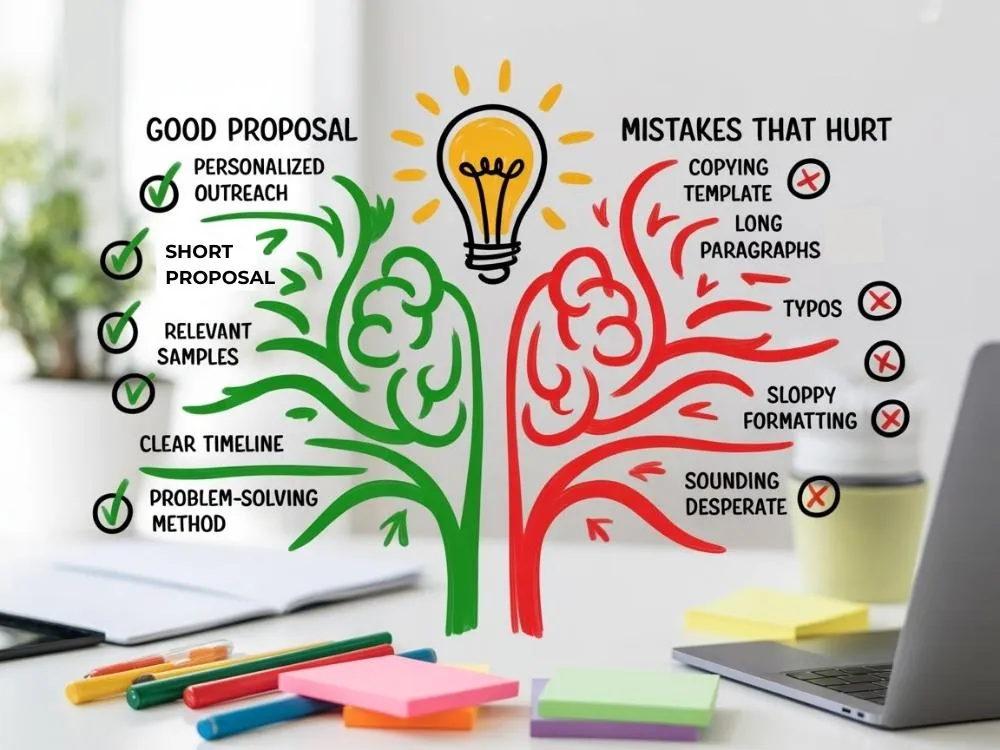
What a Good Proposal Looks Like
- Use their name without the common "Dear Sir or Madam"
- Mention something specific from their job post
- Explain how you'll solve their exact problem
- Share one or two relevant samples that match what they need
- Give a clear timeline with what you'll deliver and when
- Keep your proposal short
Mistakes That Hurt Your Chances
- Copying the same template for every job (clients spot this instantly)
- Writing about yourself before addressing their needs
- Sending long paragraphs that are hard to read
- Typos or sloppy formatting (you're a writer, this matters)
- Sounding desperate or begging for work
Always proofread twice before sending. One typo can cost you the job.
Step 7: Deliver Quality Work and Build Your Reputation
Landing the client is just the beginning. Keeping them and getting referrals is what actually builds your business.
What Good Clients Remember
- You hit deadlines without them having to follow up
- You ask questions upfront instead of guessing what they want
- Your writing shows up polished, not full of typos and formatting issues
- You actually follow their brief instead of doing your own thing
Ask for Testimonials
Just ask clients for a testimonial after you finish a project and they seem happy. Most people will do it if you make their job easier. Put those on your website and use them in proposals.
Your reputation decides how fast you grow. Do good work consistently and clients will refer you to others. That's how you stop chasing jobs and start getting approached instead.
Step 8: Scale Your Freelance Writing Business
This final step is crucial once you have steady work coming in. Push yourself to grow.
Ways to Scale Up
- Raise your rates every few months as you improve.
- Go deeper in your niche instead of broader.
- Offer monthly packages instead of one-off projects.
- Target industries that pay well like SaaS or finance.
- Build your presence on LinkedIn so clients can find you.
- Create templates to work faster without losing quality.
The One Rule That Matters
Don't rely on one client for most of your income. If they suddenly cut their budget or ghost you, your whole business falls apart. Aim for three to five steady clients instead. That way losing one doesn't wreck everything.
Scaling takes time but it's worth it. You go from scrambling for $50 blog posts to having clients on retainer paying you thousands every month. That's when freelancing stops feeling like a hustle and starts feeling like an actual business.
Common Freelance Writing Mistakes to Avoid
- Charging way too little to get clients.
- Trying to write about everything rather than picking a niche.
- Sending proposals without any portfolio samples to back you up.
- Copy and paste the same generic pitch to every client.
- Missing deadlines or asking for extensions constantly.
- Skipping the editing process and sending first drafts.
- Doing tons of extra unpaid revisions without pushing back.
- Letting one client become your entire income source.
- Never raising your rates even after a year of experience.
- Giving up after two months because you're not making enough yet.
Most writers need three to six months before things really start clicking. Stick with it past the awkward beginning phase. That's when you actually start making decent money.
Wrapping Up
Starting a freelance writing business is easy and good for people looking to make money online. You just need decent writing skills and the patience to build your client base. Start with a niche and create some samples. Pitch consistently and give yourself three to six months to gain traction. The income potential is real if you stick with it.
FAQs
Q1: How much do I need to start freelance writing?
Nothing to a couple of dollars. You can simply start with the free tools available like Google Docs. Plus, you can set up a basic website for free on Wix or WordPress.
Q2: Do I need a degree to become a freelance writer?
A degree isn't necessary but it helps build trust. When your skills speak, your clients won't ask about your educational qualifications.
Explore Related Posts
https://smarttoolsai.com/post/how-to-start-a-virtual-assistant-business
https://smarttoolsai.com/post/how-to-start-a-graphic-design-business