
How to Start a Resume Writing Business
.webp)
See a friend struggling to get interviews even though they're qualified? The problem is usually their resume. If you can spot what's wrong and fix it, that's a service people will pay for.
Many job seekers know they need a better resume yet can't write one properly. That's where you come in.
This guide walks through how to start a resume writing business in a simple, practical way. The nice part about this business is that you can start from home and build it step by step.
Key Takeaways
- Learn what a resume writer does and how to help clients get interviews.
- A practical guide to starting your resume writing business from home.
- Know how to pick a niche, set your prices, and land your first clients.
- Learn simple ways to build your portfolio and find people who need resumes.
- Know and avoid common mistakes that slow new resume writers down.
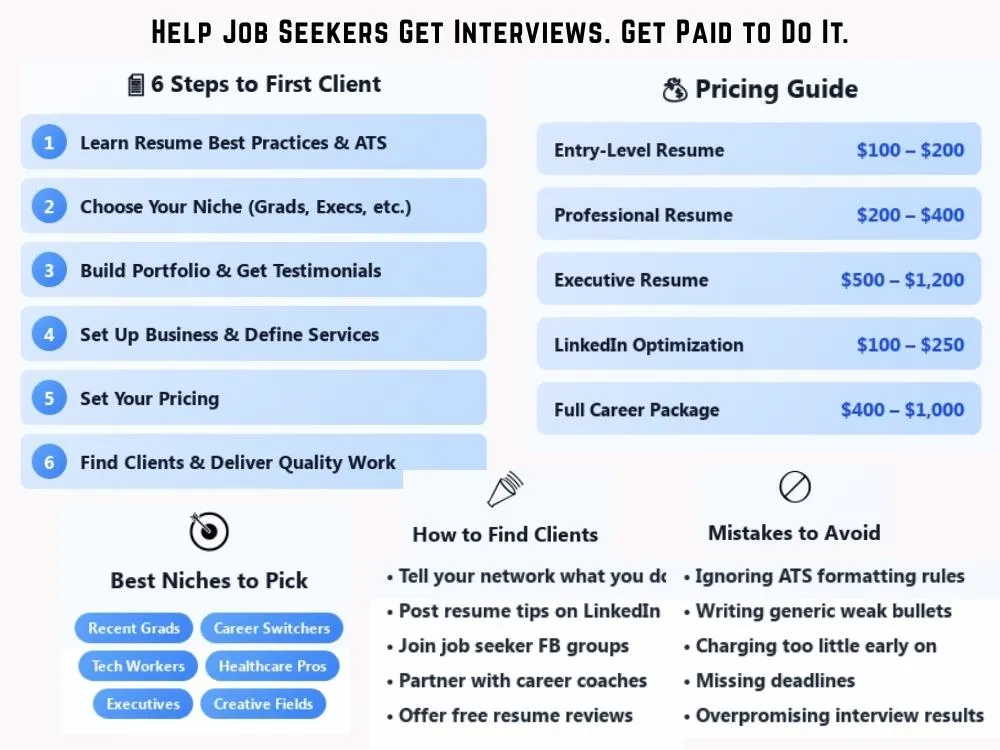
What Does a Resume Writer Do?
They help people make resumes that get interviews. You're doing more than cleaning up typos and grammar mistakes.
You talk to clients about their work history and what kind of job they want. Then you write the resume in a way that gets attention from the people doing the hiring.
Many resume writers also offer:
- Cover letters
- LinkedIn profiles
- Career summaries
- career coaching
- Interview prep (some offer this)
- Personal branding statements
Do You Need Certification or Experience?
No. You don't need a certificate to start this business. Plenty of people jump in without one. However, some background helps.
If you've worked in HR, recruiting, career coaching, freelance writing, or editing, you're already ahead. You know what employers actually look for.
You can get certified later if you want the credibility boost. But it's not required to get your first clients. People only care about landing their favorite job and you must assist them get it.
What matters most is:
- Knowing current resume best practices
- Understanding hiring expectations
- Writing clearly and professionally
- Being able to work with different industries and experience levels
Now let's find out how actually to start this business and get your first clients.
Step 1: Learn Resume Writing Best Practices

Don't charge for resume writing until you know what actually works today. Resume best practices shift constantly. What landed someone a job ten years ago might get them ignored now.
A) Understanding ATS (Applicant Tracking Systems)
Most companies run resumes through software before a human actually reads them. If the system can't read your client's resume, it gets tossed. Doesn't matter how good it is.
These systems choke on:
- Tables and text boxes
- Graphics and icons
- Fancy fonts or columns
- Important info stuck in headers or footers
A resume can look great and still fail because the software couldn't parse it. Simple formatting wins.
You need to know how to:
- Use keywords from job descriptions
- Write clear section headings
- Keep layouts ATS-friendly
- Avoid overly designed templates
B) Resume Formats and When to Use Them
There are three main formats and picking the wrong one can hurt your client.
The main ones are:
- Chronological - Best for people with a solid work history in the same field
- Functional - For career changers or people with gaps (hiring managers don't love this one though)
- Combination - Mix of both. Good for experienced people switching industries
Different industries also expect different things. A resume for a CEO won't look the same as one for a bookkeeper or graphic designer. The more examples you study, the better you get at spotting what works.
Step 2: Choose Your Resume Writing Niche

Writing for everyone sounds good, but a niche is way better. You'll learn faster and get good results with a specific audience.
Some niches to consider:
- Entry-level and recent grads
- Mid-career professionals switching industries
- Executives and senior leaders
- Tech workers like engineers or product managers
- Healthcare professionals like nurses or doctors
- Creative fields like design
- People changing careers entirely
For example, if you understand corporate hiring well, professional and executive resumes may suit you. Student and entry-level resumes might fit if you prefer helping younger clients.
Moreover, you don't need to stay in one niche forever. But picking one in the beginning helps you get traction faster.
Step 3: Build Your Portfolio and Credibility
Nobody's going to hire you without proof that you can do the work. You need examples to show. Here's how to build samples if you're starting from scratch:
- Rewriting your own resume
- Creating sample resumes for fictional candidates
- Help friends or family for free and ask for a testimonial
- Offer your first few clients a discount in exchange for a review
Your portfolio should show:
- Clean, readable formatting
- Strong professional summaries that don't sound generic
- Bullet points that show impact, not just job duties
- Different career levels or industries if possible
You also need to look legit online. That means a clean website, a clear service list, and a professional LinkedIn profile go a long way. Testimonials help too. Even a few good reviews can make a big difference when you are new.
Step 4: Set Up Your Business and Services
Once you're ready for clients, handle the setup. Nothing fancy, just the essentials.
Basic things to sort out:
- Choose a business name
- Create a professional email address
- Set up a simple website or landing page
- Decide how clients will contact you
- Create a clear process for collecting information
- Set your turnaround times (TAT)
You should also define your services clearly. Don't make people guess what you offer. Common resume writing services include:
- Full resume writing
- Resume editing
- Cover letter writing
- LinkedIn profile optimization
- Career package bundles
It also helps that you create a client intake form. That way, you can gather job targets, work history, achievements, and other important details before writing.
Step 5: Price Your Resume Writing Services
Pricing can feel awkward when you start, but you need to charge in a way that values your time and skill. Resume writing isn't just writing. It includes research, formatting, editing, and client communication.
Some writers charge too little in the beginning because they are afraid people will say no. But very low prices can attract the wrong clients and make the work unsustainable.
A simple way to think about pricing is based on:
- Experience level of the client
- Complexity of the resume
- Extra services included
- Turnaround time
Resume Writing Service Packages and Pricing
Service Package | Typical Price | Turnaround Time | What's Included |
|---|---|---|---|
| Entry-level resume | $100-$200 | 2-4 days |
|
| Professional resume | $200-$400 | 3-5 days |
|
| Executive resume | $500-$1,200+ | 5-7 days |
|
| Resume & cover letter | $250-$500 | 3-5 days |
|
| LinkedIn optimization | $100-$250 | 2-3 days |
|
| Full career package | $400-$1,000+ | 5-7 days |
|
Step 6: Find Your First Clients
This is the part that makes most new service businesses nervous. Anyhow, you don't need hundreds of clients right away. You just need your first few.
Simple ways to find early clients:
- Tell your network what you do
- Post on LinkedIn
- Join job seeker and career groups
- Offer resume reviews in Facebook groups
- Reach out to college students or recent graduates
- Partner with career coaches or recruiters
You can also create helpful content online. Share resume tips or common mistakes people make. That builds trust and shows that you know your stuff.
Word of mouth matters a lot in this business. If you do good work for one person, they may refer others.
Step 7: Deliver Quality Resumes and Scale Your Business

Getting clients is one thing. Doing solid work and building repeat referrals is what grows the business.
To deliver quality work:
- Ask the right questions
- Learn the client’s target role
- Use clear formatting
- Focus on achievements, not job duties
- Edit carefully
- Deliver on time
Clients also remember the experience. So be responsive and professional throughout the process. As your business grows, you can scale by:
- Raising your rates
- Creating package deals
- Offering rush services
- Adding LinkedIn or interview support
- Building referral partnerships
- Hiring other writers later if demand grows
Start simple. Then improve your systems as you go.
Common Resume Writing Business Mistakes to Avoid
A lot of new resume writers make the same mistakes early on. You should avoid them. Some common ones include:
- Charging too little for your writing
- Writing generic resumes with weak keywords
- Ignoring ATS formatting
- Taking on every type of client without focus
- Offering vague services
- Missing deadlines
- Overpromising interview results
- Skipping testimonials and portfolio samples
Another mistake is treating resume writing like basic proofreading. It's not. Clients pay for strategy, positioning, and clarity. That's where the value is.
Wrapping Up
Starting a resume writing business is a practical way to turn writing and career knowledge into income. You don't need a huge investment to begin. You need skill, a clear process, and the ability to help people present themselves better.
FAQs
Q1: Can I really make money writing resumes?
Yes. People make real money doing this. When you start, expect maybe a few hundred bucks a month. But with steady clients and good reviews, you can easily hit five figures or more per year.
Q2: How long does it take to write a resume?
For most writers, 2-4 hours per resume once you know what you're doing. That includes the intake call, research, writing, formatting, and one round of revisions. Executive resumes take longer. You get faster with practice.
Explore Related Posts
https://smarttoolsai.com/post/how-to-start-a-bookkeeping-business
https://smarttoolsai.com/post/how-to-start-a-graphic-design-business
https://smarttoolsai.com/post/become-a-life-coach-and-start-your-own-business