
How to Start a Baking Business from Home
.webp)
Have you been baking for years and everyone around you keeps saying you should charge for this? At some point, it's worth listening to them. A lot of home baking businesses started with nothing more than that one question.
You don't need a big budget or any formal training to get started. Plenty of people have built a real income from their own kitchen, starting with just a few orders here and there.
If you've been sitting on the idea for a while, this guide will help you finally take that first step.
Key Takeaways
- Figure out what kind of home baking business actually makes sense for you.
- Know the food laws and permits you need before you sell your first item.
- Create a simple product line, price it right, and make sure the money works.
- Get your first customers without spending anything on advertising.
- Skip the mistakes that keep most home bakers from ever getting started.
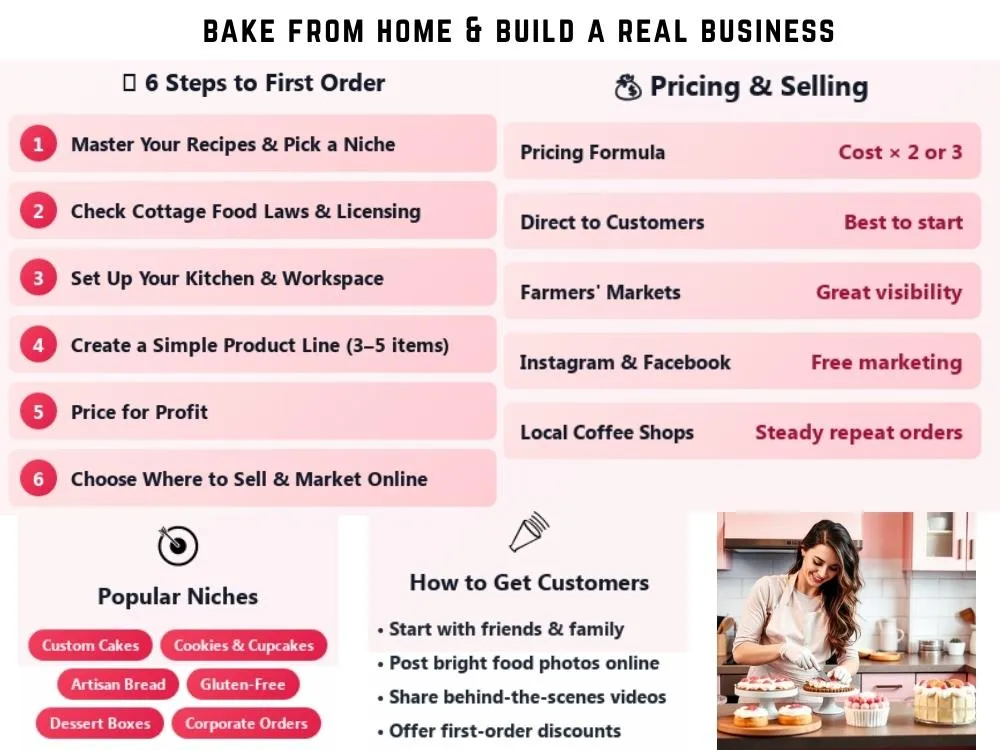
What is a Home Baking Business?
A home baking business is pretty much what it sounds like. You bake out of your own kitchen and sell to customers. That could mean cakes, cookies, bread, or whatever items you are known for. Some people take custom orders, others keep a steady lineup of ready-made goods.
But baking is only part of the job and there’s more to it than just baking. It involves:
- Taking and tracking orders
- Setting your prices
- Keeping up with ingredients and supplies
- Packaging and getting products to customers
Most people get into this because they love to bake. Just know that running the business end of things is a skill you will need to pick up along the way.
Types of Baking Businesses You Can Start
There is no single way to do this. You get to choose what kind of baking business makes sense for you.
Some popular options include:
- Custom cakes for birthdays and special events
- Wedding cakes for clients with bigger budgets
- Cookies and cupcakes for parties and gifts
- Artisan bread for regular weekly customers
- Breakfast items like muffins or cinnamon rolls
- Savory baked goods like meat pies and stuffed breads
- Gluten-free or vegan baked goods for customers with dietary needs
- Dessert boxes and treat platters that work great as gifts
- Corporate and bulk orders for offices and business events
- Seasonal treats like holiday cookies and themed items
Pick what you already make well and start there. Expanding later is always an option. Let's get into the steps to help you start.
Step 1: Learn Baking and Develop Your Skills
No culinary degree required to get this going. What you need is to produce the same quality every time someone orders from you. That kind of consistency only comes from practice.

A) Mastering Baking Techniques
Start with the basics and get them down solid.
Focus on:
- Measuring ingredients the right way every time
- Knowing your baking times and temperatures
- Understanding how different ingredients affect texture and taste
- Working on your decoration and presentation
Keep baking and keep testing. You wanna know your recipes so well that nothing surprises you. In baking, even a small slip can affect how the final product turns out.
B) Specializing in Your Niche
Once you have the basics handled, pick a lane and stay in it for a while.
For example:
- Custom cake designs for events and celebrations
- Cookies with flavors people can’t find at a regular store
- Healthy or diet-friendly options for a specific crowd
- Every day bread and baked goods for local regulars
When you focus on one thing, people know exactly what to come to you for. And you get better at it a lot faster than if you were trying to do everything at once.
Step 2: Understand Cottage Food Laws and Licensing
Check your local rules before you start selling. Most places have something called cottage food laws. These laws allow you to sell food made at home under certain conditions.
Things to look into:
- Which foods are allowed to be sold from home
- Whether you need a license or registration
- Labeling requirements
- Where you are allowed to sell
Nobody gets into baking because they love paperwork. But getting this wrong can shut you down before you even get going. A quick check now saves you a lot of headaches later.
Step 3: Set Up Your Home Baking Kitchen

A lot of successful home bakers started in a pretty basic kitchen. You just need enough space to work cleanly and stay organized as orders come in.
The basics you will need:
- A reliable oven and your core baking tools
- Mixing bowls and measuring equipment
- Proper storage for your ingredients
- A clean, dedicated workspace
- Packaging materials for your orders
A clean and organized kitchen sounds basic. But it makes a real difference when you are trying to fill multiple orders at once. Don't wait until things get busy to get organized.
Step 4: Create Your Product Line and Recipes
This is where things start to feel real. You are picking what you are actually going to sell, and the key here is to keep it simple at the start. Don't try to offer everything right away.
A good starting point looks something like:
- Three to five cake options
- A couple of cookie flavors
- One or two specialty items that set you apart
Test each recipe over and over until you're completely confident in it. You want zero surprises when a real order comes in.
Also think through:
- How long your products stay fresh
- What the ingredients are actually costing you
- How practical each item is to make in larger batches
The goal is a small menu you can deliver on every time. A few products done really well will take you further than a long list of options you are still figuring out.
Step 5: Price Your Baked Goods for Profit
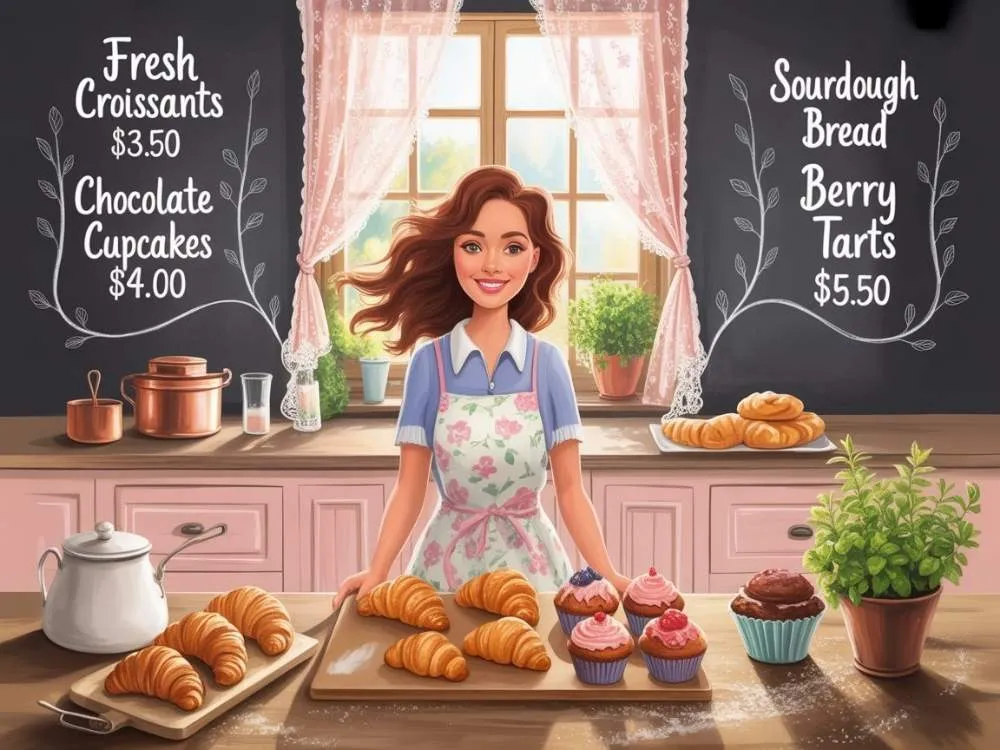
Pricing is one of the first places new bakers get it wrong. Most people charge too little because they are comparing themselves to other home bakers rather than thinking of themselves as a real business.
Your price should cover:
- Ingredients
- Packaging
- Time spent baking
- Time spent decorating
- Overhead costs
Take your manufacturing cost and multiply it by 2 or 3 times to determine your selling price. That gives you a rough baseline to work from.
Plus, look at what other bakers in your area are charging. This helps you set a correct price where people pay for the taste and quality.
Step 6: Choose Where to Sell Your Baked Goods
You don't have to figure out every sales channel at once. Start with what is easiest and add more options as you get comfortable.
You can sell through:
- Direct to customers (friends, family, referrals)
- Setting up at farmers' markets and craft fairs
- Social media orders (Instagram, Facebook)
- Your own simple website
- Etsy for baking kits or decorating kits
- Local businesses like coffee shops
- Custom orders for events and weddings
Many people start with friends and family, then slowly expand.
Step 7: Market Your Baking Business and Get Customers

People have to see what you make before they are gonna order it. In the baking business, a good photo can do more selling than any pitch ever will.
Simple ways to market your business:
- Post clear, bright photos of your products
- Share behind-the-scenes baking videos
- Ask happy customers for reviews
- Offer small discounts for first-time buyers
- Use social media regularly
Word of mouth works well for baking businesses. One happy customer can bring you several more. Consistency also matters more than being perfect so keep doing the good stuff.
Common Baking Business Mistakes to Avoid
A lot of home bakers hit the same walls when they are just starting out. However, most of these mistakes are easy to avoid once you know what to look for.
Watch out for these:
- Taking on more orders than you can actually handle
- Charging too little for your products
- Skipping the step of checking your local food laws
- Trying to offer too many items before you are ready
- Not putting enough thought into presentation and packaging
- Losing track of what things are actually costing you
- Leaving customers waiting too long for a response
Awareness goes a long way to avoid these mistakes. Keep your focus on doing a few things really well and the rest tends to fall into place.
Wrapping Up
Plenty of people have turned a home kitchen into a real baking business without a big budget. Start with what you know, get your local rules sorted, and take on orders you can handle comfortably. Do good work every single time and charge what your products are actually worth. That's honestly what grows a home baking business.
FAQs
Q1: Do I need any formal training to start?
Not at all. Most successful home bakers are self-taught. Anyhow, you can get training to do this more properly. Actually, customers look into the taste and quality of your bakery items.
Q2: How do I get my first customers?
Start with people you already know like friends and family. Plus, post on social media. Your first few orders are usually closer than you think.
Explore Related Posts
https://smarttoolsai.com/post/how-to-start-a-catering-business
https://smarttoolsai.com/post/how-to-start-a-candle-making-business
https://smarttoolsai.com/post/how-to-start-a-cleaning-business