
How to Start an Online Tutoring Business
.webp)
Ever helped a student finally understand something they'd been struggling with? That feeling when it clicks for them is hard to beat and people are willing to pay for it.
Online tutoring lets you turn that skill into real income. No teaching certificate or physical classroom needed. You only need the knowledge in your subject and a decent internet connection.
This guide shows you exactly how to start an online tutoring business from scratch. No complicated terms. Just practical steps that get you up and running.
Key Takeaways
- Learn what online tutoring actually involves and whether you need a teaching degree.
- A practical guide to starting your tutoring business from scratch.
- Know how to pick a niche, set your rates, and find your first paying students.
- Learn simple ways to set up your tech and deliver sessions that actually help.
- Know and avoid common mistakes that make new tutors quit early.
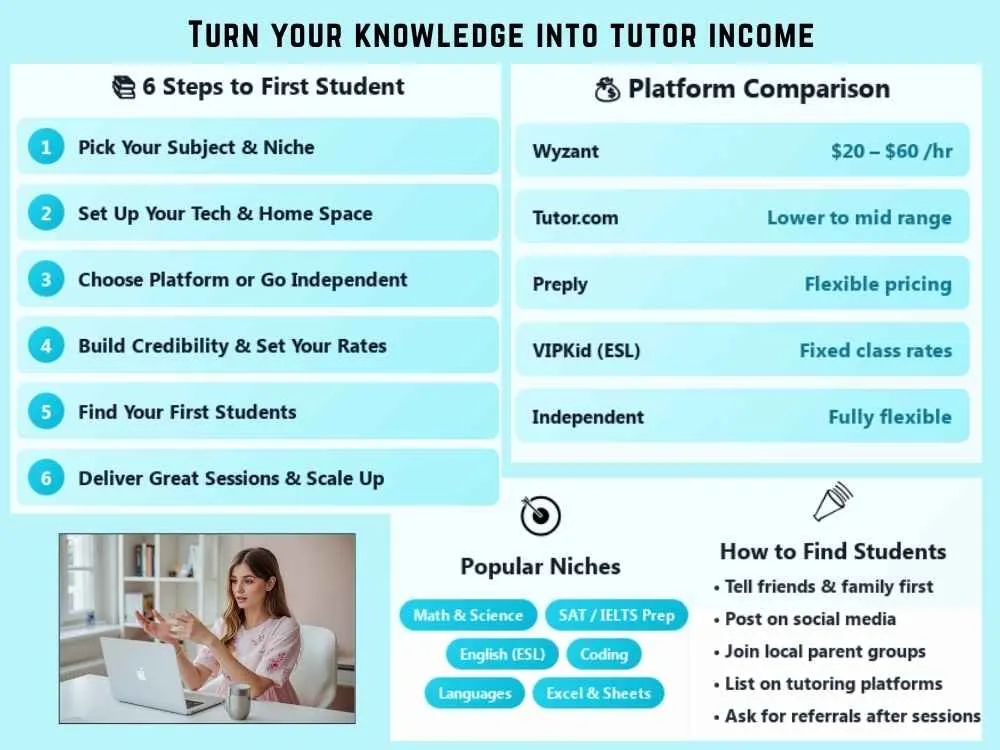
What is Online Tutoring and How Does It Work?
Online tutoring means you help students learn over the internet without in person. Some tutors work one-on-one. Others handle small groups. You might teach school subjects like math, history, science, or anything else.
You could also focus on languages, coding, test prep, professional subjects or even music. Most sessions happen on Zoom or tutoring platforms that come with whiteboards and messaging already built in.
The student books a time, you teach, and you get paid through the platform or directly. That's really it. A student needs help. You give it to them. Consistently and clearly. That's the business.
Do You Need a Teaching Degree or Certification?
No, not always. You don’t need a formal teaching degree for every type of online tutoring business. That surprises a lot of people. Students care more about whether you can actually teach the thing, not what's on your resume.
However, a degree or certification can definitely help. It makes you seem more legit. It helps a lot if you want to teach academic subjects or work with schools and serious clients.
Let's see how it works:
- You don't need formal certification if you want to tutor basic school subjects
- A degree helps a lot if you want to teach advanced subjects
- Some platforms ask for TEFL or TESOL certification if you want to teach English online
- Qualifications usually help if you want to charge higher rates
Step 1: Choose Your Tutoring Subject and Niche
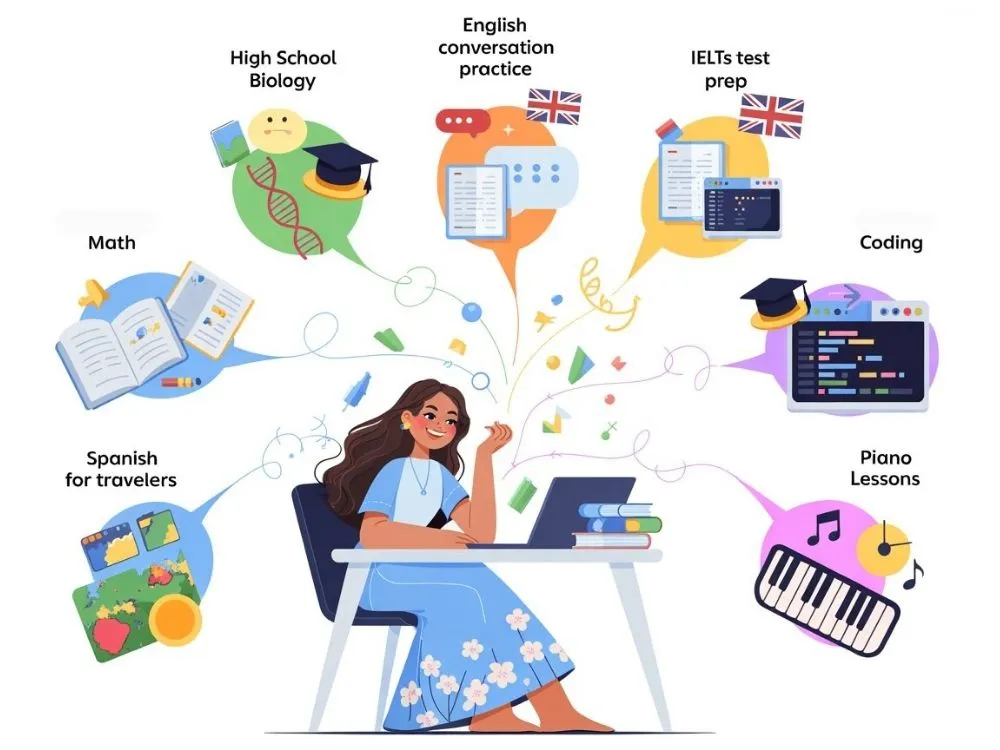
This is your first big decision. Don't try to tutor everything. It may sound like a smart move, but usually backfires. Pick one subject you actually know inside out. Then narrow it down even more.
For example:
- Math for middle schoolers
- High school biology
- English conversation practice
- SAT prep
- IELTS test prep
- Beginner coding
- Spanish for travelers
- Piano lessons for adults
- Excel and Google Sheets basics
A niche helps people immediately get what you do. It also makes everything easier when you're trying to find students. A parent looking for algebra help will pick the tutor who focuses on math over someone offering ten random subjects.
When picking your niche, ask yourself:
- What subject could I teach without constantly Googling answers?
- What age group can I actually stand working with?
- What specific problem can I solve for students?
- Are people actually looking for help with this?
Pick something that matches your skills and what people need. That's where you'll make money.
Step 2: Set Up Your Online Tutoring Technology
You don’t need a complicated setup. But you do need a reliable one. At minimum, you should have a small home office space and basic office essentials like:
- A laptop or desktop computer
- Strong internet connection
- Webcam
- Clear microphone or headset
- Video platform like Zoom or Google Meet
A few extra tools can help a lot too:
- Digital whiteboard
- Screen sharing
- Google Docs or slides for notes
- Scheduling tool
- Payment tool if you work independently
Students will forgive a small mistake here and there. They won't love constant audio issues, freezing screens, or a noisy background. So make your setup clean and dependable.
Good office lighting helps too. You don't need studio lights. Just make sure students can see you clearly and hear you without struggle.
Step 3: Decide Between Tutoring Platforms and Going Independent
This is where most new tutors freeze up. Should you join a platform or find students yourself? Both work. It just depends on whether you want to start quickly or have more control down the road.
Online Tutoring Platforms Comparison
| Platform | Fees or Commission | Student Access | Approval Process | Typical Rates | Pros | Cons |
|---|---|---|---|---|---|---|
| Wyzant | Takes commission from earnings | Large student marketplace | Profile review | Flexible, often $20 to $60+ | Good visibility, set your own rate | Platform takes a cut |
| Tutor.com | Company pays tutors directly | Students provided by platform | Application, tests, background checks | Usually lower to mid range | Steady student flow | Less control over pricing |
| Chegg Tutors | Platform-based pay model | Access to student demand | Approval required | Moderate rates | Easy entry for some subjects | Less control, platform rules |
| VIPKid (ESL) | Platform pays per class | Students assigned through platform | Interview and teaching demo | Usually fixed class rates | Good for ESL tutoring | Specific requirements, less flexible |
| Preply | Commission-based | Built-in student traffic | Profile approval | Flexible pricing | Good for language tutors | Commission can be high at first |
| Independent | No platform fee, except payment tools | You find your own students | No formal approval | Fully flexible | Full control, keep more profit | Harder to get clients at first |
If you want a simpler start, platforms can help. They already have students. You just create a profile, get approved, and start teaching.
If you want more control and better long-term income like five or six figures, going independent makes sense. You keep more money and build your own brand. The trade-off is that you need to find clients yourself.
A lot of tutors do both. They start on platforms, gain experience, and slowly move toward getting their own students.
Step 4: Build Credibility and Set Your Pricing
People seek out confident tutors when they hire. They want to know you can actually help. That's why credibility matters.
You can build credibility with:
- A clear tutor profile
- Qualifications or degrees
- Subject experience
- Testimonials
- Sample teaching videos
- Results or success stories if you have them
Even if you are new, you can still look professional. Write a strong introduction. Be specific about what you teach. Explain who you help and how.
Now let’s talk pricing. Many new tutors charge too little or high. That's where you slip but don't stay there for long. Your price should reflect your subject and the value you provide.
You can price by:
- Hour
- Session package
- Monthly plan
A beginner might start lower to get reviews and experience. Once results and confidence grow, rates should grow too. Check what tutors in your niche charge, but don't copy blindly.
Someone teaching basic homework help will charge differently from someone teaching advanced calculus or IELTS prep
Step 5: Find Your First Students

This part feels scary at first. But it gets easier once you start talking about what you do.
A few simple ways to find students:
- Post on social media
- Tell friends and family
- Join local parent groups
- Share in student communities
- Create a simple website or landing page
- List your service on tutoring platforms
- Ask early students for referrals
If you already know people with kids, start there. If you speak another language, language tutoring can also open doors fast.
Keep your message simple When promoting your service:
- What you teach
- Who you help
- What result you help students get
For example, “I help middle school students improve in math and build confidence before exams” is much stronger than “I offer tutoring.” Clarity brings better leads.
Step 6: Deliver Effective Online Tutoring Sessions
Getting students is one thing but keeping them is the main point. A good tutoring session should feel organized and encouraging. Students should leave feeling like they understood something better than before.

Some simple ways to improve sessions:
- Start on time
- Have a plan for the lesson
- Explain things in simple language
- Ask questions often
- Use examples
- Check if the student actually understands
- End with a quick summary or next step
Try not to blab unnecessary things in the class session. Provide value and students learn better when they participate. Also, be patient. Some students need time to open up, especially online.
A calm tutor who explains things clearly can make a huge difference. And yes, parents notice professionalism too. If you communicate well and stay organized, they are more likely to keep booking.
Step 7: Grow and Scale Your Tutoring Business
You can think bigger once you have a few steady students. You can grow your tutoring business by:
- Raising your rates
- Offering packages instead of one-off sessions
- Teaching small groups
- Specializing in a premium niche
- Creating study materials
- Offering recorded lessons or sell online courses
- Hiring other tutors later
No need to rush this scaling part. Start with a few students and build confidence. Once you see improvement, simply grow from there. A lot of tutors burn out because they say yes to everything.
Try to grow in a way that still feels manageable. If group tutoring makes sense for your subject, that can help you earn more without trading every hour for a single student.
Common Online Tutoring Business Mistakes to Avoid
Many tutors make the same mistakes repeatedly and it's better you spot them early. Some common ones include:
- Trying to teach too many subjects
- Charging too little for too long
- Showing up unprepared
- Having poor audio or internet setup
- Talking too much and not checking understanding
- Depending on one platform only
- Not asking for reviews or referrals
- Being unclear about scheduling or payment
Another big mistake is thinking tutoring is just about knowing the subject. It's not. You also need patience, structure, and communication. Students stay with tutors who make learning feel easier.
Wrapping Up
Online tutoring is an easy business you can start from your home. You just need to know your subject and show up prepared. You need to actually help students improve. Pick your niche and get your tech sorted. What matters most is being reliable and making things clearer to students. That's what keeps them coming back.
FAQs
Q1: What if I've never tutored anyone before?
No problem. Start with someone you know. Help a neighbor's kid or a friend studying for an exam. You'll understand many ups and downs in your teaching which help you improve the next time you actually start teaching for money.
Q2: Do I need to be available every day?
Not at all. Just set a schedule that works for you. Some tutors only teach on weekend mornings. Others do evening shift. Students will work around your availability if you're clear about it upfront.
Explore Related Posts
https://smarttoolsai.com/post/how-to-start-a-proofreading-and-editing-business
https://smarttoolsai.com/post/how-to-start-a-bookkeeping-business
https://smarttoolsai.com/post/how-to-start-selling-on-teachers-pay-teachers