
How to Start a Proofreading and Editing Business
.webp)
Do people always ask you to review their writing before they share it? There's a reason for that. You have a sharp eye for mistakes others miss, and businesses desperately need that skill.
Why not turn it into actual income? You don't need a degree in English or fancy credentials. Just a good eye and the drive to figure things out along the way.
This guide walks you through how to start a proofreading and editing business from scratch. No fancy jargon. Just clear steps that actually work.
Key Takeaways
- Learn what proofreading and editing actually involve and how they're different.
- A practical guide to starting your proofreading business with no degree required.
- Know how to pick a niche, set your rates, and find your first paying clients.
- Learn simple ways to build a portfolio even if you've never been paid before.
- Know and avoid common mistakes that trip up new editors and waste time.
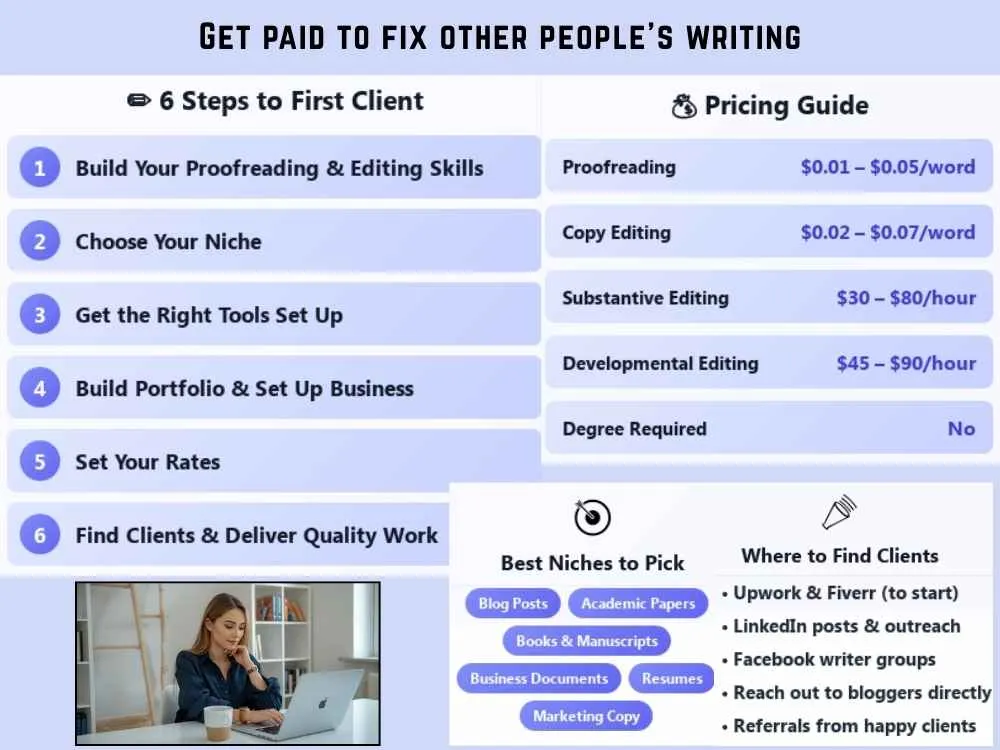
What is Proofreading and Editing?
It's a business where you help people fix their writing before they share it. That means looking over blog posts, resumes, business reports, website copy, or whatever the client needs. Your job is simple. Make it clearer and more professional.
Proofreading means catching typos, grammar slip-ups, and punctuation problems. Editing tackles the messy parts which involve correcting the clunky sentences, repetitive words, and paragraphs that don't quite land. In practice, you usually end up doing both at once.
This business works well because you can do it from anywhere and serve clients in any industry. Writers, business owners, students, and companies all need someone with a good eye for detail.
Proofreading vs Editing: Key Differences
People mix these two all the time. So understanding the difference is important. Proofreading is the final check before something goes out. You're catching surface mistakes like:
- Spelling errors
- Punctuation problems
- Typos
- Missing words
- Formatting issues
Editing goes deeper. You're actually improving the writing:
- Fixing confusing sentences
- Cutting unnecessary words
- Making ideas clearer
- Moving sections around
- Smoothing out the flow
Clients ask for proofreading when they really need editing. So part of your job is helping them figure out what their document actually needs.
Step 1: Develop Your Proofreading and Editing Skills
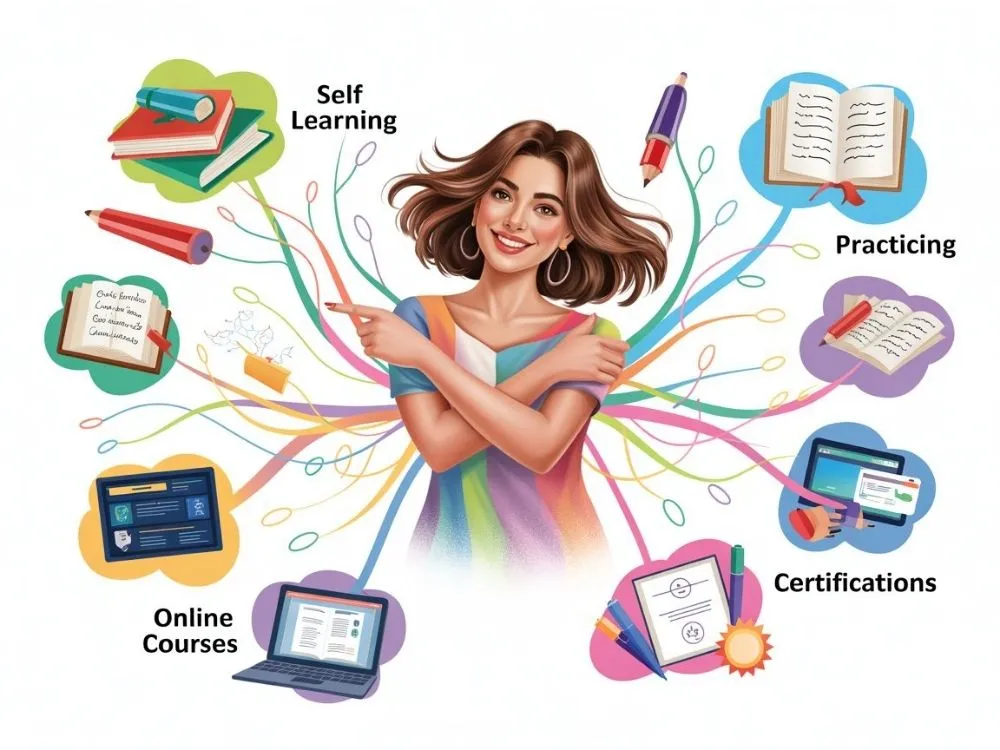
No need to be perfect on day one and you need solid basics. People pay for this because they trust you to catch mistakes they can't see themselves.
A) Self-Teaching and Practice
Most proofreaders teach themselves. It works fine if you stay consistent and actually put in the time.
Here's how to get better:
- Read well-written books, articles, and business content
- Learn grammar and punctuation rules
- Practice on sample documents or real text you find online
- Compare original writing with professionally edited versions
- Study common style guides like AP, Chicago, or APA
Practice on anything you can find. Edit your content or fix a friend's resume. Work on different types of writing so you can learn faster. You'll mess up at first. That's normal. However, you improve by doing the work over and over.
B) Courses and Certifications (Optional)
You don't need a certificate to start this business. But courses can speed things up if you want structure.
Options include:
- Online proofreading courses
- Editing workshops
- Grammar refresher classes
- Niche training for things like academic papers or book editing
Certifications might help you feel more legit when you're starting out. But most clients care more about whether you can actually do the work. If your edits are clean and you communicate well, that matters way more than a certificate on your wall.
Step 2: Choose Your Proofreading Niche

You can start with general proofreading but picking a niche keeps things simple. It helps you find laser-targeted clients faster and stand out from other proofreaders.
Some common niches include:
- Books and manuscripts
- Academic papers and theses
- Business documents and reports
- Blog posts and website content
- Marketing copy and ads
- Resumes and cover letters
Each niche works differently. Academic editing means knowing citation styles and formal language. Blog editing is about making things clear and easy to read. Book editing takes more time and goes deeper into structure and story.
Think about these things when picking your niche:
- What writing do you like reading
- What topics do you already know
- What clients do you want to work with
- Where the demand actually is
You can always change niches later. But starting with something specific helps you explain what you do and who you help.
Step 3: Get the Right Tools and Resources
You don't need much to start. A few basic software tools and home office essentials will get you going and make the work way easier.
What you need:
- A decent laptop or computer
- Reliable internet
- Microsoft Word or Google Docs
- Grammarly or a similar grammar checker
- Style guides for your niche if needed
- Cloud storage like Google Drive or Dropbox
- A way to send invoices and track payments
Most editors also use:
- Track Changes in Word to show edits
- Comment features in Google Docs for feedback
- Time tracking apps to see how long projects take
- Project management tools like Trello or Notion
- PDF tools for easy documentation
Find out early how you'll deliver finished work to clients. Most expect clean edits with tracked changes so they can see what you fixed.
Some want comments explaining why you made certain changes. It's better you keep things simple at the start. You can add more tools once you're making money.
Step 4: Build Your Portfolio and Set Up Your Business
Clients wanna see that you can actually do the work. That means you need a portfolio, even if you've never been paid for this before.
- Editing sample documents
- Offering free or low-cost help to a few people
- Editing blog posts, short stories, or business copy as practice pieces
- Showing before-and-after examples
Make sure your samples match what you want to get paid for. Want academic clients? Show academic edits. Want to work on blogs? Show blog work.
Once you have samples, set up the basics of your business:
- Pick a simple business name
- Get a professional email address
- Build a basic website or portfolio page
- Set up your LinkedIn if you're targeting professionals
- Write out a clear list of what services you offer
You don’t need a huge brand right away. You just need to look like someone who has their stuff together and is easy to reach.
Step 5: Price Your Proofreading Services
Pricing can be confusing at first because rates vary widely. It depends on the service you offer, your niche, and the amount of work involved.
Some editors charge:
- Per word
- Per page
- Per hour
- Per project
The more work involved, the more you charge. Light proofreading pays the least. Developmental editing pays the most because it takes way more time and job skill.
Proofreading and Editing Services with Pricing
| Service Type | Niche | Typical Rate | Common Pricing Style | Turnaround Time |
|---|---|---|---|---|
| Proofreading | Blog posts | $0.01 to $0.03 per word | Per word or hour | 1 to 3 days |
| Proofreading | Business documents | $0.02 to $0.04 per word | Per word or page | 1 to 3 days |
| Proofreading | Academic papers | $0.02 to $0.05 per word | Per word or page | 2 to 5 days |
| Proofreading | Books/manuscripts | $0.01 to $0.03 per word | Per word or project | 1 to 3 weeks |
| Copy editing | Blog posts | $0.02 to $0.05 per word | Per word or hour | 2 to 4 days |
| Copy editing | Business content | $0.03 to $0.06 per word | Per word or project | 2 to 5 days |
| Copy editing | Academic writing | $0.03 to $0.07 per word | Per word or page | 3 to 7 days |
| Copy editing | Books/manuscripts | $0.02 to $0.05 per word | Per word or project | 2 to 4 weeks |
| Substantive editing | Blog or web content | $30 to $60 per hour | Hour or project | 3 to 7 days |
| Substantive editing | Business writing | $40 to $70 per hour | Hour or project | 3 to 7 days |
| Substantive editing | Academic work | $40 to $80 per hour | Hour or project | 1 to 2 weeks |
| Substantive editing | Books/manuscripts | $0.03 to $0.08 per word | Per word or project | 2 to 6 weeks |
| Developmental editing | Books | $0.04 to $0.10 per word | Per word or project | 3 to 8 weeks |
| Developmental editing | Academic books or long reports | $45 to $90 per hour | Hour or project | 2 to 6 weeks |
| Developmental editing | Business books or guides | $45 to $85 per hour | Hour or project | 2 to 6 weeks |
When you set your rates, consider:
- How complex the writing is
- How fast they need it back
- How much rewriting you'll need to do
- Your experience level
- How long the project will actually take you
A lot of beginners undercharge. Try not to do that. You can start reasonably, but don't price yourself so low that the work stops making sense.
Step 6: Find Your First Clients
This is where most people get stuck. But your first clients usually come from pretty simple places.
Start by looking here:
- Freelance platforms like Upwork or Fiverr
- Facebook groups for freelance writers, students, or business owners
- LinkedIn connections and posts
- Job boards that list editing gigs
- People you already know
- Local businesses that need help with their website or marketing stuff
You can also reach out directly to:
- Bloggers
- Self-published authors
- Coaches
- Small business owners
- Students or academics
Keep your message simple. Tell them what you do, who you help, and how your editing makes their writing better. Referrals can also become a big source of work once you help a few people and do a good job.
Step 7: Deliver Quality Work and Scale Your Business

Getting clients is one thing. Keeping them is what actually matters. If you want repeat work and referrals, just do the basics right:
- Reply quickly
- Be clear about when you'll finish
- Follow their instructions
- Ask questions if something doesn't make sense
- Send back clean, helpful edits
- Be kind when you give feedback
Editing is personal work. People are handing you something they wrote, which means they may feel sensitive about it. Be direct about problems but kind in your delivery.
As your business grows, you can scale by:
- Raising your rates as you get better
- Focusing on one specific niche
- Taking on bigger projects like full books or reports
- Building relationships with clients who need ongoing help
- Adding extra services like formatting or rewriting sections
Set up a basic system for handling invoices and deadlines early on. It makes everything way easier when you start getting more work.
Common Proofreading Business Mistakes to Avoid
New editors mess up in predictable ways. Watch out for these:
- Calling everything proofreading when you're actually doing deeper editing
- Setting rates that are way too cheap
- Taking projects you're not ready for yet
- Missing deadlines or turning things in late
- Relying only on Grammarly without actually reading carefully
- Ignoring the style guide the client asked for
- Not using contracts or being vague about what you'll deliver
- Being too harsh with feedback instead of helpful
One big mistake is trying to work with everyone. It's better to get known for one type of editing first, then branch out once you have a reputation.
Wrapping Up
Starting a proofreading and editing business is one of those ideas that looks simple from the outside. But still needs real skill and consistency to work well. Improve your skills and choose a niche that fits. Build a few samples, get your first clients and grow from there. What actually matters is doing good work and treating the business seriously.
FAQs
Q1: Can I do this part-time while keeping my job?
Yes. Take on whatever you can truly handle while maintaining your full-time job. Then grow it slowly from there.
Q2: Do I need fancy software to get started?
Nope. Word or Google Docs works fine. You can add other tools later if you want, but most clients just need tracked changes and comments.
Explore Related Posts
https://smarttoolsai.com/post/how-to-become-a-health-and-wellness-coach
https://smarttoolsai.com/post/how-to-start-a-bookkeeping-business
https://smarttoolsai.com/post/how-to-start-a-virtual-assistant-business