How to Start an Interior Design Business from Home
.webp)
Do people keep complimenting your eye for color and asking for decorating advice? That's not just flattery. It's a skill clients will pay for. You don't need a storefront or huge startup costs to launch an interior design business.
Many successful designers started right from their kitchen table with nothing but talent and determination. This guide shows you exactly how to start an interior design business from home. No complicated industry jargon. Simple steps you can follow and see results.
Key Takeaways
- Learn what interior designers actually do and if it matches your skills.
- A step-by-step guide to starting without formal training or big money.
- Know how to pick your niche, price your work, and get first clients.
- Learn what you need to set up and how to build a solid portfolio.
- Avoid common mistakes that make new design businesses fail early.
What Does an Interior Designer Do?
They help create spaces people love. Maybe they do a full redesign or just guide furniture, colors, layout, or anything else to improve the interior.
Some designers focus just on homes. Others work with businesses like offices, coffee shops, boutiques, short-term rentals, or anything similar.
The daily work usually includes:
- Meeting with clients to understand what they need
- Planning how rooms should be laid out
- Picking colors, furniture, and materials
- Putting together mood boards or design plans
- Suggesting products and finishes
- Managing timelines and suppliers
- Making sure the final space comes together well
Ready to start? Let's walk through the key steps to get your interior design business up and running.
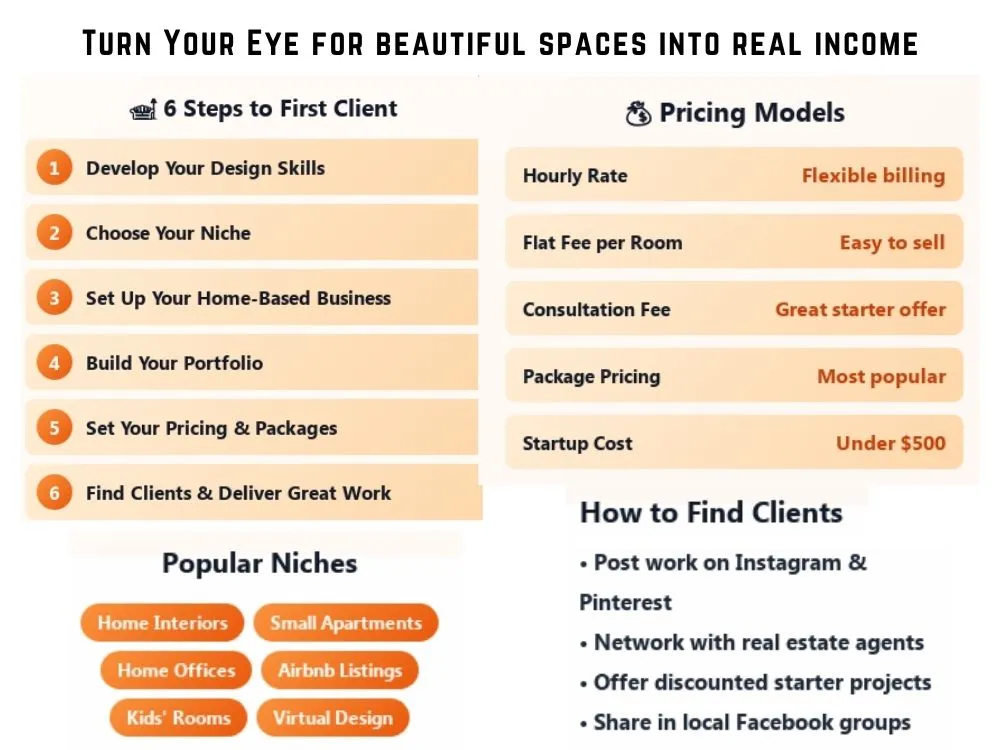
Step 1: Develop Your Interior Design Skills
You need to understand the basics before you start charging people. Learn how layout, color, lighting, and scale work together. So how do you learn all this?
A) Teaching Yourself
Learning on your own is easier than you think
You can use:
- YouTube videos
- Design blogs and articles
- Interior design books
- Pinterest and design magazines
- Online courses on platforms like Skillshare or Coursera
Study real spaces around you and notice what works in a room. Rearrange your own home or help friends with their spaces. This type of practice matters a lot more than you think.
B) Formal Training
Some people want more structure. That helps if you want deeper skills or plan to handle bigger projects down the road.
Options include:
- Interior design certificate programs
- Online diploma courses
- Community college classes
- Design software training
- Full interior design degrees
You don't always need a degree for a small home-based business. But training builds confidence and makes you look more credible. Check if your area has rules about using the title "interior designer." Some places require certification.
Step 2: Choose Your Interior Design Niche
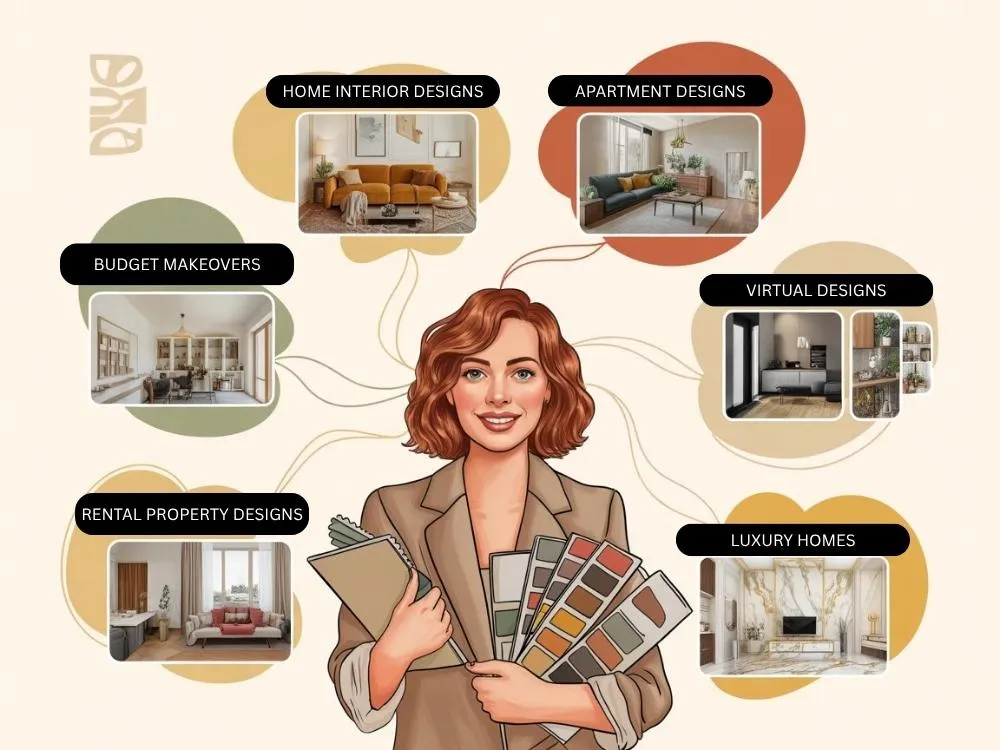
Don't try to be everything to everyone. It just makes your life harder. Pick one particular niche that you're good at and go with that.
Some common niches include:
- Home interiors
- Small apartments
- Kids' rooms
- Home offices
- Rental properties
- Luxury homes
- Budget makeovers
- Airbnb listings
- Virtual design services
Think about what you actually like doing? And what makes sense for you? If you hate driving around town all day, stick with virtual design. If you love seeing projects come together in person, go that route.
Also, think about who you want to deal with. Homeowners? Renters? Real estate flippers? Once you pick, everything gets easier like your portfolio or how you market yourself.
Step 3: Set Up Your Home-Based Design Business
Once you're ready to take clients, get the basics in place. Nothing fancy. Just enough to look like you know what you're doing.
Start with these:
- Pick a business name
- Check if you need to register it locally
- Open a separate bank account for your business
- Make a simple website or portfolio page
- Get a business email address
- Figure out how clients can reach you
- Use basic contracts for every project
You also need a spot at home where you can actually work. Somewhere you can plan projects, take calls, and keep things organized. A tiny office with a corner desk works fine.
You'll probably need:
- A laptop or desktop
- Design software or presentation tools
- Measuring tools
- A printer if needed
- Project management tools
- Video call apps for virtual consultations
The goal is to build a setup that makes your business feel real from the start.
Step 4: Build Your Portfolio
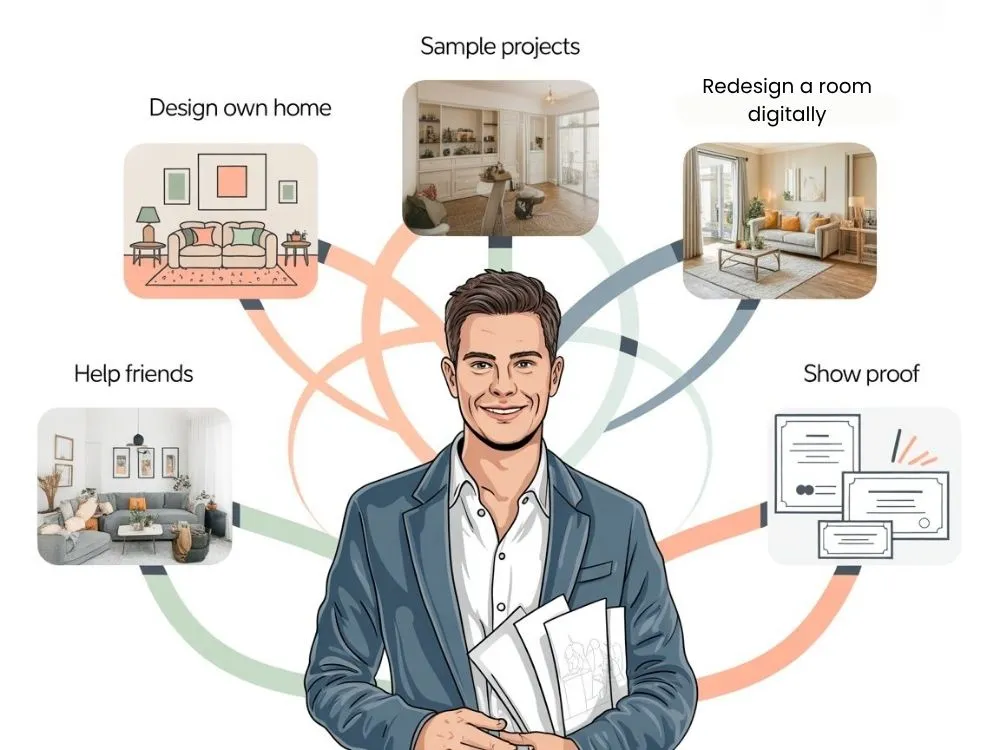
Before people hire you, they wanna see what you can do. That's why your portfolio matters so much. If you're just starting and have no client work yet, that's okay. You can still create a good portfolio.
Try these approaches:
- Design rooms in your own home
- Help friends or family with their spaces
- Create mood boards for sample projects
- Redesign a room digitally as a concept
- Show before and after transformations
- Put together style boards with furniture and color choices
Your portfolio just needs to clearly show your style and skills.
Try to include:
- Good photos
- Clear design concepts
- A short explanation of your choices
- Work that matches the niche you want to serve
If you want to book home office design projects, your portfolio should include that kind of work. Keep it absolutely focused.
Step 5: Price Your Interior Design Services
Pricing trips up a lot of beginners. Most people charge way too little because they're nervous about it. That's a fast track to burning out. Your price needs to cover your time, the actual design work, planning, back-and-forth with clients, and revisions.
Here's how designers usually charge:
- Hourly rate
- Flat fee per room
- Consultation fee
- Package pricing
- Percentage of project cost for larger jobs
If you're just starting out, flat packages are easier for clients to wrap their heads around. Something like:
- One-room design package
- Virtual consultation package
- Space planning package
- Mood board and shopping list package
When you're setting your rates, think about:
- Time spent talking to the client
- Time spent researching and finding stuff
- Actual design work
- Revisions they'll ask for
- Admin work nobody sees
- How much experience you have
Look at what others in your area or niche charge. But don't copy them blindly. Pick a rate that's fair and keeps you going.
Step 6: Find Your First Clients

This is where most people freeze up. However, you don't need hundreds of clients to get started. You just need a few to get rolling.
Ways to find your first clients:
- Posting your work on Instagram or Pinterest
- Creating a basic website
- Sharing your services with friends and family
- Joining local interior design Facebook groups
- Networking with real estate agents or home stagers
- Offering a limited number of discounted starter projects
- Asking people you know for referrals
Be specific about what you do. Don't just say "I am an interior designer." Say something like "I help renters make small apartments look way better without spending a fortune."
That's way easier for people to remember and pass along. And when you finish those first few projects, ask for reviews. When you're new, a good testimonial goes a long way.
Step 7: Deliver Design Projects and Scale Your Business
Once clients start hiring you, your job is to give them a smooth experience from start to finish.
That means:
- Clear communication
- A simple process they can follow
- Realistic timelines
- Clean, organized presentations
- Good follow-up
Clients want great interior design without a doubt. But they also want things to feel easy and clear. If your process is confusing, they notice.
A simple project flow might look like this:
- Initial meeting
- Measure or check out the space
- Figure out their style
- Put together a concept or mood board
- Show them the layout, colors, and furniture options
- Make changes if needed
- Lock in the final plan
- Help them through setup or styling
As your business grows, you've got options to scale:
- Raise your prices
- Offer bigger packages
- Take on larger projects
- Go fully virtual
- Hire someone to handle admin or sourcing
- Partner with contractors or suppliers
- Sell downloadable design packages (digital products)
Do good work first. A solid reputation makes everything else easier.
Common Interior Design Business Mistakes to Avoid
Most beginners trip over the same stuff. Here's what to watch out for.
Common mistakes:
- Chasing every trend you see
- Trying to offer everything at once
- Charging way too little
- Not using contracts
- Taking projects you're not ready for
- Letting clients walk all over you
- Having no clear process
- Ignoring the business stuff
One big mistake? Only caring about the creative part. Yeah, design is creative. But it's also a business. You've got to manage your time, your money, client communication, and expectations.
Another one is waiting until everything's perfect before you start. Your website doesn't need to be amazing. Your logo doesn't need to win awards. Just get something decent up and improve it as you go.
Wrapping Up
You can absolutely run an interior design business from home. No huge budget needed. No perfect setup required. Just get the basics down, choose your niche, show some solid work, and land a few clients. Start with what you've got and upgrade later.
FAQs
Q1: How much do I need upfront?
Not much. You can start with what you have already like a laptop, basic design tools, and a simple website. Many designers begin with under $500.
Q2: How long does it take to get clients?
It varies where some people land their first client within weeks through friends or social media. Some may take a few months. Stay consistent with marketing and networking, so clients will come.
Explore Related Posts
https://smarttoolsai.com/post/how-to-start-a-graphic-design-business
https://smarttoolsai.com/post/office-wall-decor-ideas
https://smarttoolsai.com/post/how-to-start-an-event-planning-business